
 Business License
What Is a Krah Pipe Machine? A Plain-Language Guide
A processing plant in Southeast Asia once took delivery of a large-diameter pipe line based almost entirely on a supplier's catalog photo. The buyer assumed every winding system could reach the sizes printed on the brochure.
Roughly fourteen months later the line still could not produce the DN4000 storage tank sections the contract required. A machine valued at over two hundred thousand dollars sat underused while the project fell behind schedule.
The root cause was simple. The purchaser never confirmed what a Krah pipe machine actually is or what it is built to do.
This guide explains the equipment in plain language so buyers, engineers, and plant managers can make informed decisions before signing a purchase order.
1. What a Krah Pipe Machine Actually Produces
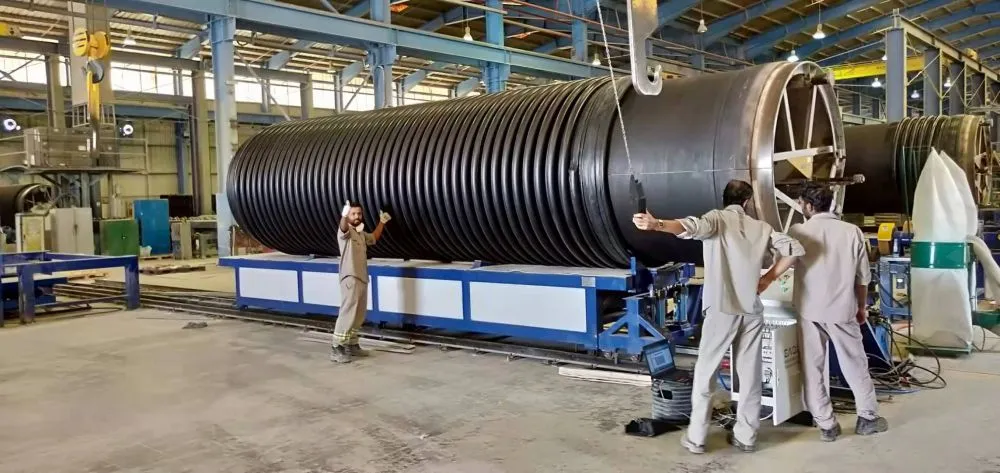
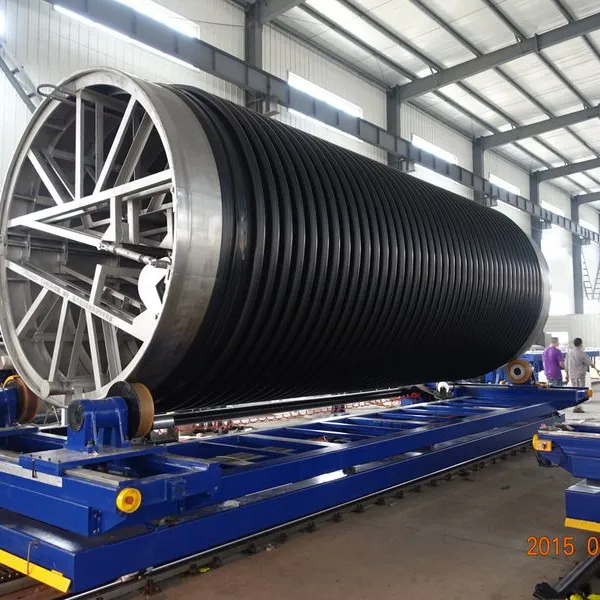
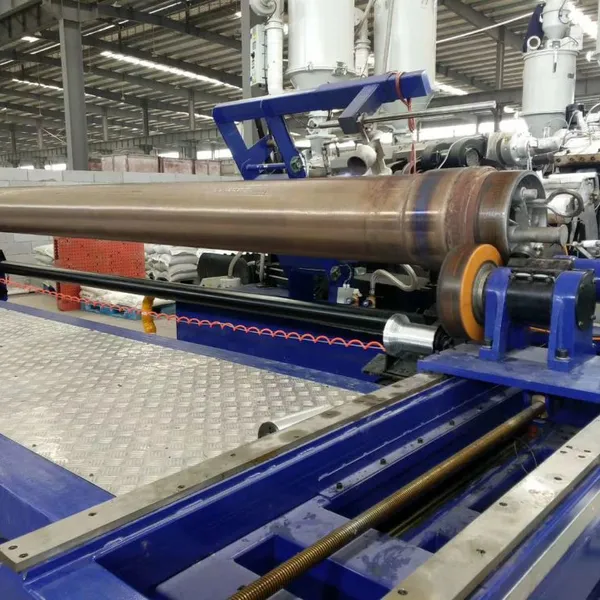
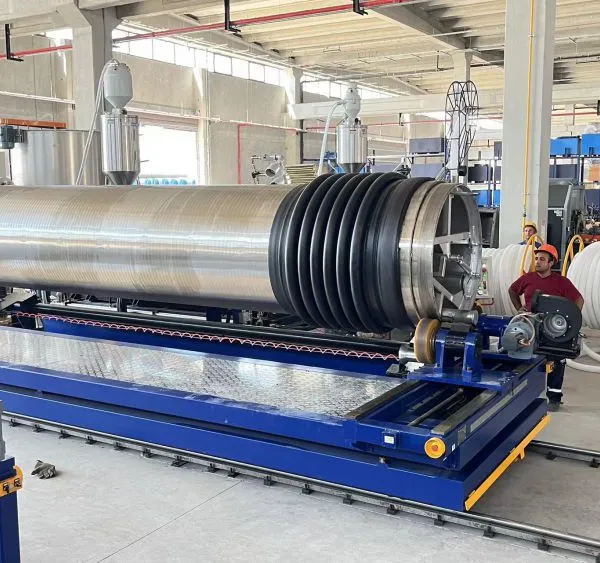
A Krah pipe machine is a production system that builds large-diameter plastic pipes by helically winding a shaped polymer profile strip onto a rotating mandrel. The result is a structural-wall pipe rather than a solid-wall extruded tube. Most units handle diameters from roughly DN300 up to DN5000.
That range covers stormwater mains, sewage trunks, and industrial culverts. The profile strip is extruded continuously and laid in a spiral, with each turn fused to the previous one.
This winding method lets a single machine make pipes far larger than a conventional straight extruder could push through a die. Qingdao Yongke Machinery Co Ltd has supplied these lines across more than a dozen export markets since its founding in 2010.
The finished pipe is lightweight compared with concrete yet stiff enough for buried service. Wall structure is engineered through the profile shape, not through raw thickness, which changes how buyers evaluate machine capability.
2. The Spiral Winding Principle in Plain Terms
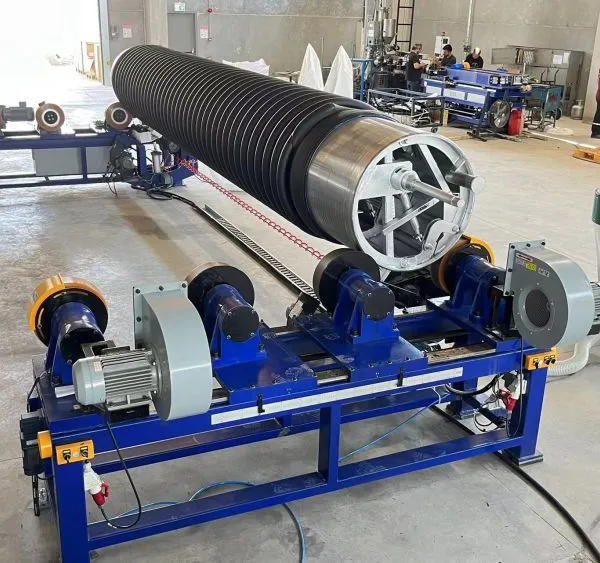
Imagine a very long, continuously made plastic ribbon. The machine feeds that ribbon onto a slowly turning steel mandrel at a fixed angle.
As the mandrel rotates, the ribbon coils into a tube, and a heated shoe or roller presses each new coil against the last so they bond. This is the entire core idea behind spiral winding technology.
The mandrel diameter sets the pipe diameter. Because the mandrel is modular, the same winding head can serve a wide range of sizes by swapping or extending mandrel sections.
Yongke Machinery builds lines that shift between DN300 and DN5000 without replacing the primary extruder. Winding speed, ribbon width, and fusion temperature are the three variables an operator tunes for each order. Getting these three variables right is the core skill that separates a stable line from a scrap-prone one.
3. Key Components of the Production Line
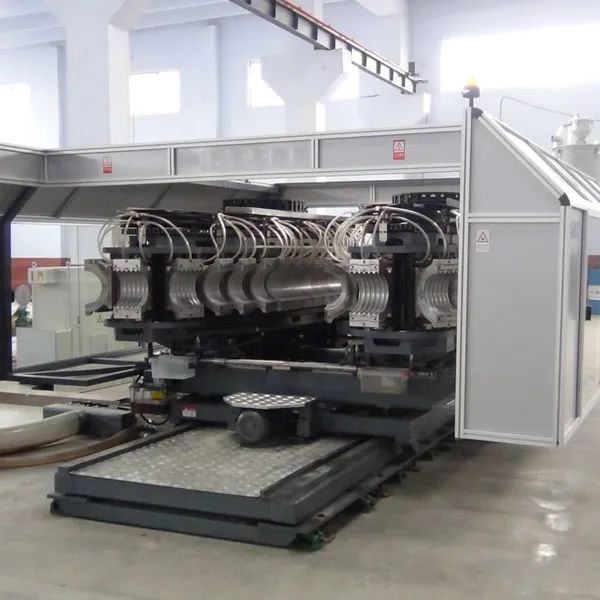
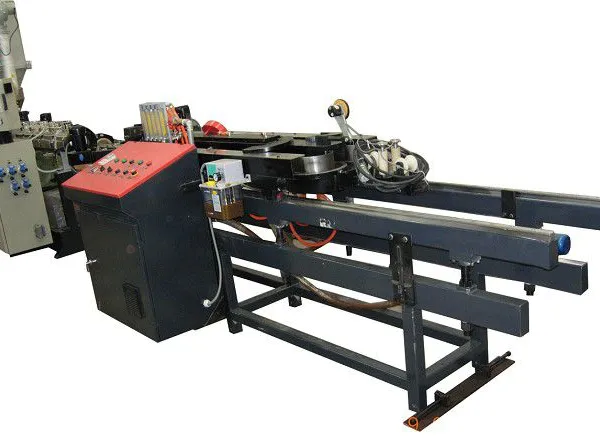
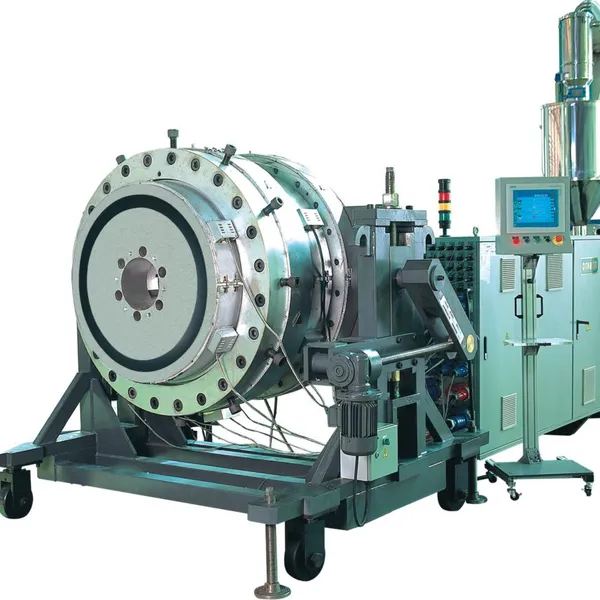
A complete line is more than the winding head. The table below lists the main stations and what each contributes to the final pipe.
| Component | Function | Typical Specification |
|---|---|---|
| Profile Extruder | Melts resin and forms the shaped strip | Single or twin screw, 75-120 mm |
| Winding Head | Lays and fuses the strip onto the mandrel | Adjustable angle, servo controlled |
| Mandrel | Defines pipe diameter and supports winding | Modular, DN300-DN5000 |
| Calibration System | Holds outer shape during cooling | Water or air cooled |
| Cutting Unit | Separates finished pipe to length | Planetary or ring saw |
| Control Cabinet | Coordinates speed, temperature, alarms | PLC with touchscreen |
The extruder and winding head do the heaviest work. The control cabinet is where most modern lines gain their consistency.
A stable PLC keeps strip temperature within a narrow band so seams stay uniform across a full production shift. Qingdao Yongke Machinery sizes this cabinet for the target product mix rather than using a generic controller.

4. Typical Diameter and Wall Configurations
Diameter is the headline number, but wall configuration decides performance. Structural-wall pipes come in single-wall and double-wall forms, and the machine settings change with each.
The table below shows how diameter ranges map to common applications.
| Diameter Range | Common Use | Wall Type |
|---|---|---|
| DN300-DN800 | Minor stormwater, culverts | Single wall |
| DN900-DN2000 | Municipal sewer trunks | Single or double wall |
| DN2200-DN3500 | Retention tanks, industrial outfalls | Double wall |
| DN4000-DN5000 | Large storage tanks, conveyance | Double wall, reinforced |
Our team typically recommends double-wall profiles for anything above DN2000. The enclosed air channel raises ring stiffness without adding much material.
That choice protects the pipe against soil load in deep burial. Buyers should confirm the stiffness class their local standard requires before ordering tooling.
5. Materials: HDPE and PP Profile Strips
Two polymers dominate the profile strip: high-density polyethylene, known as HDPE, and polypropylene, known as PP. HDPE is the default for most drainage and sewage work because it resists chemical attack from typical municipal flows.
PP gains ground where higher temperature or stiffness is needed. The resin grade, not the machine alone, sets the pipe's long-term strength.
A line from Yongke Machinery can run both materials by adjusting extruder temperature and screw speed. Buyers should confirm which grade their local standards expect before ordering.
Recycled content is possible in the core but is rarely used in the outer skin where aesthetics and weathering matter. We advise keeping the visible layer virgin for predictable performance over a twenty-year service life.
6. Output Capacity and Line Speed
Capacity is usually stated as meters of pipe per day at a given diameter. A line making DN600 pipe can output several hundred meters in a single shift.
The same line making DN3000 sections produces far less because each meter uses more material and winding takes longer. Typical line speeds run between roughly 0.5 and 3 meters per minute depending on diameter and wall type.
Faster is not always better. The fusion zone needs enough dwell time to bond properly.
Qingdao Yongke Machinery sizes the extruder to the target product mix rather than quoting a single headline speed. Buyers should ask for a capacity curve across diameters, not one idealized number. A realistic curve also helps a buyer defend the capital request to its own financiers and avoids later disputes over expected output.
7. Where These Pipes End Up Being Used
Spiral-wound pipes serve infrastructure that moves water and resists corrosion. Municipal water supply, sanitary sewers, stormwater drains, and industrial effluent lines are the largest markets.
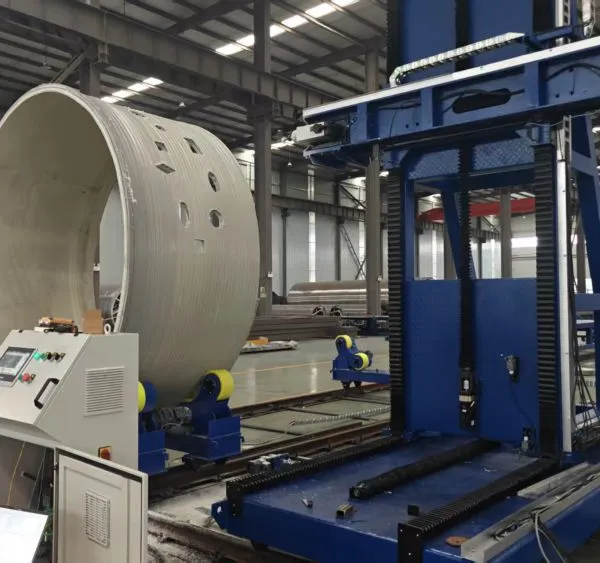
The same winding principle also builds vertical and horizontal storage tanks. Mining sites use large diameters for process water and tailings drainage.
Agricultural irrigation networks benefit from the light weight during installation. Because the machine makes both pipe and tank bodies, a single plant can serve several customer segments.
That flexibility is part of why the company has shipped lines to North America, Southeast Asia, Africa, and the Middle East.
8. How the Machine Differs from Standard Extruders
A conventional pipe extruder pushes melt through a stationary die to make a solid or corrugated tube of limited diameter. A Krah machine instead builds the pipe from a wound profile.
Diameter is set by the mandrel rather than by die size. This is the single most important difference for buyers to grasp.
The practical consequence is scale. Straight extrusion struggles beyond roughly DN1200 without enormous tooling, while winding handles DN5000 on the same floor space.
The trade-off is slower output per meter at large sizes and a more complex line to operate. The company positions its winding lines precisely where diameter and wall engineering matter more than raw linear speed.
9. Common Misconceptions About Krah Equipment
One misconception is that bigger always means better. A DN5000-capable line is overkill for a shop only serving DN300-DN800 culverts.
Another myth is that winding is a niche, low-quality method. In reality, properly fused spiral pipe meets the same ring-stiffness classes as alternative structures when the profile and fusion are controlled.
The weak point is almost always operator training, not the principle. A third error is assuming all suppliers' lines are interchangeable.
Control logic, mandrel tolerance, and spare-part standards differ enough that switching brands mid-project creates real downtime. Yongke Machinery documents its line specs so buyers can plan maintenance before delivery.
10. Two Field Lessons on Machine Selection
A municipal contractor in Eastern Europe some time ago ordered a winding line after seeing only a trade-show demo of DN800 pipe. When a regional water authority later requested DN2600 tank sections, the mandrel set the team had purchased could not reach that size without a costly extension ordered months later.
The delay pushed the tank project into the following construction season. The producer eventually completed the work, but the unused capability at small diameters and the late mandrel purchase together raised the effective cost of the line.
In a separate instance, a plant in the Middle East ran a DN1200 spiral line for stormwater trunks and found that training the winding crew properly cut start-up scrap from roughly double digits to a low single-digit percentage within two months.
The lesson was consistent across both cases. Matching the machine to the real diameter band, and investing in operator skill, mattered more than any single specification on the brochure.
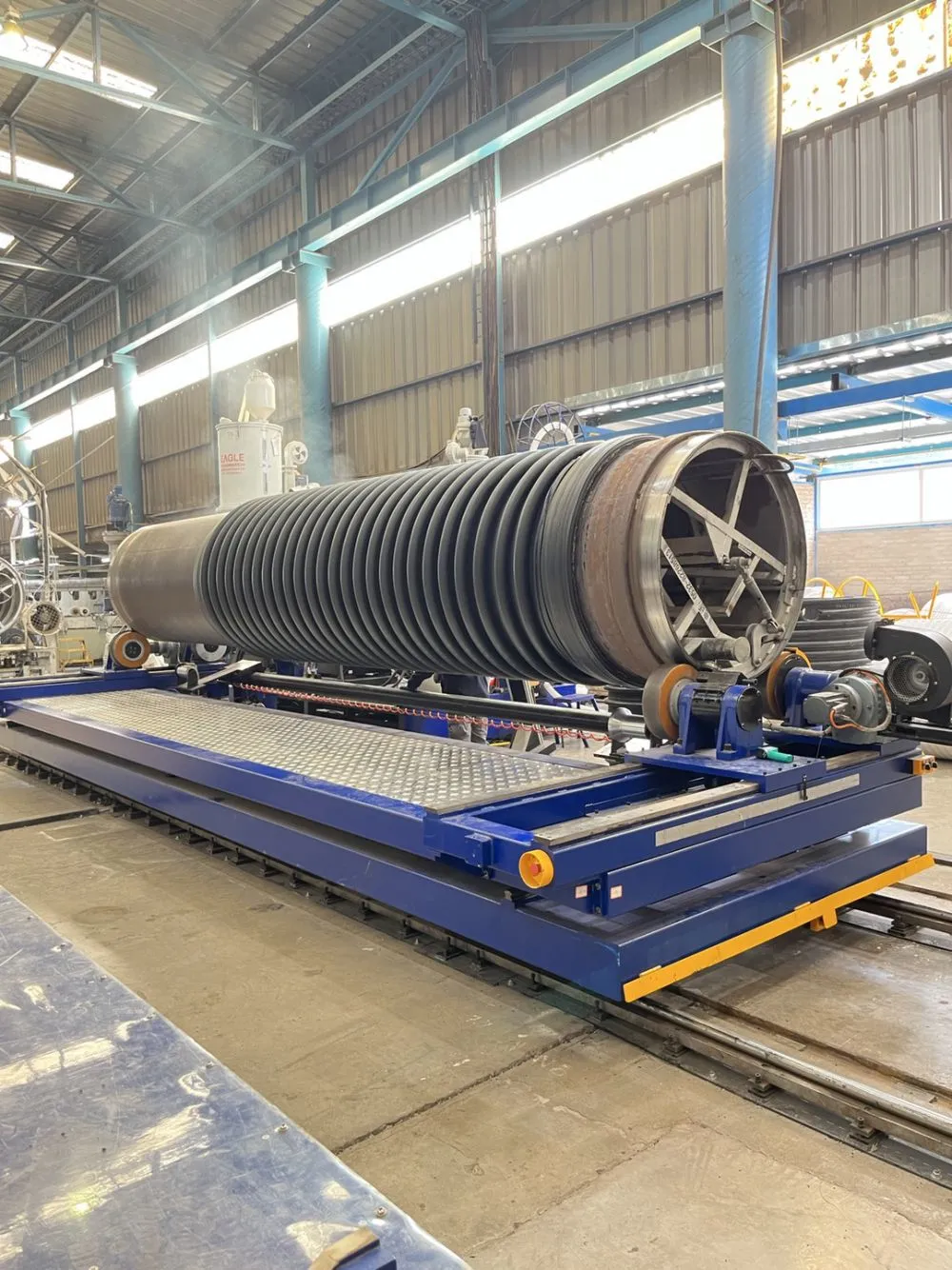

11. Maintenance and Long-Term Care
A winding line rewards routine care. The winding head rollers, the extruder screw, and the cutting blades are the components that wear first under daily use.
The table below lists the items our team suggests scheduling on a preventive basis.
| Item | Suggested Check |
|---|---|
| Winding head rollers | Inspect surface and pressure weekly |
| Extruder screw | Check wear every few months |
| Cutting blades | Sharpen or replace per meter count |
| PLC logs | Review temperature trends monthly |
Qingdao Yongke Machinery supplies a spare-part list with each line so buyers can stock the high-turnover items. Reviewing the control log monthly often reveals a drifting temperature before it becomes a seam defect.
12. Frequently Asked Questions
12.1 Is a Krah pipe machine the same as a regular pipe extruder?
No, the two build pipe in fundamentally different ways. A standard extruder forces molten plastic through a fixed die to form a tube, which limits practical diameter and wall engineering. A Krah machine winds a shaped profile strip onto a rotating mandrel, so diameter is set by the mandrel rather than the die. This lets one line serve sizes from roughly DN300 to DN5000.
The trade-off is that winding lines are more complex to run and slower per meter at large diameters. Buyers should choose based on the diameter range and wall types their orders actually require, not on which machine sounds more advanced.
12.2 What diameter range can one machine realistically cover?
A single modular line typically spans from DN300 up to DN5000 by changing mandrel sections and winding-head settings. Smaller diameters run faster and use less material per meter, while the largest sizes need more dwell time at the fusion zone. Most plants settle on a working band such as DN300-DN2000 or DN800-DN3500 rather than using the full range daily. Qingdao Yongke Machinery sizes each line to the customer's target product mix so capacity stays realistic.
Ask for a diameter-versus-output curve instead of a single headline number during quotation.
12.3 Which material should the profile strip use, HDPE or PP?
HDPE is the default for municipal drainage and sewage because it resists the chemicals found in typical flows and welds reliably. PP becomes attractive when the service temperature is higher or when a stiffer wall is needed at lower weight. Both run on the same line after adjusting extruder temperature and screw speed. Local standards often dictate the accepted grade, so confirm that before ordering tooling.
We recommend a virgin outer skin even when recycled content is used in the core for predictable long-term performance across the pipe's service life.
12.4 How much floor space and power does a line need?
Space depends on the maximum diameter because the mandrel and finished pipe grow with size; a DN5000 line needs substantially more length than a DN800 setup. Power centers on the extruder screw diameter and the heating zones, with larger screws drawing noticeably more current. A typical mid-range line fits within a standard factory bay of roughly several hundred square meters including material staging. Qingdao Yongke Machinery provides a plant-layout drawing during quotation so buyers can verify the footprint against their available hall before committing to the purchase.
Recently Posted
-
How to Choose a Spiral Profile Pipe Machine: A Buyer's Checklist
August 21, 2026A procurement officer in South America once shortlisted three suppliers using only the lowest quoted price. He then discovered aft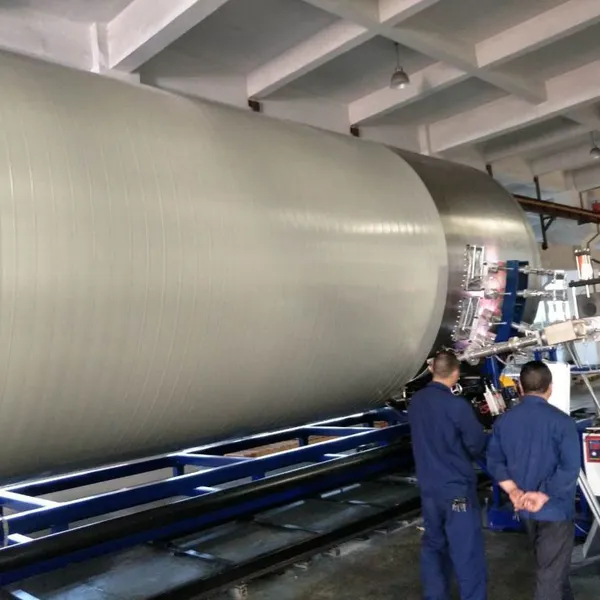 Read More
 -
Krah Machine vs Conventional Extrusion: Which Pipe Production Method Fits
August 20, 2026A distributor in Eastern Europe once split a budget between two production ideas without weighing how each matched his order book.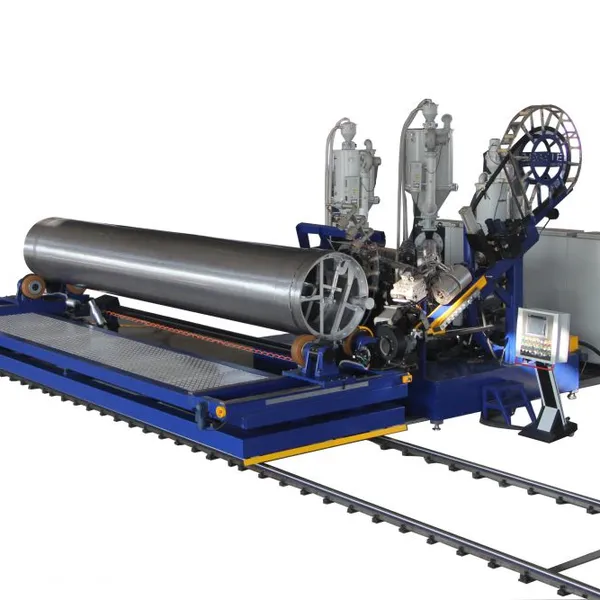 Read More
 -
HDPE Pipe Standards: A Practical Guide for Engineers and Buyers
June 30, 2026A municipal contractor in Southeast Asia once accepted a shipment of HDPE pipe based only on a supplier's diameter claim. Six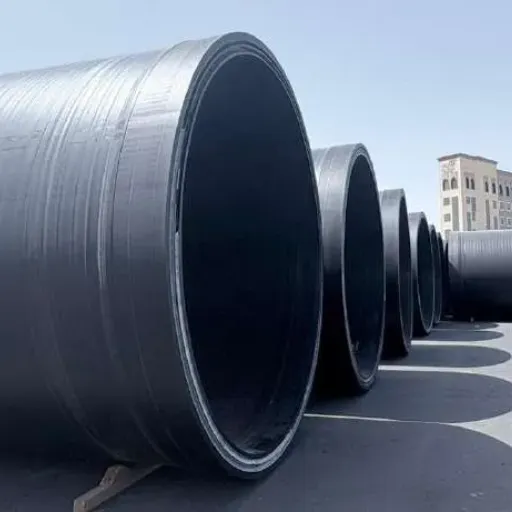 Read More
 -
Wastewater Collection System Design, Operation, and Renewal
June 30, 2026In late 2021, a coastal city in Southeast Asia discovered that its oldest wastewater collection system had been losing capacity fo Read More

Contact Us
Recommended Products
-
 CIPP Glass Fibre Liner MachineNegotiableMOQ: 1 Set
 -
HDPE Helically Wound Tank MachineUS$ 10MOQ: 1 Set
-
CIPP Glass Liner MachineNegotiableMOQ: 1 Set
-
CIPP Felt Liner Manufacturing MachineNegotiableMOQ: 1 Set
-
Large Diameter HDPE Sea Intake Outfall Structured Wall Pipe Making MachineNegotiableMOQ: 1 Set
-
UV-CIPP Glass Fibre Liner Manufacturing MachineUS$ 1000 - 110000MOQ: 10 Meters
-
HDPE Pipe Extrusion Machine / PE Pipe Production Line With High OutputNegotiableMOQ: 1 Set
-
UV-CIPP Glass Fiber Liner Hose Production LineUS$ 1000 - 110000MOQ: 1 Set
-
HDPE Spiral Structure Wall Pipe MachineNegotiableMOQ: 1 Set
-
HDPE Spiral Pipe MachineNegotiableMOQ: 1 Set
-
HDPE Spiral Tank MachineNegotiableMOQ: 1 Set
-
Krah Pipe MachineNegotiableMOQ: 1 Set
-
Plastic HDPE PVC PPR Pipe Extrusion Making Machine Extrusion LineNegotiableMOQ: 1 Set
-
PVC Pipe Extrusion Production Line for Electrical Conduit and Water Supply PipesNegotiableMOQ: 1 Set
-
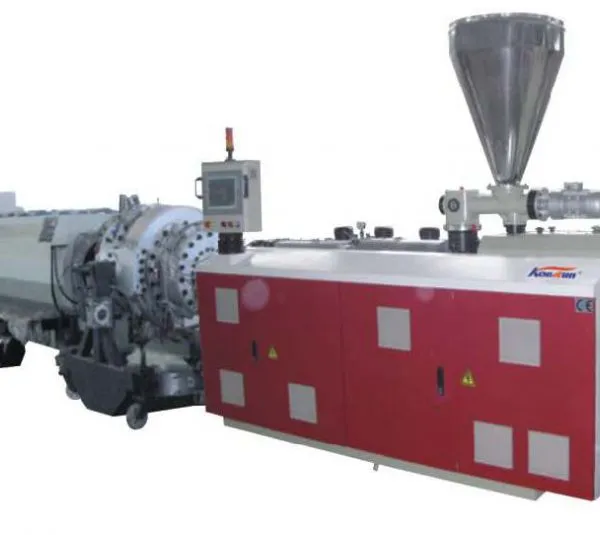
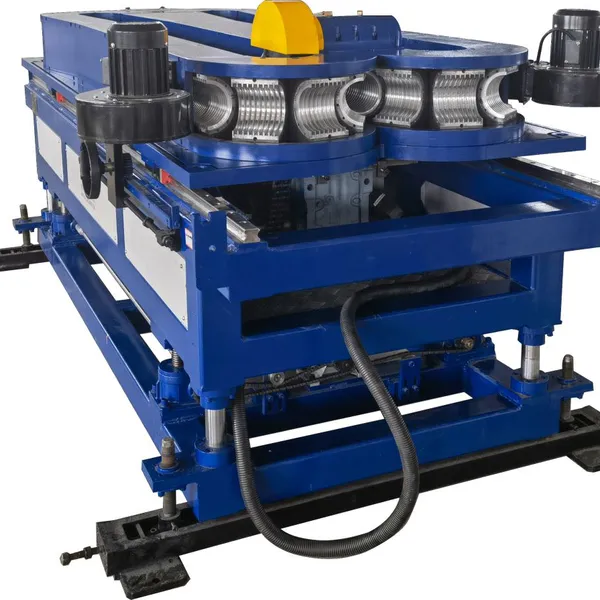
Hot Sell Single Wall Corrugated Pipe Extrusion Line With Competitive PriceNegotiableMOQ: 1 Set
-
HDPE Krah Profild Pipe MachineUS$ 10000MOQ: 1 Set
-
Plastic Tank CNC Holes Boring MachineUS$ 10000MOQ: 1 Set
-
Double Wall Corrugated Pipe Extrusion LineNegotiableMOQ: 1 Set
-
Single Wall Corrugated Pipe Extrusion LineNegotiableMOQ: 1 Set
-
Inversion CIPP Liner Tube Manufacturing MachineNegotiableMOQ: 1 Set