
 Business License
Krah Machine vs Conventional Extrusion: Which Pipe Production Method Fits
A distributor in Eastern Europe once split a budget between two production ideas without weighing how each matched his order book. He ran small-diameter commodity pipe on an oversized winding line and lost money on slow cycles.
A neighbor made the same product on a simple extruder at triple the throughput. The mistake was treating the Krah method and conventional extrusion as interchangeable, which they are not.
This article compares the two approaches so buyers can match equipment to the work it will actually do. The right choice depends on diameter, volume, and the team running the floor, not on which machine sounds more advanced.
1. How Conventional Extrusion Builds Pipe
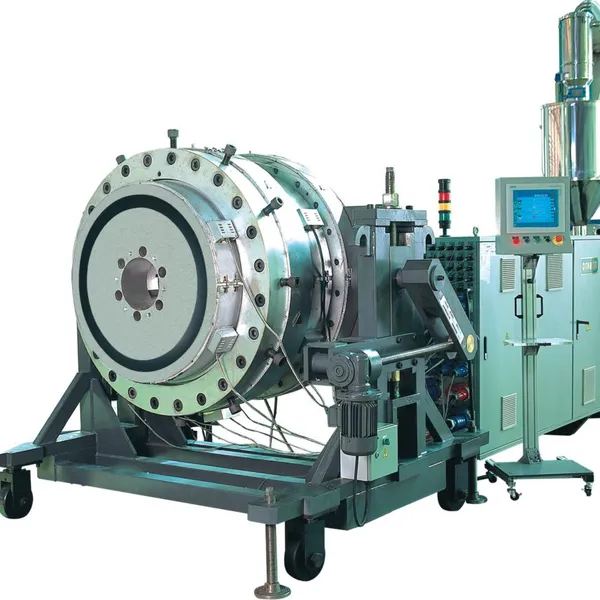
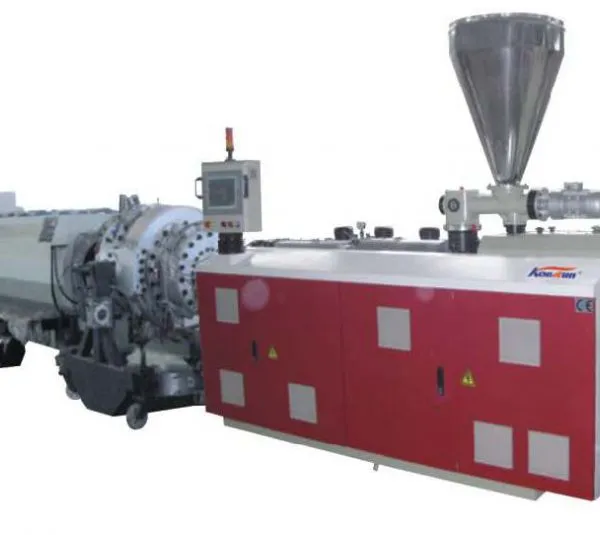
Conventional pipe extrusion melts polymer and pushes it through a stationary die to form a continuous tube. The die, not the floor, defines the diameter, which keeps the process intuitive to operate.
This is a mature, fast, and economical way to make solid-wall and corrugated pipe up to a moderate size. For diameters up to roughly DN1200, a well-tuned extruder outperforms a winding line on linear speed and simplicity.
Fewer moving parts mean fewer things to break and a shorter learning curve for new operators. Qingdao Yongke Machinery still recommends straight extrusion for shops focused on small to mid diameters where volume is the priority.
The limitation is physical. Beyond a certain diameter the die and cooling system become massive and the melt pressure hard to control, which is precisely where the winding method earns its place in a producer's plan.
2. How a Krah Winding Line Builds Pipe
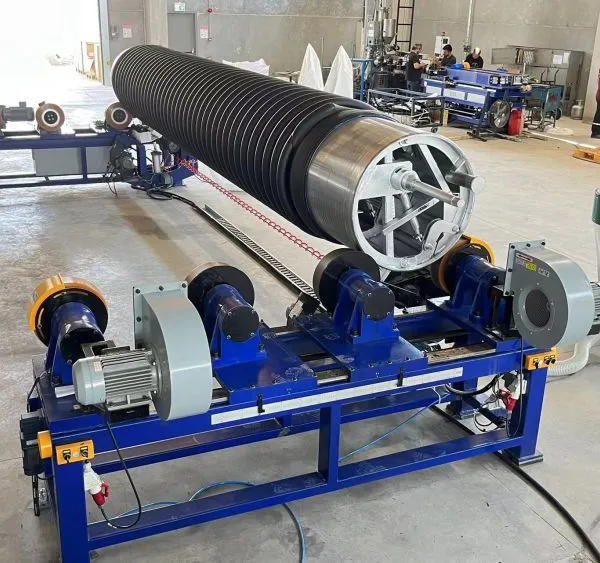
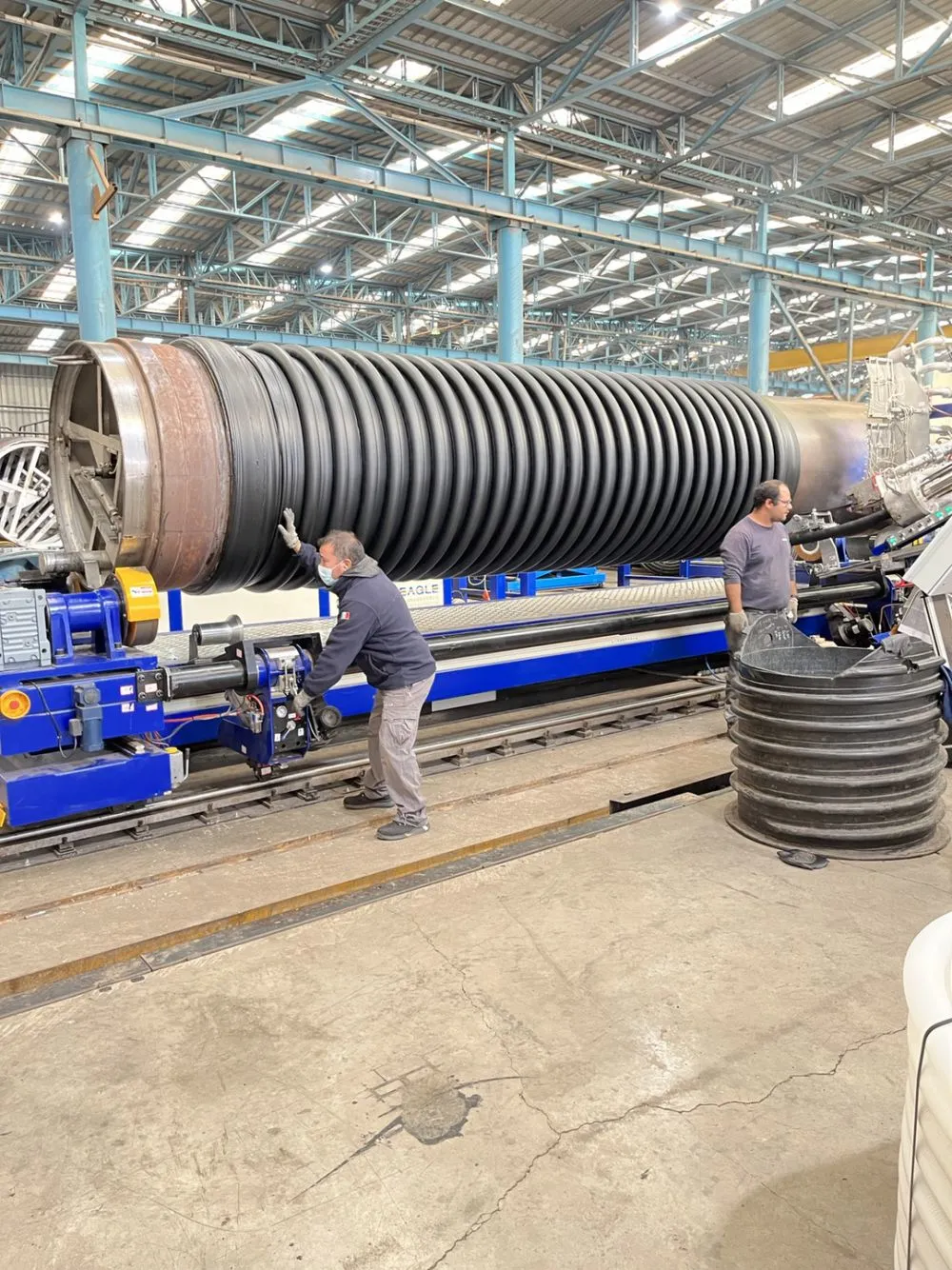
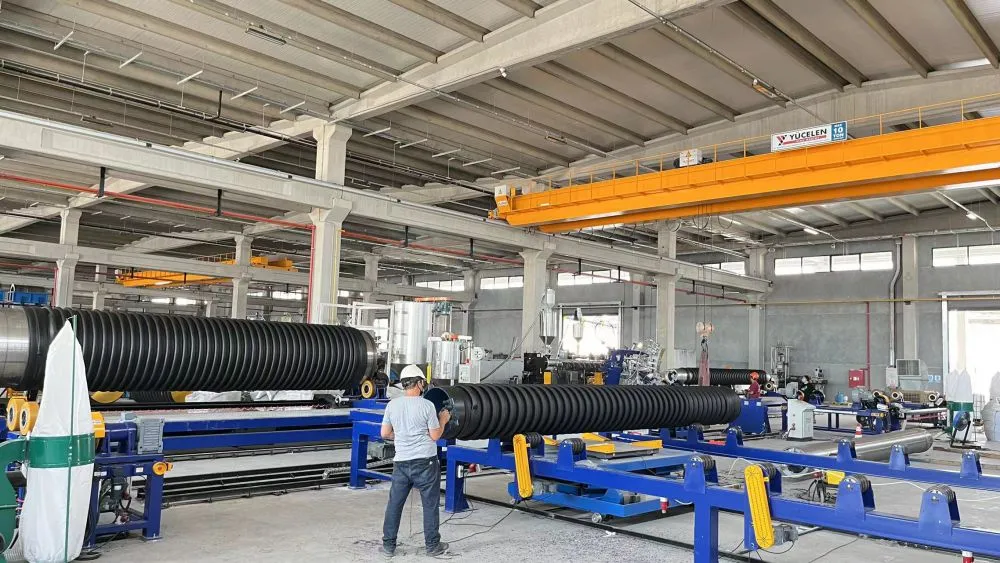
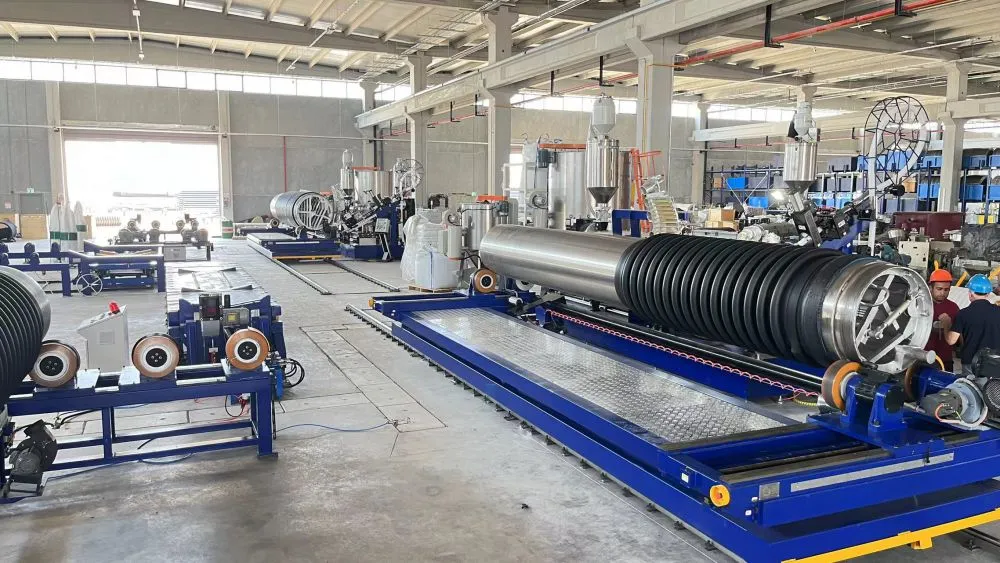
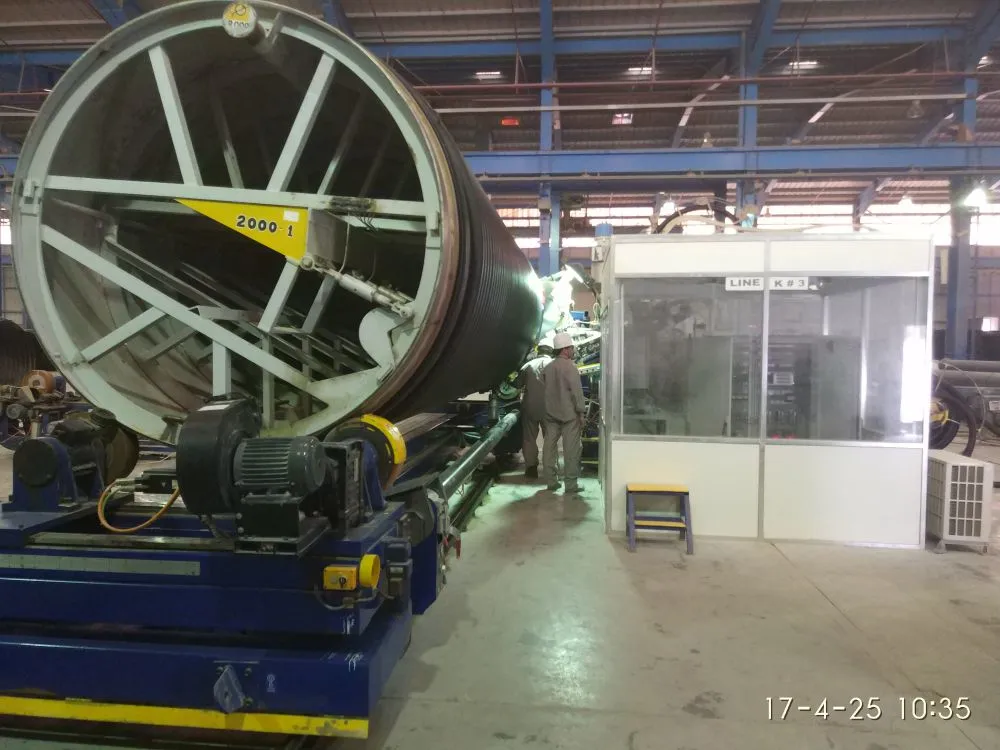
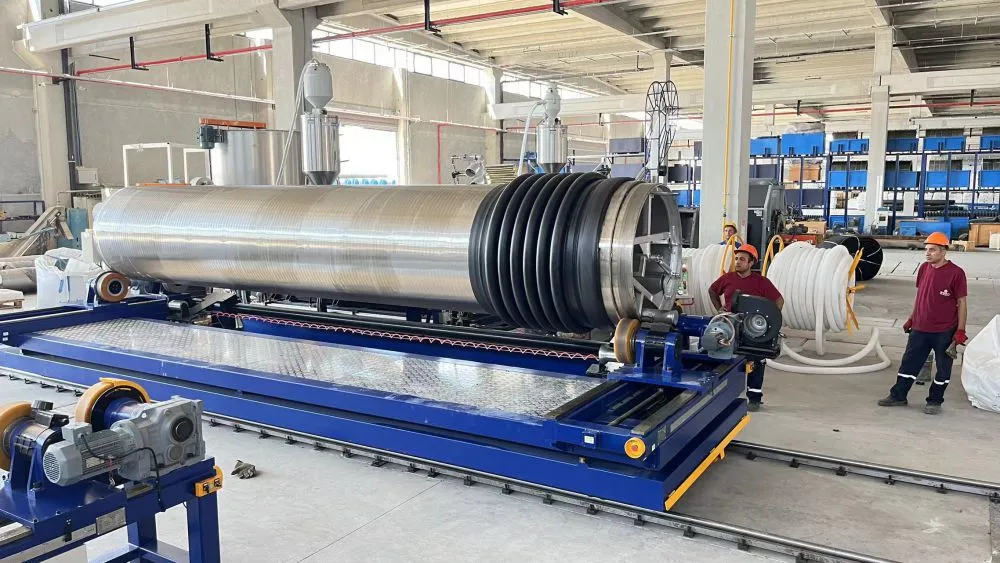
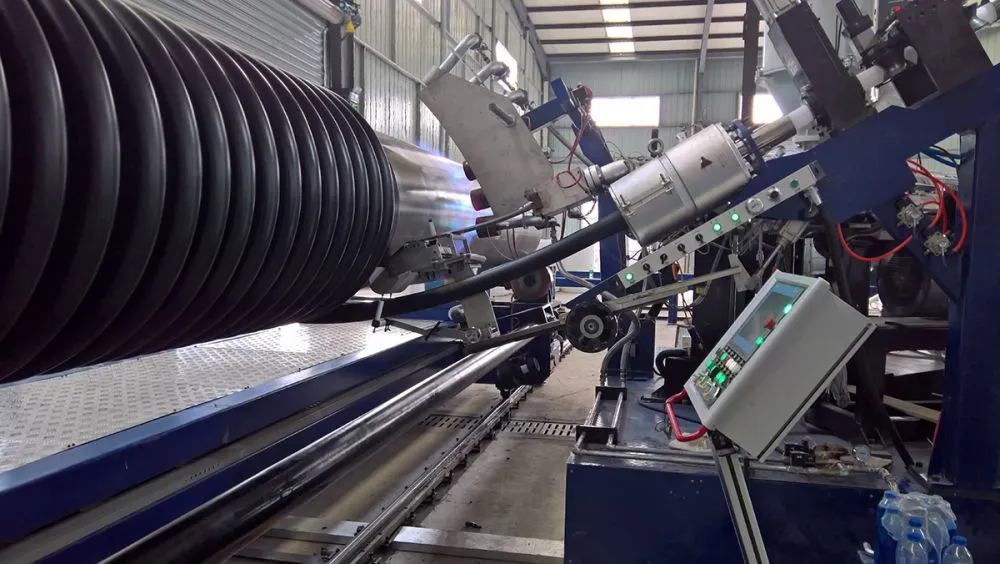
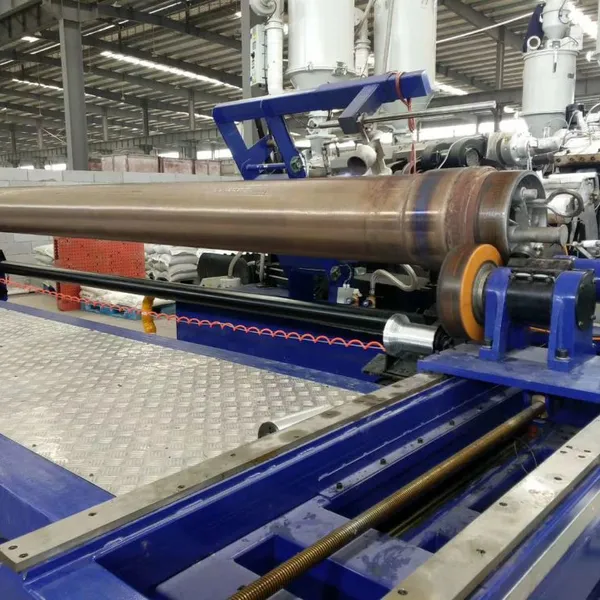
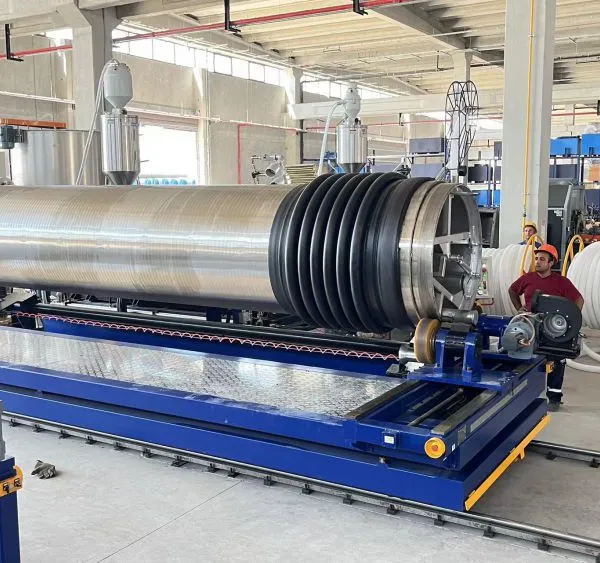
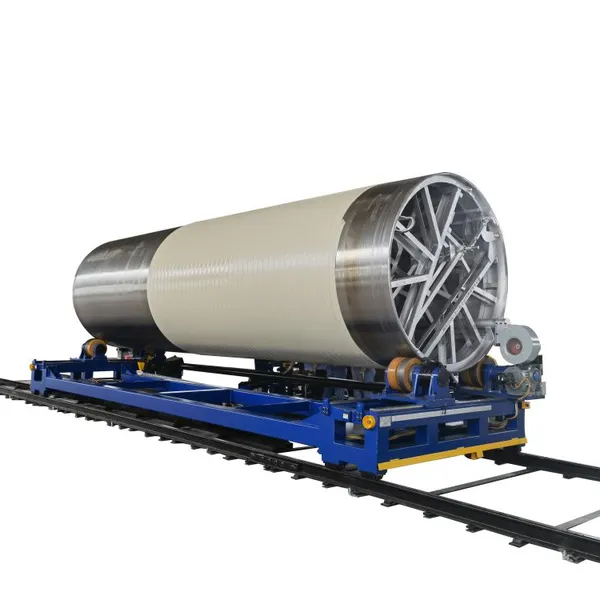
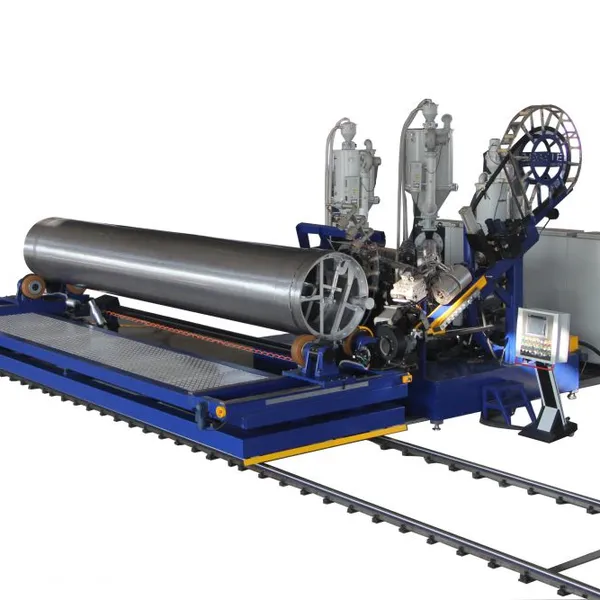
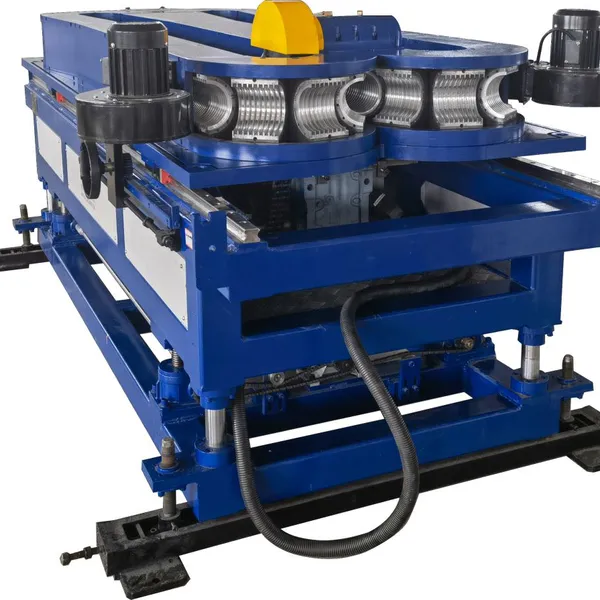
A Krah pipe machine extrudes a shaped profile strip and winds it helically onto a rotating mandrel, fusing each coil to the last. Diameter is set by the mandrel, so one line covers a very wide range without swapping dies.
The wall is structural rather than solid, which saves material at large sizes. A double-wall profile can reach high ring stiffness while keeping weight manageable for transport and installation on site.
The cost is complexity. The winding head, mandrel, and fusion control must stay synchronized, and operators need more training than a basic extrusion crew before output stabilizes.
Yongke Machinery builds lines from DN300 up to DN5000 using this principle, serving both pipe and tank production from one floor. That single-floor flexibility is the main reason buyers accept the extra complexity.
3. Diameter and Wall Engineering Compared
The table below summarizes where each method sits on the diameter and wall-structure spectrum that buyers must understand before quoting.
| Factor | Conventional Extrusion | Krah Winding |
|---|---|---|
| Practical diameter | Up to ~DN1200 | DN300-DN5000 |
| Wall type | Solid or corrugated | Structural, single or double |
| Diameter change | New die needed | Mandrel swap |
| Ring stiffness | Limited by thickness | Engineered via profile |
For a plant serving only minor drainage and culverts, the extruder wins on cost and changeover speed. For one serving trunk sewers, storage tanks, and large conveyance, winding is often the only practical route.
Qingdao Yongke Machinery helps buyers map their diameter band to the right method before quotation. The goal is to avoid paying for capability the order book will not use over the next few years.
4. Throughput and Cost per Meter
At small diameters, extrusion delivers more meters per shift at lower energy per meter. The line is simpler, startup is faster, and scrap is easier to recycle inline without specialized handling.
These advantages compound for high-volume commodity production where margin lives in throughput. At large diameters, the comparison flips in the winding line's favor.
A DN3000 extruded solid wall would be heavy and slow to cool, while a wound structural wall uses less resin and builds at a steadier pace. Our team typically sees winding become competitive above roughly DN1500 once material savings are counted.
Buyers should model cost per meter across their real diameter mix, not at a single size, because a line sized to the wrong method can erode margin on every order it runs.
5. Material Flexibility and Quality Control
Both methods run HDPE and PP, but winding adds freedom in wall design. By changing the profile shape, the same resin can yield different stiffness classes without changing thickness, which supports varied customer specs.
Extrusion quality hinges on die balance and cooling uniformity, which are well understood after decades of use. Winding quality hinges on fusion consistency at the seam, which demands stable temperature control throughout the shift.
Qingdao Yongke Machinery equips its lines with PLC-based monitoring so seam temperature stays within a narrow band across a shift. Neither method holds an inherent quality advantage when run by a competent crew.
The deciding factor is whether the plant can maintain the control each method needs. A poorly run extruder and a poorly run winding line both produce scrap that eats the supposed advantage.
6. Footprint, Power, and Operator Skill
A conventional extrusion line is compact and draws predictable power scaled to screw size. A winding line needs more length for the mandrel and finished pipe, especially at DN4000 and above where the product itself is long.
Operator skill is the quiet differentiator between the two. Extrusion crews learn the process in weeks; winding crews need months to master mandrel setup, angle tuning, and fusion troubleshooting under varying conditions.
The company includes on-site training in its delivery scope to close that gap before the buyer is left alone with the machine. Plants with limited technical staff often start with extrusion and add winding only when large-diameter demand justifies the learning investment.
Power planning should also account for the winding drive and the longer heated path at large diameters, which raises steady-state draw compared with a compact extruder of similar output.
7. When Conventional Extrusion Is the Better Fit
Choose extrusion when your orders cluster below DN1200, when volume is high, and when wall type is standard across the catalog. It is the lower-risk entry point for new pipe producers entering a crowded market.
It also suits shops that value fast changeovers and minimal downtime between grades. With fewer synchronized subsystems, an extruder returns to production quickly after a jam or a material change.
Yongke Machinery supplies extrusion-based lines for exactly these scenarios where simplicity protects the bottom line. If your entire business is small culverts and irrigation pipe, a winding line would be capital parked in capability you rarely use.
The simpler control logic also means local technicians can service the line without brand-specific training, which lowers long-term support cost and shortens any repair window.
8. When a Krah Machine Is the Better Fit
Choose winding when your work includes large trunk sewers, storage tanks, or conveyance above DN1500. The mandrel-based diameter range removes the die-size ceiling that caps conventional extrusion and blocks large projects.
It also fits plants serving multiple segments from one floor, since the same line makes pipe and tank bodies across a wide size band. Our team has shipped such lines to Southeast Asia and the Middle East where infrastructure projects span many diameters within a single contract.
The higher upfront complexity pays back when large-diameter orders are frequent enough to keep the line busy at its strengths rather than its weaknesses. Occasional large jobs do not justify the training overhead on their own.
Buyers should therefore forecast diameter mix for at least two to three years before committing to a winding investment, because reselling or repurposing a specialized line is rarely quick.
9. Two Plants That Chose Differently
A processor in South America some time ago built its business on DN400-DN1000 drainage pipe for residential developments. It chose a conventional extrusion line and ran it at high utilization for several years with steady margins.
When a regional road project later requested DN2200 culverts, the plant subcontracted the large sizes rather than buying a winding line, because the volume did not justify the capital or the training. The extruder remained the right tool for its dominant band.
By contrast, a manufacturer in Central Asia a few years back served a mix that included DN3000 storage tanks from the start. It invested in a Krah winding line and produced both its tank bodies and its DN800 sewer pipe on the same floor.
The mandrel swaps between orders took hours rather than the weeks a new die would have required. That flexibility, not a single headline specification, justified the more complex machine for this particular order book and protected the plant from subcontracting its largest jobs.
10. A Practical Decision Checklist
Before choosing, list your top diameters by order volume, your wall-stiffness requirements, your available floor space, and your team's technical depth. Match the method to the dominant diameter band rather than to the most impressive demo you saw.
The table below turns that list into a quick filter buyers can apply during the first supplier conversation.
| If your work is mostly... | Recommended method |
|---|---|
| DN300-DN1200, high volume | Conventional extrusion |
| DN1500-DN5000, mixed | Krah winding |
| Both bands significant | Two dedicated lines |
Qingdao Yongke Machinery can quote either approach and document the capacity curve so the decision rests on numbers, not on a brochure claim that hides the limits. A disciplined comparison prevents the mismatch that oversized or undersized lines create after the deposit is paid.
11. Frequently Asked Questions
11.1 Can one machine do both methods?
Not in a single integrated unit, because the two processes are mechanically distinct in ways that cannot be bolted together. An extruder pushes melt through a die, while a winding line builds from a profile on a mandrel with synchronized rotation.
Some plants install both as separate lines and route orders to whichever fits the diameter and volume. Others start with extrusion for small diameters and add a winding line later as large-diameter demand grows. Qingdao Yongke Machinery can supply either and help layout a floor that accommodates both without duplicated material handling. The key is treating them as complementary tools serving different diameter bands rather than expecting one machine to excel at all sizes and wall types at once.
11.2 Which method gives lower cost per meter?
At diameters below roughly DN1200, conventional extrusion usually wins on cost per meter because it runs faster and uses simpler tooling with fewer sensors. Above about DN1500, a Krah winding line typically becomes cheaper once you account for the material saved by a structural wall instead of a thick solid wall that must be cooled.
The crossover point depends on resin price, wall class, and local energy cost, so model it across your real product mix rather than trusting a single figure. Our team provides diameter-versus-cost estimates during quotation instead of a headline number that may not match your orders. Always validate the estimate against your actual resin and power rates before committing capital to either method for the coming season.
11.3 Is winding pipe lower quality than extruded pipe?
No, properly fused spiral pipe meets the same ring-stiffness classes as alternative structures when the profile and seam are controlled within tolerance. The seam is the critical zone, and modern lines use PLC-based temperature monitoring to keep fusion consistent shift after shift.
Quality problems almost always trace to operator error or poor maintenance rather than to the winding principle itself, which is mature and well documented. Extrusion has its own failure modes around die balance and cooling that are equally punishing. Choose based on which process your team can control reliably, and invest in training either way to keep scrap low and delivery dates credible with your own customers.
11.4 How do I decide for a new factory?
Start by mapping your expected orders by diameter and volume for the first two to three years, because the dominant band decides everything else. If the bulk sits under DN1200, begin with a conventional extrusion line for lower risk and faster payback on the floor space you lease.
If large trunk sewers or tanks dominate, a Krah winding line is the practical choice despite higher complexity and a longer training curve for the crew. Many new plants phase the investment, adding winding once demand justifies it and the team has gained extrusion discipline first. Yongke Machinery reviews your product plan and recommends a method and capacity before you commit capital, which prevents the mismatch that oversized or undersized lines create later.
Recently Posted
-
How to Choose a Spiral Profile Pipe Machine: A Buyer's Checklist
August 21, 2026A procurement officer in South America once shortlisted three suppliers using only the lowest quoted price. He then discovered aft Read More
 -
What Is a Krah Pipe Machine? A Plain-Language Guide
August 19, 2026A processing plant in Southeast Asia once took delivery of a large-diameter pipe line based almost entirely on a supplier's ca Read More
 -
HDPE Pipe Standards: A Practical Guide for Engineers and Buyers
June 30, 2026A municipal contractor in Southeast Asia once accepted a shipment of HDPE pipe based only on a supplier's diameter claim. Six Read More
 -
Wastewater Collection System Design, Operation, and Renewal
June 30, 2026In late 2021, a coastal city in Southeast Asia discovered that its oldest wastewater collection system had been losing capacity fo Read More

Contact Us
Recommended Products
-
 CIPP Glass Fibre Liner MachineNegotiableMOQ: 1 Set
 -
HDPE Helically Wound Tank MachineUS$ 10MOQ: 1 Set
-
CIPP Glass Liner MachineNegotiableMOQ: 1 Set
-
CIPP Felt Liner Manufacturing MachineNegotiableMOQ: 1 Set
-
Large Diameter HDPE Sea Intake Outfall Structured Wall Pipe Making MachineNegotiableMOQ: 1 Set
-
UV-CIPP Glass Fibre Liner Manufacturing MachineUS$ 1000 - 110000MOQ: 10 Meters
-
HDPE Pipe Extrusion Machine / PE Pipe Production Line With High OutputNegotiableMOQ: 1 Set
-
UV-CIPP Glass Fiber Liner Hose Production LineUS$ 1000 - 110000MOQ: 1 Set
-
HDPE Spiral Structure Wall Pipe MachineNegotiableMOQ: 1 Set
-
HDPE Spiral Pipe MachineNegotiableMOQ: 1 Set
-
HDPE Spiral Tank MachineNegotiableMOQ: 1 Set
-
Krah Pipe MachineNegotiableMOQ: 1 Set
-
Plastic HDPE PVC PPR Pipe Extrusion Making Machine Extrusion LineNegotiableMOQ: 1 Set
-
PVC Pipe Extrusion Production Line for Electrical Conduit and Water Supply PipesNegotiableMOQ: 1 Set
-
Hot Sell Single Wall Corrugated Pipe Extrusion Line With Competitive PriceNegotiableMOQ: 1 Set
-
HDPE Krah Profild Pipe MachineUS$ 10000MOQ: 1 Set
-
Plastic Tank CNC Holes Boring MachineUS$ 10000MOQ: 1 Set
-
Double Wall Corrugated Pipe Extrusion LineNegotiableMOQ: 1 Set
-
Single Wall Corrugated Pipe Extrusion LineNegotiableMOQ: 1 Set
-
Inversion CIPP Liner Tube Manufacturing MachineNegotiableMOQ: 1 Set