
 Business License
Quality Control in Spiral Pipe Machine Manufacturing
A buyer in South America some time ago received a winding line that looked complete on the surface but suffered repeated seam defects in the first weeks. The root cause was not the design; it was an unchecked winding-head tolerance at the factory.
One misaligned roller passed final inspection because nobody had measured it against the drawing. The defect then travelled halfway around the world before the customer found it.
Quality control in machine manufacturing is the discipline that stops that journey. It is cheaper to catch a fault on the shop floor than in a customer's trench.
This article outlines how a spiral pipe machine should be controlled, tested, and documented before it ships.
1. Why Manufacturing QC Matters More Than Design
A sound design can still fail if the built machine diverges from the drawing. Tolerances, alignment, and component grade are where good intentions become good equipment.
The customer cannot see most of this once the line is crated. What they experience later is the sum of every unchecked detail.
Qingdao Yongke Machinery Co Ltd runs its build against ISO9001 as the baseline quality system. Yongke Machinery treats the manufacturing record as part of the product, not paperwork.
Discipline at the factory is what the buyer feels as reliability on site.
A line is a long-term asset, so the cost of a missed check is not the rework alone but the lost production and trust that follow. Building quality in is cheaper than inspecting it in after the fact. Qingdao Yongke Machinery treats the manufacturing record as part of the product, because that is what the buyer ultimately relies on.
2. Incoming Material and Component Inspection
Control starts before assembly. Steel grades, bearings, sensors, and electrical components are verified against the purchase specification on arrival.
Substandard bearings or mis-graded steel quietly shorten service life, so incoming inspection protects the whole build. Supplier certificates are filed with the order.
Our team quarantines non-conforming parts rather than hoping they will be fine. Qingdao Yongke Machinery keeps the incoming log so a later failure can be traced to its source.
This step is unglamorous but it removes the most common cause of early breakdowns.
It also sets the tone for the whole build, because a shop that checks incoming parts tends to check everything else with the same care. Skipping it signals that later checkpoints may also be loose. Our team treats incoming inspection as the first link in a chain that ends only when the line is released. Yongke Machinery files the supplier certificates so any future query can be answered with evidence.
3. Machining Tolerances on Key Parts
Certain parts decide machine accuracy: the winding-head rollers, the mandrel surface, and the extruder screw. Their tolerances are tight by design and must be measured, not assumed.
A roller out of round by a fraction of a millimeter transfers that error straight into the pipe seam. The mandrel surface finish affects how cleanly the strip releases.
Yongke Machinery measures these parts against the drawing at multiple points, not just at one spot. Qingdao Yongke Machinery records the measurements so the build is auditable.
Tolerance control here is the difference between a line that holds geometry and one that drifts.
The measuring is done at several points along each part, not just one convenient spot, because a roller can be round at the center and off at the ends. Recording those measurements creates a baseline the customer can compare against after years of service. Qingdao Yongke Machinery keeps the logs with the build file so wear can be judged against the original numbers.
4. Assembly and Alignment Checks
Putting the stations together is where alignment matters. The extruder, winding head, and mandrel must sit on a common axis within the specified limits.
Misalignment forces the strip to wind at the wrong angle, which opens seams or twists the profile. It is invisible until the pipe comes off the line.
Our team checks axis alignment with calibrated tooling during assembly. Yongke Machinery re-checks it after the line is bolted down, because transport within the factory can shift frames.
A line that is aligned on paper but not in steel will not make good pipe.
Alignment is checked again after the line is bolted to the floor, because the act of fixing it in place can introduce small shifts that were not present on the bench. Catching them then avoids a test run that fails for a reason no one can see. Yongke Machinery treats the post-bolting check as separate from the assembly check, never as the same step done twice.
5. Key QC Checkpoints
The table below lists the checkpoints our team treats as mandatory before a line is cleared for test running. Each has an owner and a recorded result.
| Checkpoint | Method | Pass Criterion |
|---|---|---|
| Incoming parts | Certificate and gauge check | Match specification |
| Roller roundness | Metrology on roundness tester | Within drawing tolerance |
| Axis alignment | Calibrated alignment tool | Within limit |
| PLC logic | Function test | All interlocks pass |
| Test run | Run with material | Good pipe produced |
Qingdao Yongke Machinery attaches this checklist to the build file for every line. Yongke Machinery treats a missing result as a failed checkpoint, never as a pass by default.
A checklist only works when a blank field stops shipment.
6. The Test Run with Material
The definitive quality proof is a wet run: feeding real resin and producing actual pipe on the finished line. This exposes seam quality, temperature stability, and cutting accuracy together.
A line that passes static checks but makes scrap under load has not really been qualified. The test run is where theory meets resin.
Our team runs the line across at least the customer's core diameters during this stage. Qingdao Yongke Machinery retains pipe samples from the test run as evidence the machine performs.
The wet run is the moment a machine earns its release note.
Running across the customer's core diameters during this stage also reveals whether changeovers between sizes are as quick as claimed. A line that makes good pipe but takes a full shift to reconfigure will still disappoint in daily use. Qingdao Yongke Machinery times the changeover during the test run so the buyer sees the real transition, not a brochure estimate.
7. Calibration and Instrumentation
Sensors and controllers must read what they claim. Temperature probes, speed encoders, and pressure gauges are calibrated so the operator's screen reflects the real process.
An uncalibrated probe can report a safe fusion temperature while the seam is actually too cold. Calibration turns the control cabinet from a display into a tool.
Yongke Machinery calibrates instruments against reference standards before shipment. Qingdao Yongke Machinery schedules recalibration intervals in the maintenance manual.
Instrument trust is the quiet foundation of consistent pipe quality.
8. Certifications and Compliance
The builder's own certifications support the buyer's compliance story. Qingdao Yongke Machinery holds ISO9001, ISO14001, and ISO45001, and applies CE marking to applicable equipment.
These marks are not decoration; they signal that a documented system sits behind the build. The buyer can cite them when qualifying the supplier.
Our team supplies the relevant certificates with the order documentation. Yongke Machinery keeps certificate copies current so a renewal never lapses unnoticed.
A credible quality system is itself a deliverable, not a footnote.
9. Documentation and Traceability
Every line should ship with a build record: part certificates, measurement logs, test-run samples, and the calibration schedule. This is what makes a fault traceable later.
When a component fails in the field, the record tells you which batch it came from and which inspection it passed. That shortens the fix from a mystery to a procedure.
Qingdao Yongke Machinery compiles the build file per line and indexes it by serial number. Yongke Machinery stores the file so a query years later still returns the original data.
Traceability is the quality habit that keeps paying back after delivery.
It also protects the builder, because a clear record defends against claims of parts that were never supplied or inspections that were never done. When both sides can see the same evidence, disputes shrink. Yongke Machinery stores the file by serial number so a question raised years later still returns the original data without a search through archives.
10. Two Field Lessons on QC Gaps
A European buyer some time ago received a line whose winding head had passed visual inspection but not roundness measurement. Within weeks the seams showed periodic variation that traced to one roller.
The fix was a single replacement roller, but the line had already shipped and the customer lost production. Adding a mandatory roundness checkpoint closed the gap permanently in the build process.
In a separate instance, a plant in the Middle East took a line whose PLC interlock had been bypassed during a factory shortcut. The missing interlock let an operator start the winding head with a guard open, creating a safety incident on the first week.
Restoring the interlock and adding a logic-function checkpoint prevented recurrence. Both cases proved that the cheapest fix is the one done on the factory floor.
11. Packing and Shipping Readiness
Quality extends to how the line leaves the factory. Critical surfaces are protected, loose tooling is boxed and labelled, and the spare-part kit is matched to the line's serial number.
Qingdao Yongke Machinery ships most export lines from Qingdao port, so packing must survive a sea journey as well as handling at transshipment. Our team photographs the crating as part of the record.
Yongke Machinery includes a packing list that maps each crate to its contents, so the buyer can verify arrival without opening everything at once.
A line that arrives damaged undoes every factory checkpoint that came before it.
The packing list should map each crate to its contents so the buyer can verify arrival without opening everything at once, which matters when a crane is waiting at the dock. Photographing the crating gives a record if transit damage is disputed with the carrier. Qingdao Yongke Machinery treats the packing record as the final page of the build file, closing the quality loop at the port rather than at the factory gate.
12. Frequently Asked Questions
12.1 What does a proper test run involve?
A proper test run feeds real resin through the finished line and produces actual pipe, ideally across the customer's core diameters. It proves seam quality, temperature stability, and cutting accuracy together, which static checks cannot. Qingdao Yongke Machinery retains pipe samples from the run as evidence of performance. Treat the wet run as the moment the machine earns its release, not as a formality.
If a line has not made good pipe, it is not qualified.
12.2 Which certifications should the builder hold?
Look for a documented quality system such as ISO9001, plus environment and safety standards like ISO14001 and ISO45001 where relevant, and CE marking on applicable equipment. These signal that a system sits behind the build, not just a good design. Qingdao Yongke Machinery holds these certifications and supplies copies with the order. The buyer can cite them when qualifying the supplier internally.
Certifications are a deliverable, not a decoration.
12.3 How can I trace a part if it fails later?
Request a per-line build file that includes part certificates, measurement logs, test-run samples, and the calibration schedule, indexed by serial number. When a component fails, that record shows its batch and the inspection it passed, turning a mystery into a procedure. Yongke Machinery compiles and stores this file so a query years later still returns the original data. Traceability is the quality habit that keeps paying back after delivery.
Ask for the build file before you sign, not after a failure.
12.4 Why does packing matter to quality?
Packing is the last quality checkpoint, because a line that arrives damaged undoes every factory inspection before it. Critical surfaces need protection, loose tooling must be boxed and labelled, and the spare-part kit should match the serial number. Qingdao Yongke Machinery photographs crating and ships many export lines from Qingdao port, so the pack must survive sea transit and handling. A clear packing list lets the buyer verify arrival without opening every crate at once.
Recently Posted
-
Qingdao Yongke Machinery: Full-Category Spiral Pipe Equipment from China's Qingdao
September 1, 2026Choosing a machinery supplier for large-diameter plastic pipe production is a long-term decision, because the line you install wil Read More
 -
Spiral Pipe for Sewage and Drainage Networks: Production Notes
August 28, 2026A municipal contractor in Eastern Europe some time ago took delivery of spiral-wound sewer pipe that looked flawless on the line. Read More
 -
DN300 to DN5000: Diameter Range and Machine Configuration
August 27, 2026A plant owner in Central Asia once asked for a line "up to DN5000" because a future tender mentioned large storage tanks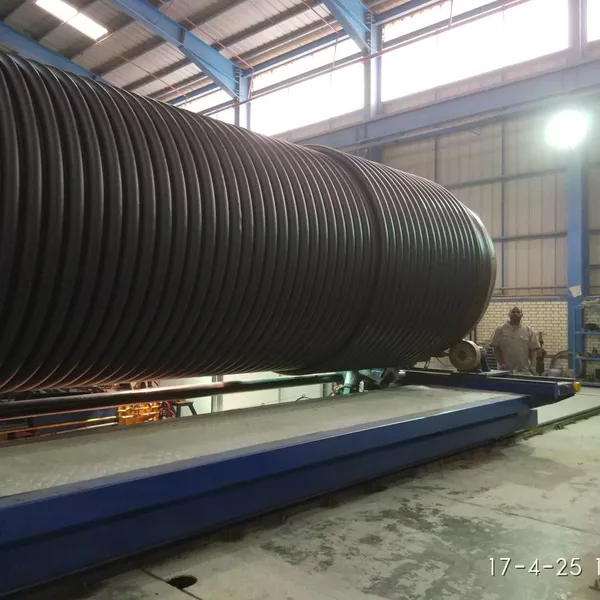 Read More
 -
HDPE vs PP Profile Strip: Choosing the Right Material for Spiral Pipe
August 26, 2026A procurement officer at a Middle Eastern utility once specified polypropylene for a drainage project because a competitor claimed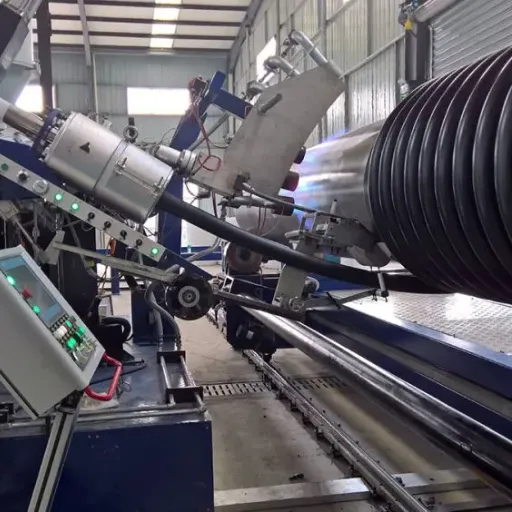 Read More

Contact Us
Recommended Products
-
 CIPP Glass Fibre Liner MachineNegotiableMOQ: 1 Set
 -
HDPE Helically Wound Tank MachineUS$ 10MOQ: 1 Set
-
CIPP Glass Liner MachineNegotiableMOQ: 1 Set
-
CIPP Felt Liner Manufacturing MachineNegotiableMOQ: 1 Set
-
Large Diameter HDPE Sea Intake Outfall Structured Wall Pipe Making MachineNegotiableMOQ: 1 Set
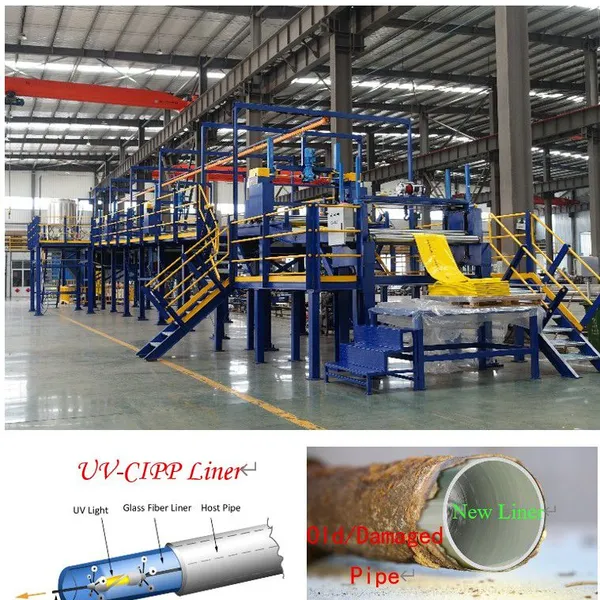
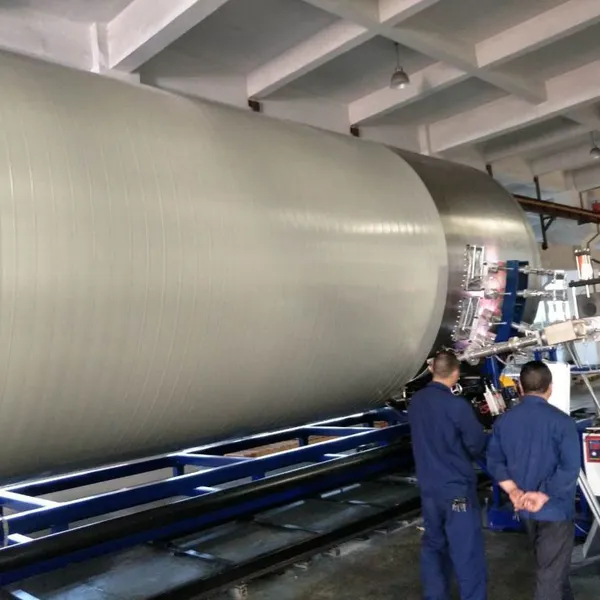
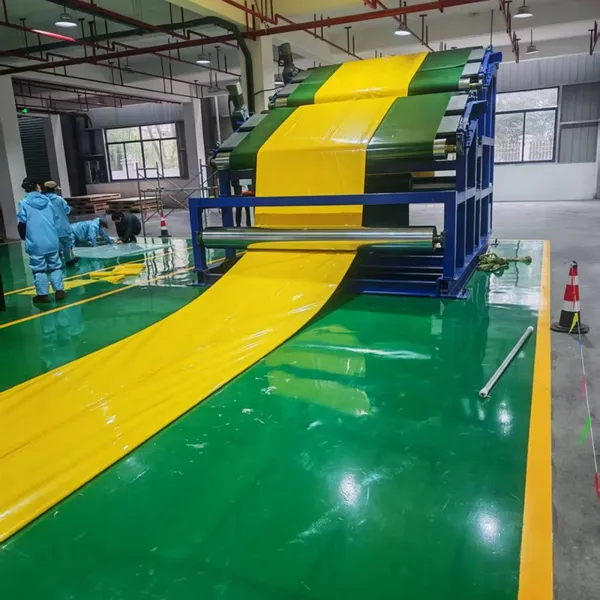
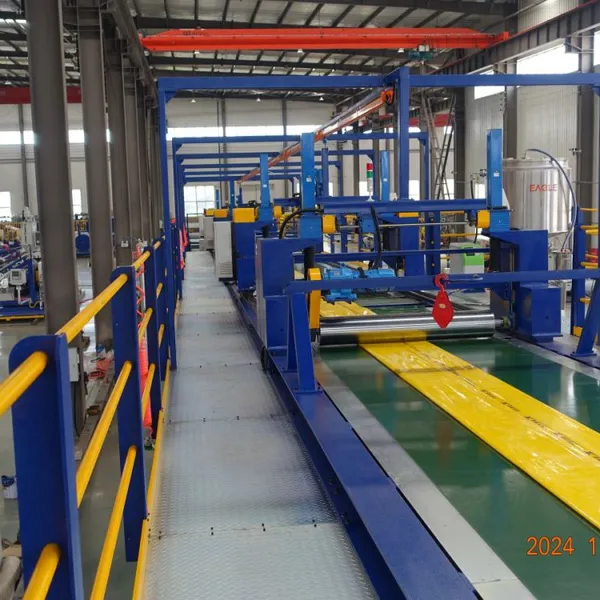
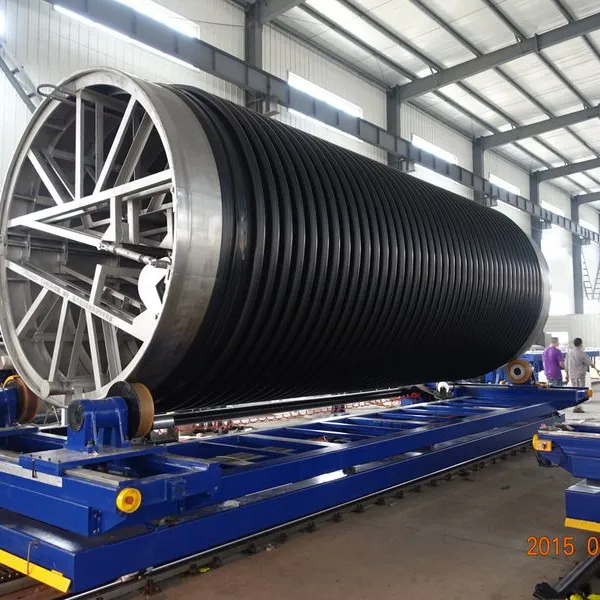
-
UV-CIPP Glass Fibre Liner Manufacturing MachineUS$ 1000 - 110000MOQ: 10 Meters
-
HDPE Pipe Extrusion Machine / PE Pipe Production Line With High OutputNegotiableMOQ: 1 Set
-
UV-CIPP Glass Fiber Liner Hose Production LineUS$ 1000 - 110000MOQ: 1 Set
-
HDPE Spiral Structure Wall Pipe MachineNegotiableMOQ: 1 Set
-
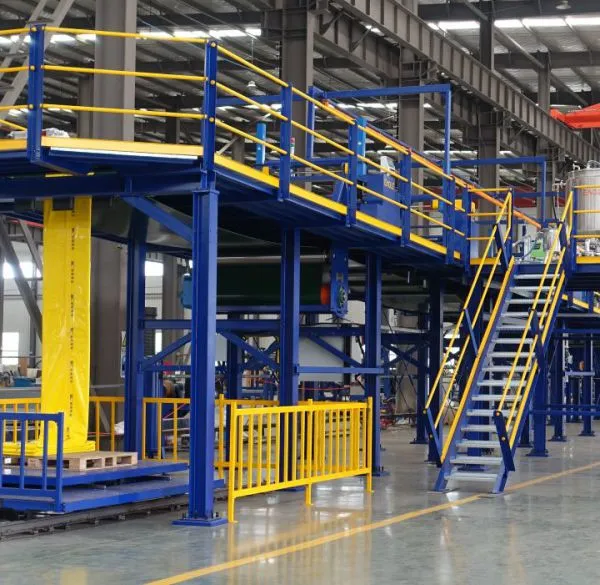
HDPE Spiral Pipe MachineNegotiableMOQ: 1 Set
-
HDPE Spiral Tank MachineNegotiableMOQ: 1 Set
-
Krah Pipe MachineNegotiableMOQ: 1 Set
-
Plastic HDPE PVC PPR Pipe Extrusion Making Machine Extrusion LineNegotiableMOQ: 1 Set
-
PVC Pipe Extrusion Production Line for Electrical Conduit and Water Supply PipesNegotiableMOQ: 1 Set
-
Hot Sell Single Wall Corrugated Pipe Extrusion Line With Competitive PriceNegotiableMOQ: 1 Set
-
HDPE Krah Profild Pipe MachineUS$ 10000MOQ: 1 Set
-
Plastic Tank CNC Holes Boring MachineUS$ 10000MOQ: 1 Set
-
Double Wall Corrugated Pipe Extrusion LineNegotiableMOQ: 1 Set
-
Single Wall Corrugated Pipe Extrusion LineNegotiableMOQ: 1 Set
-
Inversion CIPP Liner Tube Manufacturing MachineNegotiableMOQ: 1 Set