
 Business License
What Is CIPP Lining? A Complete Guide to Trenchless Pipe Rehabilitation
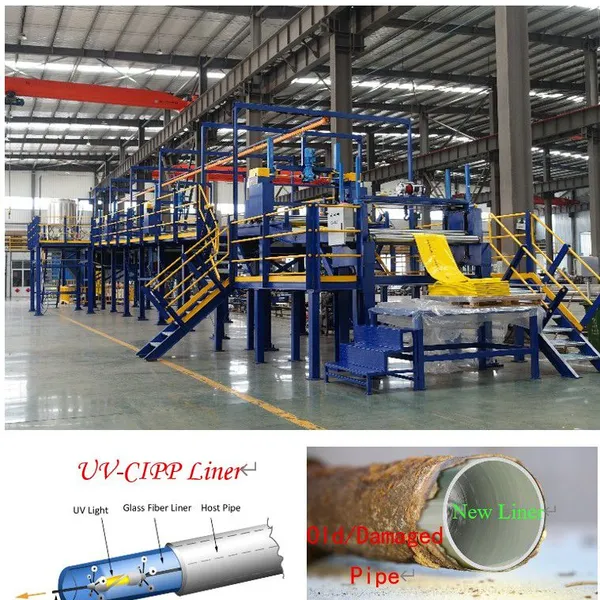
What is CIPP lining? Cured-In-Place Pipe (CIPP) lining is a trenchless rehabilitation method that creates a new, structural pipe inside an existing damaged pipe without excavation. A flexible liner tube, typically made of polyester felt or fiberglass fabric, is saturated with thermosetting resin and installed inside the host pipe. Once cured, the liner hardens into a seamless, corrosion-resistant pipe-within-a-pipe that restores structural integrity and flow capacity for 50 years or more.
Municipalities and industrial operators now face a difficult choice whenever an underground pipe fails. Open-cut replacement tears up streets, disrupts traffic, and inflates project budgets. CIPP lining offers a proven alternative.
According to industry estimates from NASSCO, trenchless rehabilitation can reduce project costs by 50-70% compared to traditional excavation while cutting installation time from weeks to days. At Qingdao Yongke Machinery, we have manufactured UV-CIPP liner hose manufacturing machines and inversion CIPP liner production equipment since 2010, supplying liner manufacturers across North America, Europe, Southeast Asia, and the Middle East.
In this guide, you will learn exactly how CIPP lining works. We will cover the main technologies contractors use, the materials that make up a CIPP liner, and where the method delivers the strongest return on investment. You will also see how pipe manufacturers can enter the growing CIPP equipment market.
Key Takeaways
CIPP lining installs a resin-saturated tube inside a damaged pipe and cures it into a structural new pipe, eliminating excavation.
The three main CIPP technologies are inversion CIPP (hot water/steam cured), UV-CIPP (ultraviolet light cured), and pull-in-place spot repair.
CIPP liners typically serve pipes from DN100 to DN3000+ and meet standards such as ASTM F1216 and EN ISO 11296.
A CIPP liner combines a fabric tube (polyester felt or fiberglass) with a thermosetting resin (polyester, epoxy, or vinyl ester).
Manufacturers entering the trenchless market can choose between UV-CIPP and inversion liner production lines based on capital, target diameter range, and regional demand.
What Is CIPP Lining?
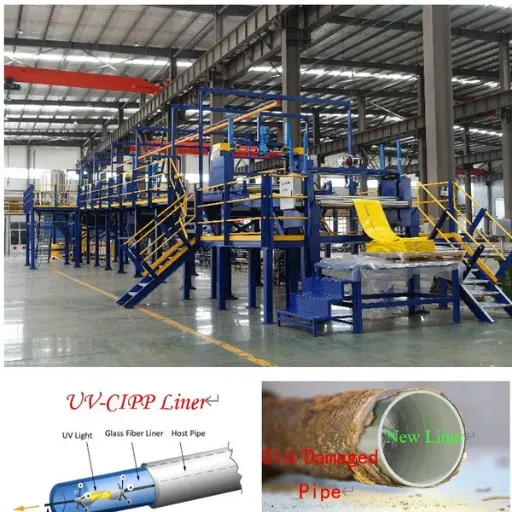
CIPP lining, short for Cured-In-Place Pipe lining, is a no-dig pipeline rehabilitation technology. Instead of removing and replacing an old sewer, drain, or industrial pipe, contractors install a new liner directly within the existing host pipe. The cured liner becomes a standalone structural pipe that carries internal pressure and external loads according to engineering design.
The concept emerged in the 1970s when British engineer Eric Wood developed the first inversion lining system to repair a cracked cast-iron pipe. Since then, CIPP has become the most widely used trenchless rehabilitation method worldwide. It now accounts for a significant share of all sewer rehabilitation work in Europe and North America, and adoption is accelerating in Asia, the Middle East, and Latin America as urban infrastructure ages.
The term "Cured-In-Place" describes the key transformation. The liner arrives at the job site flexible and saturated with uncured resin. During installation, technicians position the liner against the host pipe wall and apply energy in the form of heat, steam, or ultraviolet light. The resin polymerizes, hardening the liner into a rigid composite pipe that conforms precisely to the interior shape of the original pipe.
For municipal engineers, CIPP lining solves a persistent problem: how to renew aging underground infrastructure without shutting down city centers. For pipe manufacturers, it represents a fast-growing equipment market driven by global infrastructure investment and stricter environmental regulations.
How the CIPP Lining Process Works
A successful CIPP project follows a precise sequence. Each stage affects liner performance, so contractors and manufacturers must understand the full workflow.
Inspection and Cleaning
Every project begins with a CCTV camera inspection. The inspection identifies cracks, joint offsets, root intrusion, corrosion, and structural defects. It also confirms pipe diameter, length, and access points. Without accurate measurements, the liner may not fit or may bridge over damaged areas.
Cleaning follows inspection. High-pressure water jetting removes debris, grease, and roots. Mechanical cutters remove protruding lateral connections or severe encrustation. The host pipe does not need to be perfect, but it must provide a reasonably smooth surface so the liner contacts the wall along its full length.
In late 2023, a municipal crew in Manchester, UK, inspected a 150-meter brick sewer built in the 1890s. CCTV revealed multiple longitudinal cracks and leaking joints, yet the barrel was still round and structurally viable. After two days of high-pressure cleaning, the team confirmed that a 7mm CIPP liner would restore the pipe to full structural capacity without excavating the Victorian road surface above.
Liner Manufacturing and Impregnation
The liner tube is manufactured to the exact diameter and length required for the project. Tubes are typically sewn from polyester felt or woven from fiberglass fabric. Felt liners absorb resin easily and conform well to irregular pipe shapes. Fiberglass liners provide higher structural strength and are preferred for UV-CIPP applications because the fabric allows consistent UV penetration.
Resin impregnation, often called wet-out, saturates the tube with thermosetting resin. For inversion CIPP, technicians perform wet-out on site or at a nearby facility just before installation. The resin content typically targets 35-45% by weight of the final composite. For UV-CIPP, manufacturers pre-impregnate the liner under factory-controlled conditions, seal it in light-proof packaging, and ship it with a shelf life of 6-12 months.
Installation
Installation method depends on the CIPP technology selected.
Inversion CIPP: Technicians insert the liner into an access point and inflate it with water or air pressure. As the liner turns inside-out, the resin-coated side presses against the host pipe wall. The outer protective film faces inward, creating a smooth finished surface.
UV-CIPP: The pre-impregnated liner is pulled or inverted into position. Once in place, a robotic UV light train travels through the liner and cures the resin progressively. Curing completes in 1-3 hours regardless of pipe length.
Pull-in-Place: Technicians pull a short liner into position through a small access point and expand it with an inflatable packer. This method is common for spot repairs and short sections where full inversion is unnecessary.
Curing and Final Inspection
Curing converts the flexible liner into a rigid composite. Hot water or steam curing for inversion CIPP typically takes 4-12 hours depending on pipe diameter, wall thickness, and ground temperature. UV curing is faster and more predictable because the light train controls exposure precisely.
After curing, technicians conduct a post-installation CCTV inspection to verify liner placement, wall thickness, and absence of wrinkles or voids. Robotic cutters reopen service lateral connections. The rehabilitated pipe now functions as a composite structure: the host pipe provides external support, and the CIPP liner provides a new corrosion-resistant interior pipe.
Types of CIPP Lining Technology
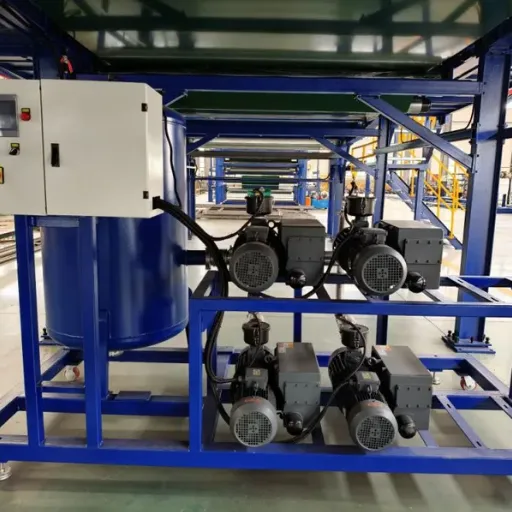
Contractors choose from three main CIPP technologies. Each requires different equipment, resin systems, and installation expertise.
Inversion CIPP
Inversion CIPP is the original and most widely deployed trenchless rehabilitation method. The liner inverts into the host pipe using water or air pressure, and curing occurs through circulated hot water or steam.
Advantages:
Proven performance with decades of installation data
Suitable for large diameters from DN600 to DN3000+
Lower equipment investment for manufacturers
Compatible with polyester, epoxy, and vinyl ester resins
Limitations:
Curing takes 4-12 hours, extending traffic control and crew time
On-site wet-out depends on weather and technician skill
Shelf life of 2-4 weeks limits inventory flexibility
Curing performance varies with host pipe temperature and groundwater
For manufacturers, inversion liner production requires felt or fiberglass tube-making equipment, a temperature-controlled wet-out facility, calibration tables, and packaging systems.
Our inversion CIPP liner hose machine produces liners compatible with established hot-water and steam-curing installation methods.
UV-CIPP Lining
UV-CIPP uses ultraviolet light rather than heat to cure the resin. The liner includes an inner transparent film that allows UV penetration while containing the resin and creating a smooth internal surface.
Advantages:
Curing completes in 1-3 hours, minimizing street closures
6-12 month uncured shelf life supports inventory and export logistics
Controlled curing independent of ambient temperature
Excellent for pipes with bends, transitions, and complex geometries
No water or steam equipment required at the installation site
Limitations:
Typically limited to DN150-DN1200 due to UV light penetration
Higher equipment investment for manufacturers
Requires UV-curable resin systems
Installers need training on UV light train operation
UV-CIPP manufacturing demands precise control over resin impregnation, film application, and diameter calibration.
Our UV-CIPP liner hose manufacturing machine produces liners meeting ASTM F1743 and EN ISO 11296 standards for UV-cured installations.
Pull-in-Place CIPP
Pull-in-Place (PIP) methods suit spot repairs, short sections, and pipes where inversion is impractical. Technicians pull the liner into position and expand it against the host pipe using an inflatable bladder or packer. Curing may use ambient temperature, heat, or UV light depending on the system.
PIP dominates the point repair market, where full sectional lining would be excessive. Equipment requirements differ from full-length liner production, typically involving shorter tubes and specialized inflation systems.
What Materials Go Into a CIPP Liner?
A CIPP liner is a composite material. Its mechanical properties depend on the combination of fabric tube, resin, and any coatings or reinforcement layers.
Fabric Tube
Polyester felt is the most common carrier material. It absorbs resin readily, conforms to irregular pipe shapes, and provides good structural properties at moderate cost. Felt liners are used for both inversion and UV-CIPP systems.
Fiberglass fabric offers higher stiffness and strength than felt. It is the preferred material for UV-CIPP liners because the open weave allows UV light to penetrate evenly through the liner wall. Fiberglass also enables thinner liner designs for the same structural capacity.
Resin Systems
The resin binds the fabric fibers together and provides the hardened matrix. Common resin types include:
Polyester resin: Lower cost, fast curing, widely used for inversion CIPP in municipal sewers
Epoxy resin: Higher chemical resistance and mechanical strength, common for industrial and potable water applications
Vinyl ester resin: Combines corrosion resistance with good mechanical properties, often used for aggressive environments
For UV-CIPP, the resin must include photoinitiators that trigger polymerization when exposed to UV light. These formulations are more specialized and typically more expensive than standard thermosetting resins.
Inner and Outer Films
Most CIPP liners include protective films. The outer film prevents resin loss during installation and creates a smooth internal surface. The inner film, used in UV-CIPP, must be transparent to UV light and strong enough to withstand installation pressure without tearing.
Where Is CIPP Lining Used?
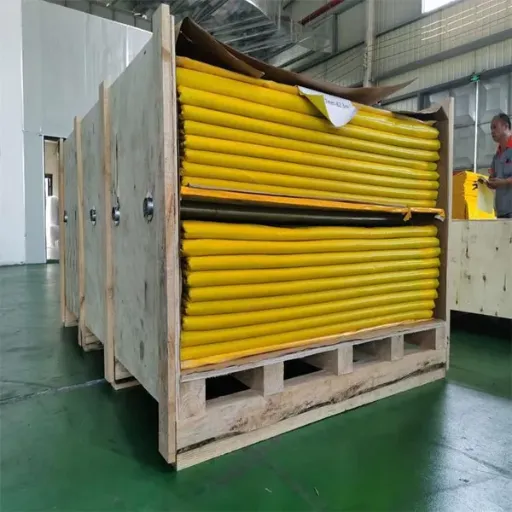
CIPP technology serves diverse infrastructure applications across a wide diameter range.
Municipal Sewer Networks
CIPP lining is most commonly used to rehabilitate gravity sewer mains, laterals, and interceptors. It seals cracks, restores structural capacity, and eliminates infiltration and inflow that overload wastewater treatment plants. Typical diameters range from DN150 house connections to DN2000+ trunk sewers.
Industrial Pipelines
Factories, refineries, and chemical plants use CIPP to rehabilitate process pipes, cooling water lines, and effluent pipes without shutting down production. Epoxy and vinyl ester liners provide chemical resistance for aggressive effluents.
Stormwater and Drainage Systems
Stormwater pipes suffer from abrasion, corrosion, and joint displacement. CIPP lining restores hydraulic capacity and prevents soil migration into the pipe. The smooth internal surface of a cured liner often improves flow capacity compared to the original rough pipe wall.
Culverts and Highway Drainage
Transportation agencies use CIPP to rehabilitate culverts under roads and railways where excavation would be prohibitively disruptive. Large-diameter inversion CIPP is often the only practical solution for these assets.
Why CIPP Lining Beats Open-Cut Replacement
The advantages of CIPP lining go far beyond avoiding excavation. They shape how municipalities and utilities plan rehabilitation programs.
Cost Reduction
Trenchless rehabilitation typically costs 50-70% less than open-cut replacement when accounting for excavation, pavement restoration, traffic control, and surface disruption. In dense urban environments, the savings can be even greater.
Faster Installation
A CIPP project often completes in a single day or overnight shift. Open-cut replacement can take weeks, especially when restoring roads, sidewalks, and landscaping.
Minimal Surface Disruption
CIPP requires only small access pits or existing manholes. Streets remain open, businesses stay accessible, and residents experience far less inconvenience.
Structural Performance
A properly designed CIPP liner acts as a fully structural pipe. It can be designed to withstand internal pressure, external soil loads, and traffic loads independently of the host pipe. Design life typically exceeds 50 years.
Limitations to Consider
CIPP lining is not suitable for every situation. Pipes with severe collapse, major deformation, or extensive missing sections may require spot repair or open-cut replacement first. The host pipe must also provide enough internal clearance for the liner to be installed.
CIPP Lining Equipment for Manufacturers
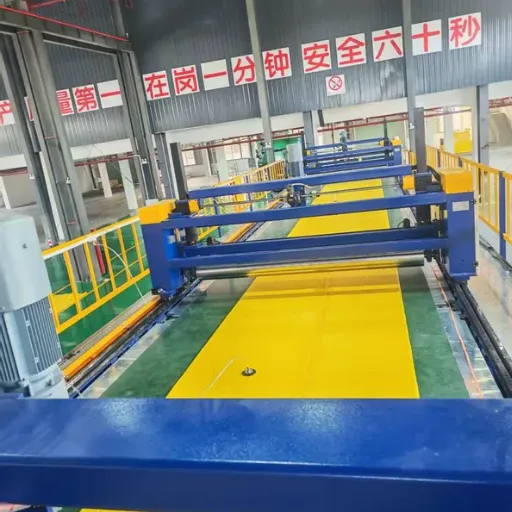
The growth of trenchless rehabilitation has created strong demand for CIPP liner manufacturing equipment. Pipe producers and liner suppliers can enter this market by investing in production lines that match regional demand. For manufacturers already producing new pipes, our HDPE/PP spiral profile pipe machine line offers a complementary path into large-diameter municipal infrastructure.
Choosing Between UV-CIPP and Inversion Equipment
The right equipment depends on your target customers and capital budget.
Choose UV-CIPP manufacturing if:
Your customers value speed and predictable curing
You plan to serve urban markets with complex pipe geometries
You can support higher initial equipment investment
You want long shelf life for inventory and export
Choose inversion CIPP manufacturing if:
You are entering the market with limited capital
Your region prefers established hot-water curing
You plan to target large-diameter applications
Your customers are price-sensitive municipal buyers
Complete Production Line Components
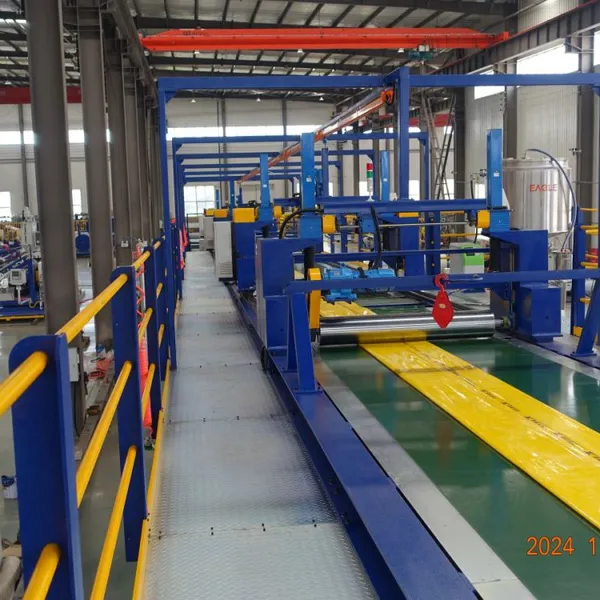
A CIPP liner production line typically includes:
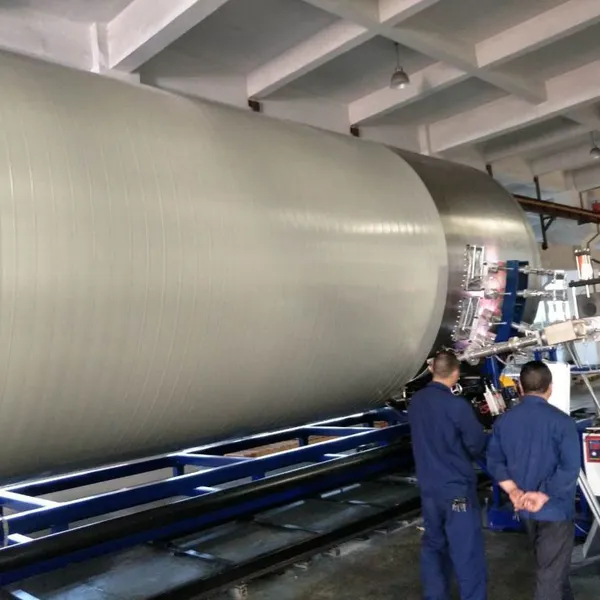
Tube forming equipment: Needle punching, weaving, or sewing machines to create felt or fiberglass tubes
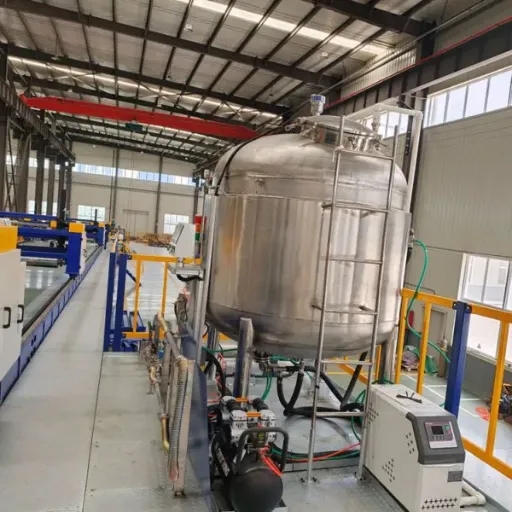
Resin impregnation system: Vacuum wet-out chamber, resin metering, and mixing equipment
Calibration systems: Diameter calibration mandrels and thickness control
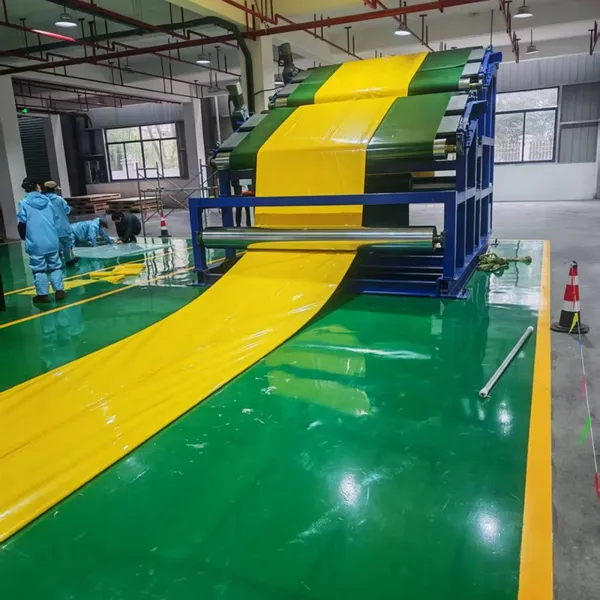
Film application equipment: For UV-CIPP, inner UV-transparent film extrusion or lamination
Packaging systems: Rolling, folding, and protective wrapping for transport
Quality control: Thickness measurement, resin content testing, and mechanical property verification
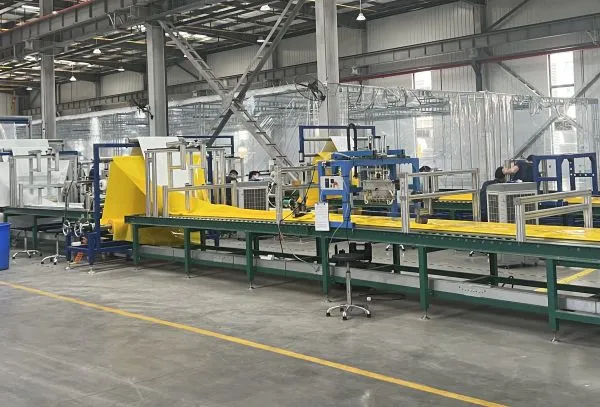
At Qingdao Yongke Machinery, we manufacture complete UV-CIPP liner hose manufacturing machines and inversion CIPP liner hose machines at our ISO 9001, ISO 14001, and ISO 45001 certified facility in Qingdao, China.
Our lines produce liners meeting ASTM F1216, ASTM F1743, and EN ISO 11296 standards.
Frequently Asked Questions About CIPP Lining
What does CIPP lining stand for?
CIPP stands for Cured-In-Place Pipe. It describes a trenchless rehabilitation method in which a flexible liner tube is saturated with resin, inserted into a damaged pipe, and cured to form a new structural pipe inside the existing host pipe.
How long does CIPP lining last?
A properly designed and installed CIPP liner typically has a design life of 50 years or more. The actual service life depends on resin selection, liner thickness, installation quality, and the chemical and mechanical environment inside the pipe.
What pipe diameters can CIPP lining repair?
CIPP lining can rehabilitate pipes from approximately DN100 for small laterals up to DN3000 or larger for major interceptors and culverts. UV-CIPP is most common in the DN150-DN1200 range, while inversion CIPP handles larger diameters.
Is CIPP lining safe for drinking water pipes?
Yes, when using liners and resins certified for potable water contact. Epoxy resins are commonly used for water main rehabilitation because of their high chemical resistance and low leaching potential. Always confirm compliance with local drinking water standards.
Can CIPP lining fix a collapsed pipe?
No. CIPP lining requires a host pipe that is structurally stable enough to contain the liner during installation. Severely collapsed or deformed pipes typically need spot repair, pipe bursting, or open-cut replacement before lining can be considered.
How much does CIPP lining cost compared to replacement?
CIPP lining typically costs 50-70% less than open-cut replacement, especially in urban areas. Savings come from avoiding excavation, pavement restoration, traffic control, and surface disruption. Actual project costs vary with diameter, length, access, and liner design.
Conclusion
CIPP lining has become the standard method for rehabilitating aging underground pipes without excavation. It creates a new structural pipe inside the existing host pipe, reduces project costs by 50-70%, and extends service life by 50 years or more. Whether you are a contractor evaluating repair options or a manufacturer asking what is CIPP lining and how it fits your equipment portfolio, understanding this technology helps you make informed decisions.
For pipe manufacturers, the growing global demand for trenchless rehabilitation presents a clear opportunity. UV-CIPP and inversion CIPP production lines each serve distinct market needs, and the right choice depends on your target customers, capital budget, and regional preferences.
If you are considering CIPP liner manufacturing equipment, contact our sales team to discuss your production targets.
Qingdao Yongke Machinery provides turnkey UV-CIPP and inversion CIPP liner production lines, complete with installation support, operator training, and spare parts availability.
Recently Posted
-
HDPE Pipe Standards: A Practical Guide for Engineers and Buyers
June 30, 2026A municipal contractor in Southeast Asia once accepted a shipment of HDPE pipe based only on a supplier's diameter claim. Six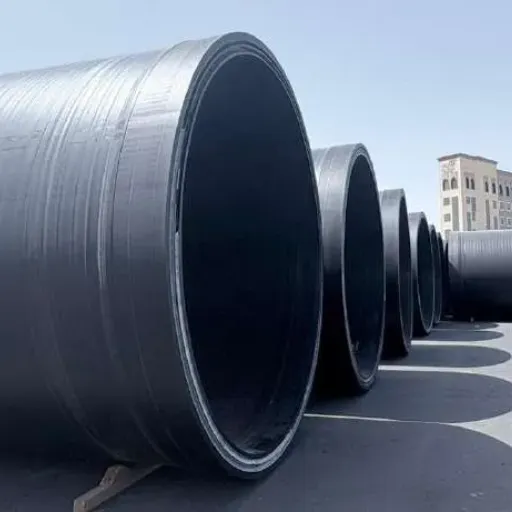 Read More
 -
Wastewater Collection System Design, Operation, and Renewal
June 30, 2026In late 2021, a coastal city in Southeast Asia discovered that its oldest wastewater collection system had been losing capacity fo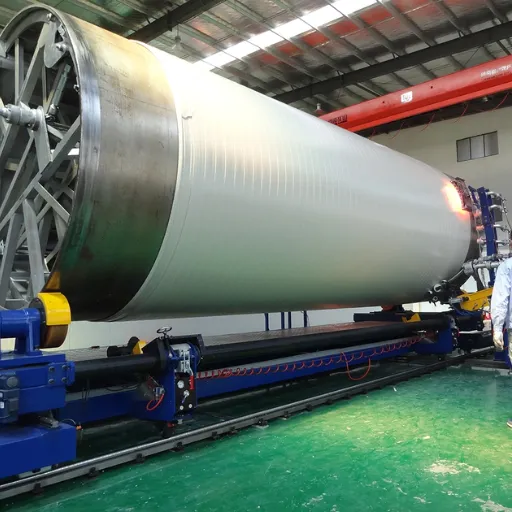 Read More
 -
Wastewater Infrastructure Design, Assessment, and Renewal
June 29, 2026In March 2023, a wastewater treatment plant serving 400,000 residents in Southern Europe suffered a cascade failure. A single inte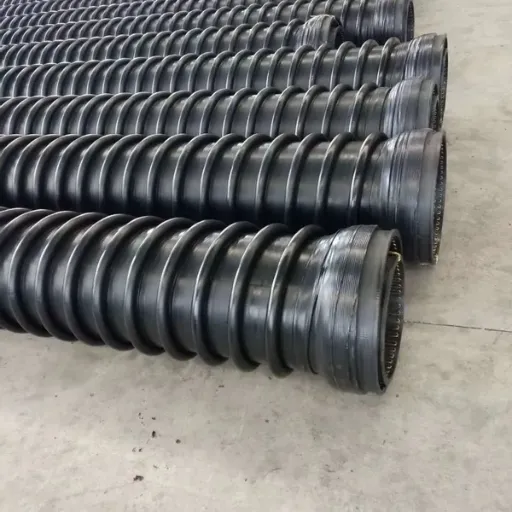 Read More
 -
Combined Sewer System Design, Operation, and Rehabilitation
June 29, 2026In August 2021, a single storm dropped 175mm of rain on a midwestern U.S. city in less than 36 hours. The city's aging combine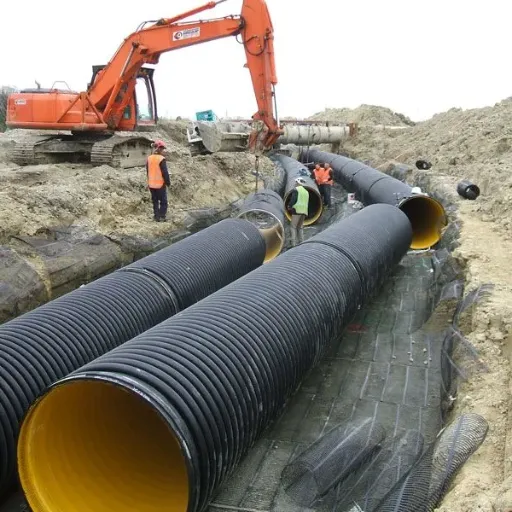 Read More

Contact Us
Recommended Products
-
 CIPP Glass Fibre Liner MachineNegotiableMOQ: 1 Set
 -
HDPE Helically Wound Tank MachineUS$ 10MOQ: 1 Set
-
CIPP Glass Liner MachineNegotiableMOQ: 1 Set
-
CIPP Felt Liner Manufacturing MachineNegotiableMOQ: 1 Set
-
Large Diameter HDPE Sea Intake Outfall Structured Wall Pipe Making MachineNegotiableMOQ: 1 Set
-
UV-CIPP Glass Fibre Liner Manufacturing MachineUS$ 1000 - 110000MOQ: 10 Meters
-
HDPE Pipe Extrusion Machine / PE Pipe Production Line With High OutputNegotiableMOQ: 1 Set
-
UV-CIPP Glass Fiber Liner Hose Production LineUS$ 1000 - 110000MOQ: 1 Set
-
HDPE Spiral Structure Wall Pipe MachineNegotiableMOQ: 1 Set
-
HDPE Spiral Pipe MachineNegotiableMOQ: 1 Set
-
HDPE Spiral Tank MachineNegotiableMOQ: 1 Set
-
Krah Pipe MachineNegotiableMOQ: 1 Set
-
Plastic HDPE PVC PPR Pipe Extrusion Making Machine Extrusion LineNegotiableMOQ: 1 Set
-
PVC Pipe Extrusion Production Line for Electrical Conduit and Water Supply PipesNegotiableMOQ: 1 Set
-
Hot Sell Single Wall Corrugated Pipe Extrusion Line With Competitive PriceNegotiableMOQ: 1 Set
-
HDPE Krah Profild Pipe MachineUS$ 10000MOQ: 1 Set
-
Plastic Tank CNC Holes Boring MachineUS$ 10000MOQ: 1 Set
-
Double Wall Corrugated Pipe Extrusion LineNegotiableMOQ: 1 Set
-
Single Wall Corrugated Pipe Extrusion LineNegotiableMOQ: 1 Set
-
Inversion CIPP Liner Tube Manufacturing MachineNegotiableMOQ: 1 Set