
 Business License
Underground Drainage System Design: An Engineer's Guide to HDPE/PP Pipe Solutions
A single storm in July 2023 dropped 180mm of rain on a mid-sized European city in 48 hours. The downtown drainage network, built mostly from aging concrete pipe, failed at six intersections. Basements flooded. Roads closed.
The municipal repair bill exceeded €2.3 million. The contractor's schedule slipped by four months.
That event is not unusual. Infrastructure managers worldwide face the same challenge. Underground drainage systems built decades ago cannot handle today's rainfall intensity, urban runoff, and stricter environmental discharge rules.
The pipe material and manufacturing method you choose will determine the system's service life, hydraulic capacity, and total installed cost. Whether you are designing a new network or replacing a failing one, these decisions matter for decades.
In this guide, we explain how modern underground drainage system design works, why HDPE and PP spiral profile pipes are increasingly specified for municipal projects, and how producing those pipes in-house can compress schedules and reduce procurement risk. Yongke Machinery has supplied large-diameter pipe production lines to contractors and pipe producers for more than 16 years, so the recommendations below reflect what we have seen work on real infrastructure projects.
What Is an Underground Drainage System?
An underground drainage system is a network of buried pipes, catch basins, manholes, and outfalls that collect and convey stormwater, groundwater, or wastewater away from roads, buildings, and public spaces. These systems protect foundations, prevent flooding, and maintain traffic safety during heavy rainfall events.
Modern underground drainage networks are rarely simple point-to-point pipelines. They typically include:
Collection points: street inlets, trench drains, and rooftop downspouts that gather surface water
Conveyance piping: the main pipeline that moves water to detention, treatment, or discharge points
Manholes and access structures: inspection and maintenance entry points, often spaced every 100–150 meters
Outfalls and energy dissipators: controlled discharge points into rivers, retention ponds, or sanitary sewer networks where permitted
Detention or infiltration features: tanks, swales, or permeable zones that slow peak flows
The underground drainage system is often invisible to the public, yet it determines whether a city keeps moving during a storm. Engineers must balance hydraulic performance, structural load capacity, chemical resistance, excavation cost, and long-term maintainability.
Engineering Note: When specifying pipe for an underground drainage system, always verify ring stiffness class (SN4, SN8, SN16), joint performance, and local backfill requirements before finalizing the bill of materials.
Why Underground Drainage Systems Are Under More Pressure Than Ever
Urbanization is changing the way rainfall behaves. Paved surfaces prevent natural infiltration, so a much larger percentage of rainfall becomes immediate runoff. At the same time, climate data shows that many regions are experiencing more intense short-duration rainfall events than historical design standards assumed.
Three trends are driving renewed investment in underground drainage infrastructure:
Aging networks: Large portions of municipal drainage pipe in North America, Europe, and Asia are more than 50 years old and reaching the end of their structural or hydraulic service life. According to the ASCE Infrastructure Report Card, many drainage systems receive below-average grades due to deferred maintenance.
Regulatory tightening: EPA stormwater management regulations, combined sewer overflow controls, and water-quality mandates require better capture, detention, and treatment of runoff.
Urban densification: New buildings and roadways reduce permeable area, increasing the volume of water that must be managed by the underground drainage system.
For contractors and procurement managers, these trends create both opportunity and risk. Projects are larger, but delays in pipe delivery can derail entire construction seasons. That is one reason why some municipalities and contractors are moving pipe manufacturing in-house.
Pipe Material Selection for Underground Drainage Systems
Choosing the right pipe material is one of the most consequential decisions in underground drainage system design. Each material has a distinct strength-to-weight ratio, corrosion resistance, jointing method, and availability profile.
Reinforced Concrete Pipe (RCP)
RCP has been used for more than a century and offers high structural strength and fire resistance. However, concrete is heavy, which increases transportation and installation cost. It is also susceptible to hydrogen sulfide corrosion in sanitary and combined systems, and joints can degrade over time.
Ductile Iron and Steel
Metal pipes provide excellent pressure capacity and are often used for force mains or deep burial conditions. They require corrosion protection, are expensive per meter, and are rarely the first choice for gravity stormwater drainage.
PVC and Corrugated Polyethylene
Smaller-diameter PVC and corrugated HDPE pipes are common for residential and light commercial drainage. They are lightweight and chemically resistant, but standard corrugated products are usually limited in diameter and ring stiffness for major municipal trunk lines.
HDPE/PP Spiral Profile Pipe
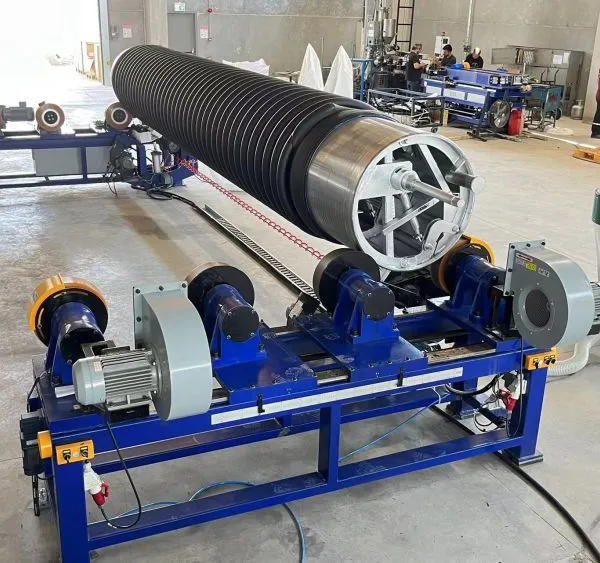
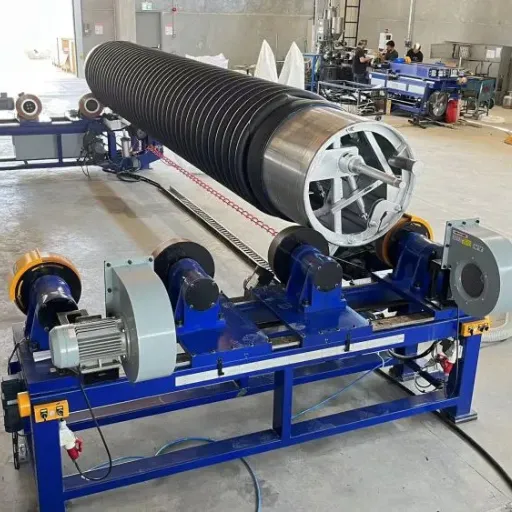
HDPE and PP spiral profile pipes combine the corrosion resistance of thermoplastics with a structural wall design that delivers high ring stiffness at large diameters. The pipe is manufactured by extruding a profile strip and spirally winding it onto a mandrel, then welding the overlaps to form a continuous structural wall.
Key advantages for an underground drainage system include:
Large diameter range: DN300mm to DN5000mm from a single production concept
Lightweight installation: often handled with smaller equipment than concrete
Corrosion resistance: HDPE and PP resist municipal wastewater, road salts, and soil chemistry
Leak-resistant joints: extrusion-welded or electrofusion joints reduce infiltration and exfiltration
Smooth interior: low Manning's roughness coefficient improves hydraulic capacity
For municipalities that need long service life and high flow capacity, HDPE/PP spiral profile pipe is becoming the default specification for trunk lines and large stormwater conduits. For help choosing between materials, see our comparison of HDPE vs PP spiral profile pipe.
How HDPE/PP Spiral Profile Pipe Works in an Underground Drainage System
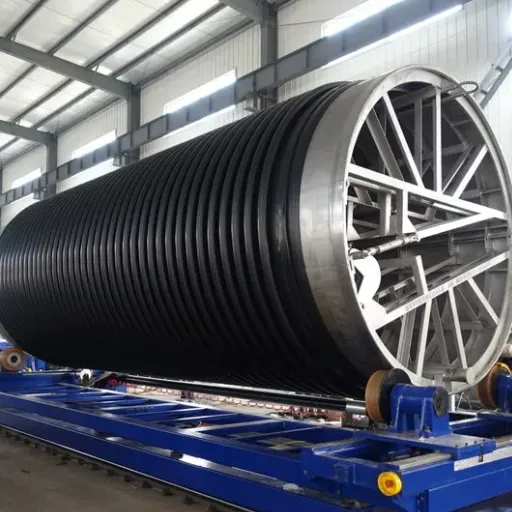
A spiral profile pipe is not a simple extruded tube. It has a structural wall made from a profiled strip that creates hollow chambers or ribs between the inner and outer walls. This geometry gives the pipe high ring stiffness without the weight of solid-wall pipe.
The manufacturing process works as follows:
Material preparation: HDPE or PP resin is dried and fed into a high-efficiency extruder.
Profile extrusion: the extruder forms a continuous profile strip with the designed rib or chamber shape.
Spiral winding: the strip is wound onto a rotating mandrel at a controlled angle and overlap.
Profile welding: each overlap is welded using hot-plate or extrusion welding to create a monolithic structural wall.
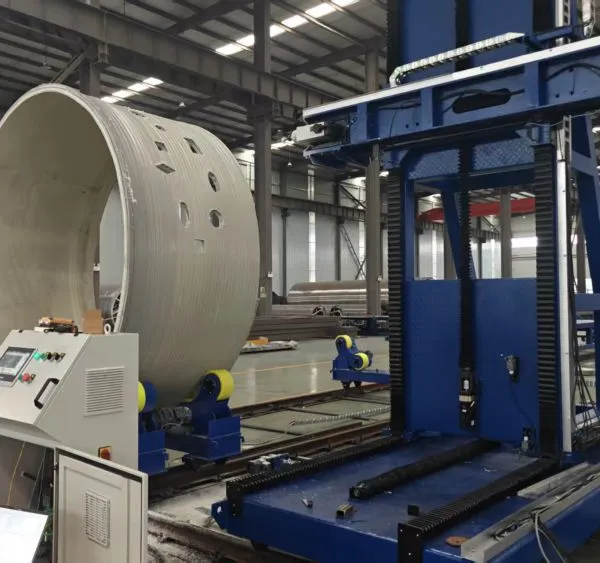
Cutting and finishing: the pipe is cut to length, and manhole or branch openings can be machined if required.
The result is a large-diameter pipe with predictable mechanical properties. Engineers can specify ring stiffness classes such as SN4, SN8, SN12.5, or SN16 depending on burial depth, traffic load, and soil conditions. You can read more about the fundamentals of this technology in our article on what is a Krah pipe and how it is manufactured.
Marcus, a project engineer in Southeast Asia, faced a failing DN1800mm concrete trunk line. His team replaced it with HDPE spiral profile pipe. The lighter, more flexible wall reduced trench width and backfill cost. The project opened to traffic two weeks ahead of schedule. During the next monsoon season, the municipality received fewer complaints about standing water.
Underground Drainage System Design Considerations
Designing an effective underground drainage system requires more than selecting a pipe size. Engineers must integrate hydrology, hydraulics, geotechnical conditions, maintenance access, and future expansion.
Hydrologic Modeling
The first step is estimating peak runoff. Engineers use rainfall intensity-duration-frequency (IDF) curves and hydrologic models such as the rational method or SWMM-based simulations. Climate-adjusted rainfall factors are increasingly required to account for more intense future storms.
Hydraulic Capacity
Once peak flow is known, the pipe diameter and slope must convey that flow without unacceptable surcharge. Spiral profile pipe's smooth interior helps here. A lower Manning's n-value means either a smaller diameter can carry the same flow, or the same diameter can carry more flow than a rougher alternative.
Structural Loading
An underground drainage system must support soil weight, traffic loads, and sometimes groundwater pressure. The required pipe stiffness depends on:
burial depth from pipe crown to finished grade
live load requirements (HS-20, HS-25, or aircraft loading near airports)
native soil modulus and compaction level
trench width and bedding type
Spiral profile pipe can be engineered to meet these loads by adjusting the profile geometry and wall thickness, rather than switching to a heavier material.
Maintenance and Access
Every underground drainage system needs inspection and cleaning access. Manhole spacing, pipe alignment, and sediment control features should match the maintenance equipment the municipality already owns. CCTV inspection compatibility is also important for long-term condition assessment.
Manufacturing Your Own Drainage Pipe: Why Contractors Are Investing In-House
Traditionally, contractors ordered pipe from external suppliers and scheduled installation around delivery dates. That model works until it doesn't. Long lead times, shipping damage, diameter shortages, and last-minute design changes can all push a project off schedule. For large-scale municipal drainage pipe manufacturing, that dependency creates risk.
Some forward-looking contractors and municipalities are solving this problem by installing their own HDPE/PP spiral profile pipe machine on-site or at a nearby production yard. On-site or local stormwater pipe production equipment offers several advantages for an underground drainage system project:
Schedule control: pipe is produced as needed, reducing stockpiling and double handling
Diameter flexibility: a single production line can switch between DN300mm and DN5000mm by changing mandrels
Reduced transport cost: producing pipe near the trench eliminates long-haul trucking of large-diameter products
Quality traceability: every pipe section can be documented for material grade, stiffness class, and weld integrity
Design adaptability: if field conditions require a diameter or length change, the production line can respond quickly
When a municipal contractor in Latin America faced a remote highway drainage project with poor road access, they set up a temporary spiral pipe production yard 15 kilometers from the alignment. They produced DN1200mm and DN1600mm pipe on demand, avoided shipping oversized pipe over mountain roads, and finished the job 30 days early.
That kind of operational flexibility is why large diameter plastic pipe manufacturing is becoming a strategic capability rather than just a procurement decision.
Standards and Quality Assurance for Underground Drainage Pipe
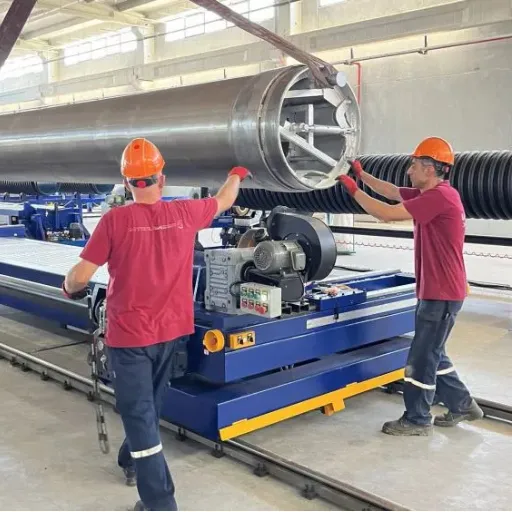
An underground drainage system is a long-term asset. The pipe specified must meet recognized standards for material quality, dimensional tolerance, and mechanical performance. This is especially critical in municipal drainage pipe manufacturing, where certification requirements are strict.
Material Standards
HDPE pipe resin for drainage applications is typically specified against standards such as ASTM D3350, which defines cell classification for density, melt index, slow crack growth resistance, and hydrostatic design basis. PP compounds have their own EN or ISO material classifications.
Product Standards
Spiral profile pipe can be tested and certified against regional standards including:
ASTM F894 for polyethylene profile wall pipe
EN 13476 for plastics piping systems with structured-wall pipes
ISO 21138 for structural wall piping systems
Local municipal or transportation department specifications
Quality Control During Manufacturing
A well-run pipe production line should monitor:
extruder temperature and output stability
profile dimensions and wall thickness
weld overlap and joint integrity
ring stiffness sample testing
pipe length and out-of-roundness
Yongke Machinery's HDPE/PP spiral profile pipe production lines include PLC-based control systems with data logging, so operators can maintain consistent production parameters and trace quality records back to each production run.
Comparing Spiral Profile Pipe to Corrugated Alternatives
Engineers often compare spiral profile pipe to double-wall corrugated pipe. Both are thermoplastic, both offer structural wall designs, and both are lighter than concrete. The differences usually matter on larger-diameter or high-load projects.
| Factor | Spiral Profile Pipe | Double-Wall Corrugated Pipe |
|---|---|---|
| Typical diameter range | DN300mm to DN5000mm | Often limited to smaller diameters in standard product lines |
| Manufacturing flexibility | Can be produced on-site with mobile line | Usually factory-made and shipped |
| Ring stiffness options | SN4 to SN16+ via profile design | SN4 to SN8 common; higher stiffness may require special designs |
| Joint methods | Extrusion welding, electrofusion, fittings | Gasketed bell-and-spigot common |
| Material options | HDPE and PP | Primarily HDPE or PP |
| Best fit | Large trunk lines, deep burial, custom lengths | Smaller collector lines, standardized lengths |
For the main conveyance lines of a municipal underground drainage system, spiral profile pipe often wins on diameter range, stiffness customization, and logistics. For contractors exploring large diameter plastic pipe manufacturing, the ability to produce on-site rather than ship pre-made sections is a decisive advantage. For smaller laterals, corrugated products may be more economical.
You can read a more detailed comparison in our article on spiral profile pipe vs double wall corrugated pipe.
Installation Best Practices for HDPE/PP Underground Drainage Systems
Even the best pipe will underperform if it is installed poorly. The following practices help ensure the underground drainage system reaches its design service life.
Trench Preparation
The trench bottom should be uniform, free of sharp objects, and properly graded. Bedding material should match the project specification, typically a compacted granular layer with a minimum 100mm thickness under the pipe.
Handling and Lowering
Spiral profile pipe is lighter than concrete, but large diameters still require appropriate lifting equipment. Slings should support the pipe evenly, and dropping or dragging should be avoided.
Jointing
Field joints must be made by trained operators. Extrusion welding is common for spiral profile pipe, producing a joint that is chemically and structurally continuous with the pipe wall. Proper joint preparation, including cleaning and preheating, is essential.
Backfill and Compaction
Sidefill should be placed in lifts and compacted to the specified density. Poor compaction reduces the pipe's effective soil support and can lead to deflection. Final backfill should be free of large rocks or debris that could damage the pipe coating.
Deflection Testing
After installation, mandrel or laser profiling tests confirm that the pipe has not been deformed beyond allowable limits. This step is especially important for flexible pipe systems.
Cost Drivers in Underground Drainage System Projects
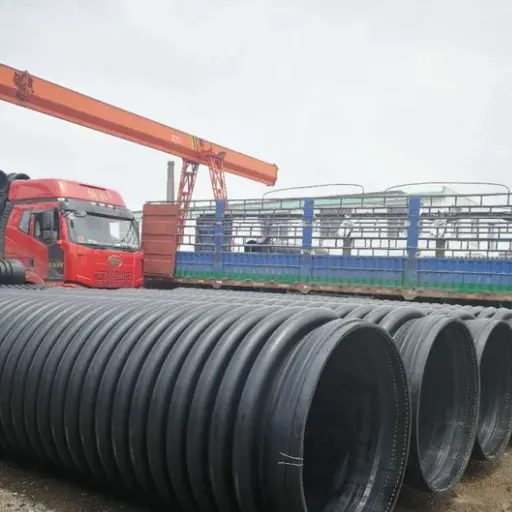
Budgeting for an underground drainage system involves more than the pipe price per meter. The total installed cost includes excavation, bedding, backfill, compaction, jointing, manholes, pavement restoration, and traffic management.
Pipe material choice affects several of these line items:
Pipe supply: material and manufacturing cost per meter
Transportation: weight, diameter, and shipping distance to site
Installation labor: handling difficulty and jointing time
Equipment: crane or excavator size needed for placement
Bedding and backfill: pipe stiffness and trench width requirements
Service life and maintenance: corrosion resistance and inspection interval
A pipe that looks cheaper on the material invoice can become the expensive choice if it requires heavier equipment, wider trenches, or frequent repairs. Lifecycle cost analysis often favors HDPE/PP spiral profile pipe for long-term municipal assets.
Environmental Benefits of Modern Underground Drainage Systems
Sustainable drainage design is no longer optional in many jurisdictions. Modern underground drainage systems are expected to reduce pollutant discharge, recharge groundwater where possible, and minimize the heat-island effect of impervious surfaces.
HDPE and PP pipes support these goals in several ways:
Long service life: 50- to 100-year design life reduces replacement frequency and embodied carbon from repeated construction
Recyclability: thermoplastic pipe can be recycled at end of life, unlike reinforced concrete
Leak control: welded joints reduce exfiltration of contaminated stormwater into surrounding soil
Lightweight logistics: lower transport emissions compared to precast concrete
Manufacturing efficiency: spiral profile construction uses material only where structural performance requires it
When a city in Northern Europe upgraded its downtown underground drainage system with HDPE spiral profile pipe, it also met stricter EU water-framework discharge standards because the smooth interior reduced sediment buildup and the welded joint network minimized leaks into the subsoil.
When to Consider an In-House Pipe Production Line
Not every contractor needs to manufacture pipe. But for organizations that repeatedly build large-diameter drainage networks, the economics of in-house production become compelling.
Consider investing in stormwater pipe production equipment for on-site or dedicated manufacturing if:
Your project pipeline includes more than 5,000 meters of large-diameter pipe per year
You frequently work in remote locations with difficult logistics
You need diameter flexibility across multiple projects
Your municipality or client values local supply and schedule certainty
You want to control material quality and certification documentation
Yongke Machinery supplies turnkey HDPE/PP spiral profile pipe production lines that include extruder, winding unit, welding station, cutting unit, mandrel set, and control system. We also provide installation supervision, commissioning, operator training, and after-sales support to bring the line to full production.
Ready to explore whether in-house pipe production fits your project pipeline? Request a customized quotation and our engineering team will review your target diameters, production volume, and material requirements.
Conclusion
An underground drainage system is one of the most important long-term investments a municipality or infrastructure owner can make. The pipe material and manufacturing strategy you choose will shape hydraulic performance, installation cost, maintenance burden, and environmental compliance for decades.
HDPE spiral profile pipe offers a proven combination of corrosion resistance, large-diameter capability, and structural stiffness that matches the demands of modern underground drainage design. For contractors and municipalities that want more control over supply, quality, and schedule, producing that pipe in-house with an integrated production line is an increasingly attractive option.
Key takeaways:
Urbanization and climate trends are increasing the load on underground drainage systems.
HDPE/PP spiral profile pipe provides DN300mm to DN5000mm capability with high stiffness and chemical resistance.
On-site or local pipe production can reduce logistics cost, compress schedules, and improve design flexibility.
Standards such as ASTM D3350, ASTM F894, and EN 13476 help ensure material and product quality.
Lifecycle cost, not just pipe price, should drive material selection.
If you are planning an underground drainage system project and want to evaluate production options, contact Yongke Machinery. Our team can help you select the right HDPE/PP spiral profile pipe machine configuration for your underground drainage system requirements.
Recently Posted
-
Qingdao Yongke Machinery: Full-Category Spiral Pipe Equipment from China's Qingdao
September 1, 2026Choosing a machinery supplier for large-diameter plastic pipe production is a long-term decision, because the line you install wil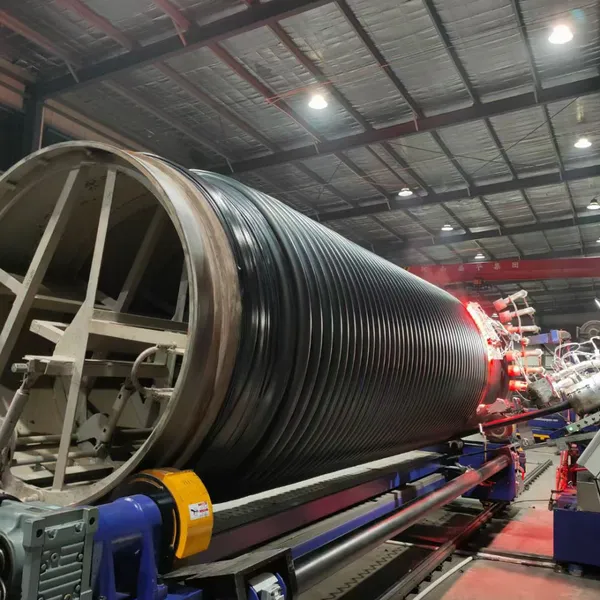 Read More
 -
Quality Control in Spiral Pipe Machine Manufacturing
August 31, 2026A buyer in South America some time ago received a winding line that looked complete on the surface but suffered repeated seam defe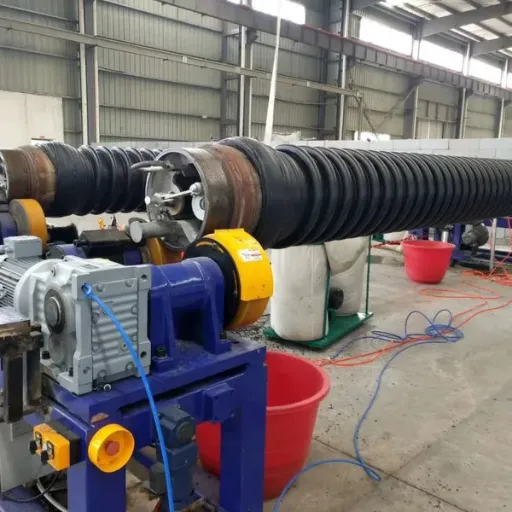 Read More
 -
Spiral Pipe for Sewage and Drainage Networks: Production Notes
August 28, 2026A municipal contractor in Eastern Europe some time ago took delivery of spiral-wound sewer pipe that looked flawless on the line.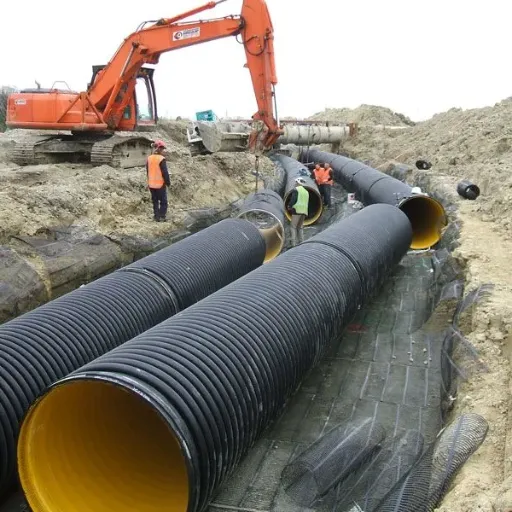 Read More
 -
DN300 to DN5000: Diameter Range and Machine Configuration
August 27, 2026A plant owner in Central Asia once asked for a line "up to DN5000" because a future tender mentioned large storage tanks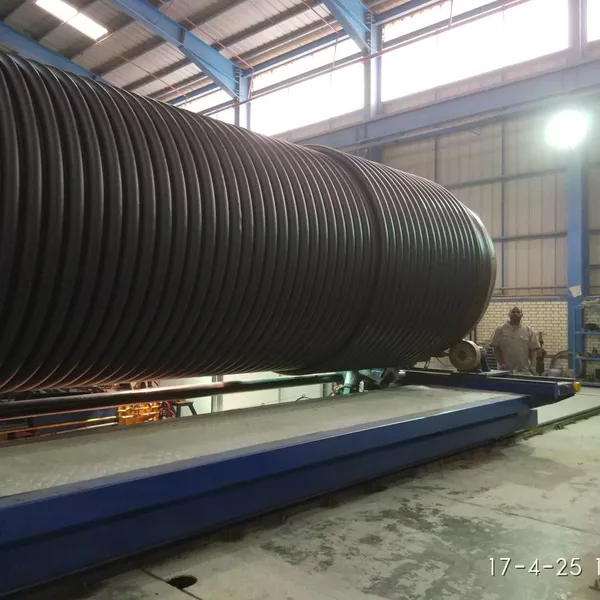 Read More

Contact Us
Recommended Products
-
 CIPP Glass Fibre Liner MachineNegotiableMOQ: 1 Set
 -
HDPE Helically Wound Tank MachineUS$ 10MOQ: 1 Set
-
CIPP Glass Liner MachineNegotiableMOQ: 1 Set
-
CIPP Felt Liner Manufacturing MachineNegotiableMOQ: 1 Set
-
Large Diameter HDPE Sea Intake Outfall Structured Wall Pipe Making MachineNegotiableMOQ: 1 Set
-
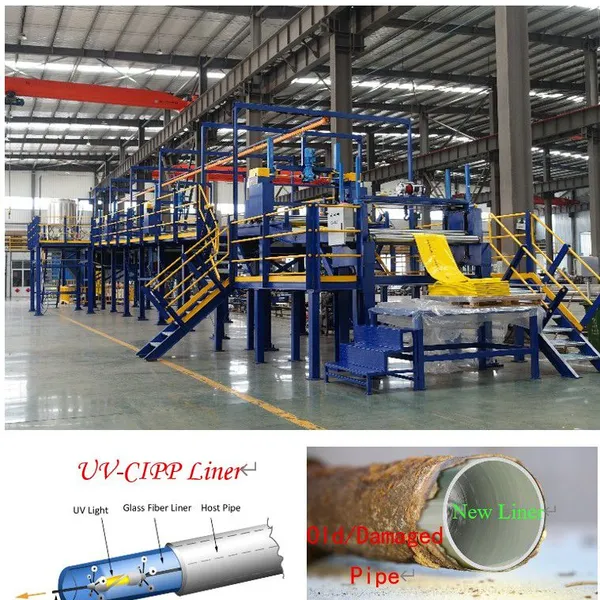
UV-CIPP Glass Fibre Liner Manufacturing MachineUS$ 1000 - 110000MOQ: 10 Meters
-
HDPE Pipe Extrusion Machine / PE Pipe Production Line With High OutputNegotiableMOQ: 1 Set
-
UV-CIPP Glass Fiber Liner Hose Production LineUS$ 1000 - 110000MOQ: 1 Set
-
HDPE Spiral Structure Wall Pipe MachineNegotiableMOQ: 1 Set
-
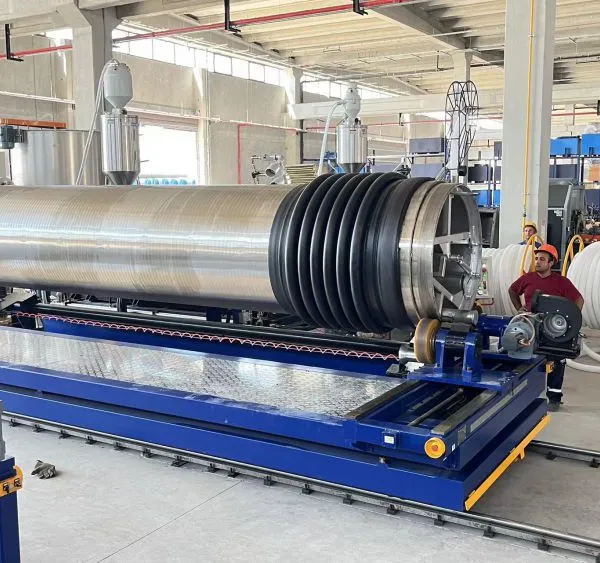
HDPE Spiral Pipe MachineNegotiableMOQ: 1 Set
-
HDPE Spiral Tank MachineNegotiableMOQ: 1 Set
-
Krah Pipe MachineNegotiableMOQ: 1 Set
-
Plastic HDPE PVC PPR Pipe Extrusion Making Machine Extrusion LineNegotiableMOQ: 1 Set
-
PVC Pipe Extrusion Production Line for Electrical Conduit and Water Supply PipesNegotiableMOQ: 1 Set
-
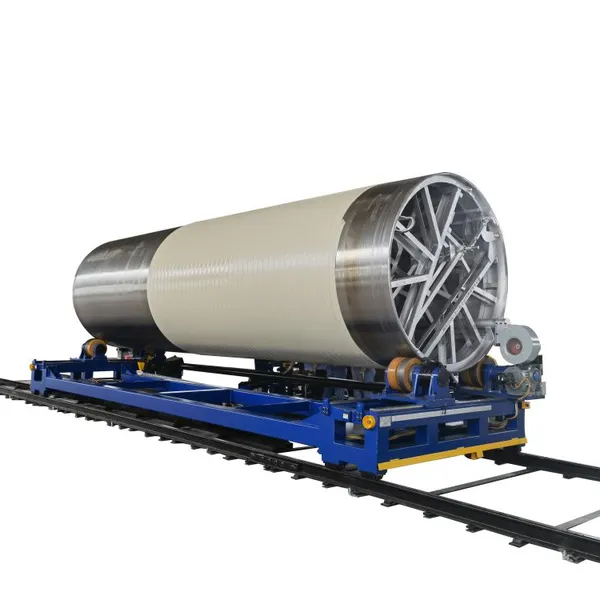
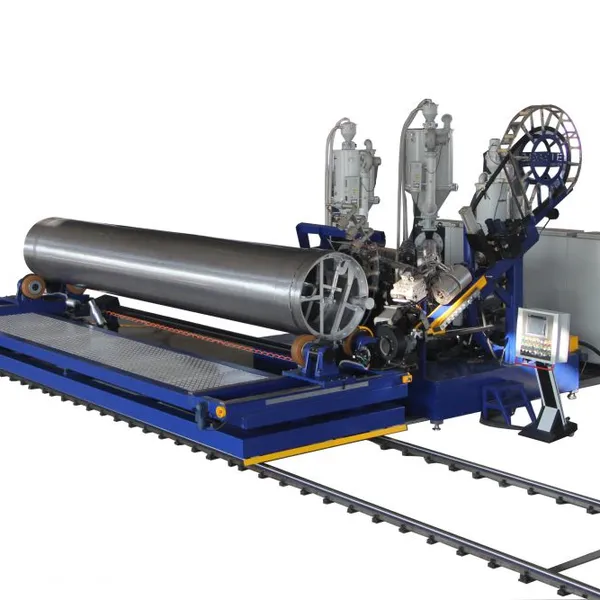
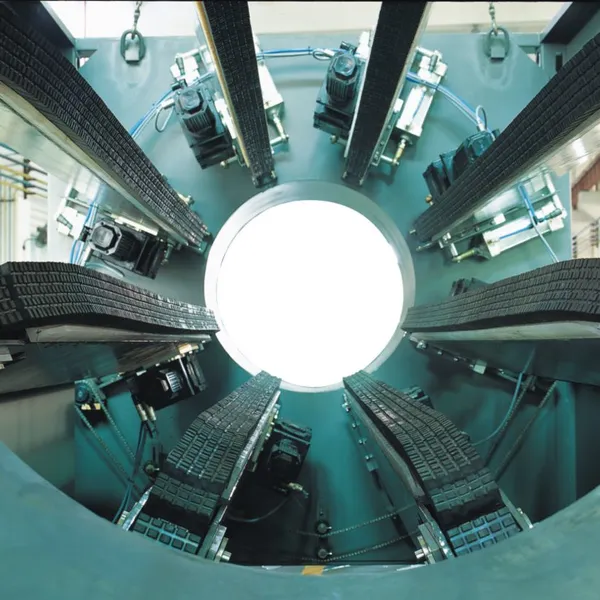
Hot Sell Single Wall Corrugated Pipe Extrusion Line With Competitive PriceNegotiableMOQ: 1 Set
-
HDPE Krah Profild Pipe MachineUS$ 10000MOQ: 1 Set
-
Plastic Tank CNC Holes Boring MachineUS$ 10000MOQ: 1 Set
-
Double Wall Corrugated Pipe Extrusion LineNegotiableMOQ: 1 Set
-
Single Wall Corrugated Pipe Extrusion LineNegotiableMOQ: 1 Set
-
Inversion CIPP Liner Tube Manufacturing MachineNegotiableMOQ: 1 Set