
 Business License
Producing HDPE Spiral Pipe for Municipal Water Supply
A municipal utility in North Africa once commissioned a water main using concrete pipe laid through corrosive soil. Within roughly eight years the lining had failed in sections and required repeated emergency work.
The utility faced repeated bursts during peak demand that disrupted supply to thousands of households. When it re-tendered the replacement, the specification called for HDPE spiral pipe produced on a modern winding line.
The episode captures why more water authorities now specify spiral-wound HDPE for conveyance and storage. This article looks at how a spiral profile pipe machine supports municipal water supply production and what operators should watch on the floor.
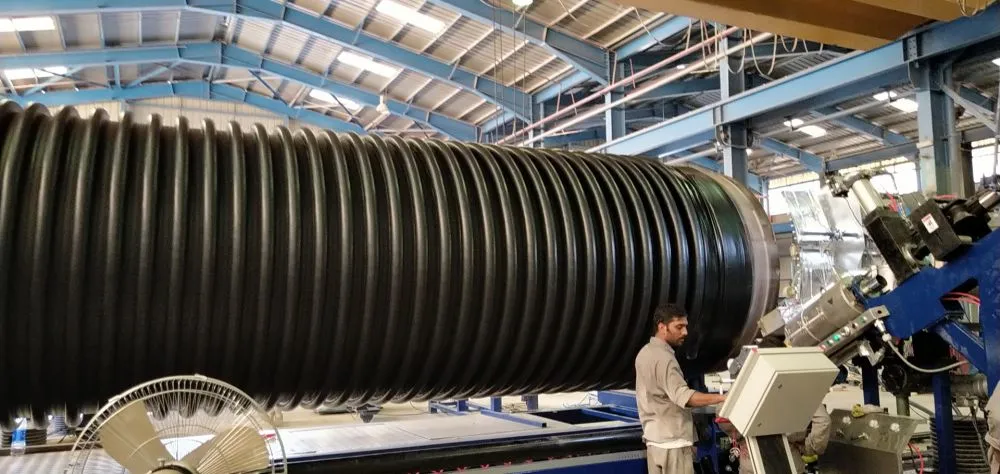
1. Why Water Authorities Choose Spiral HDPE
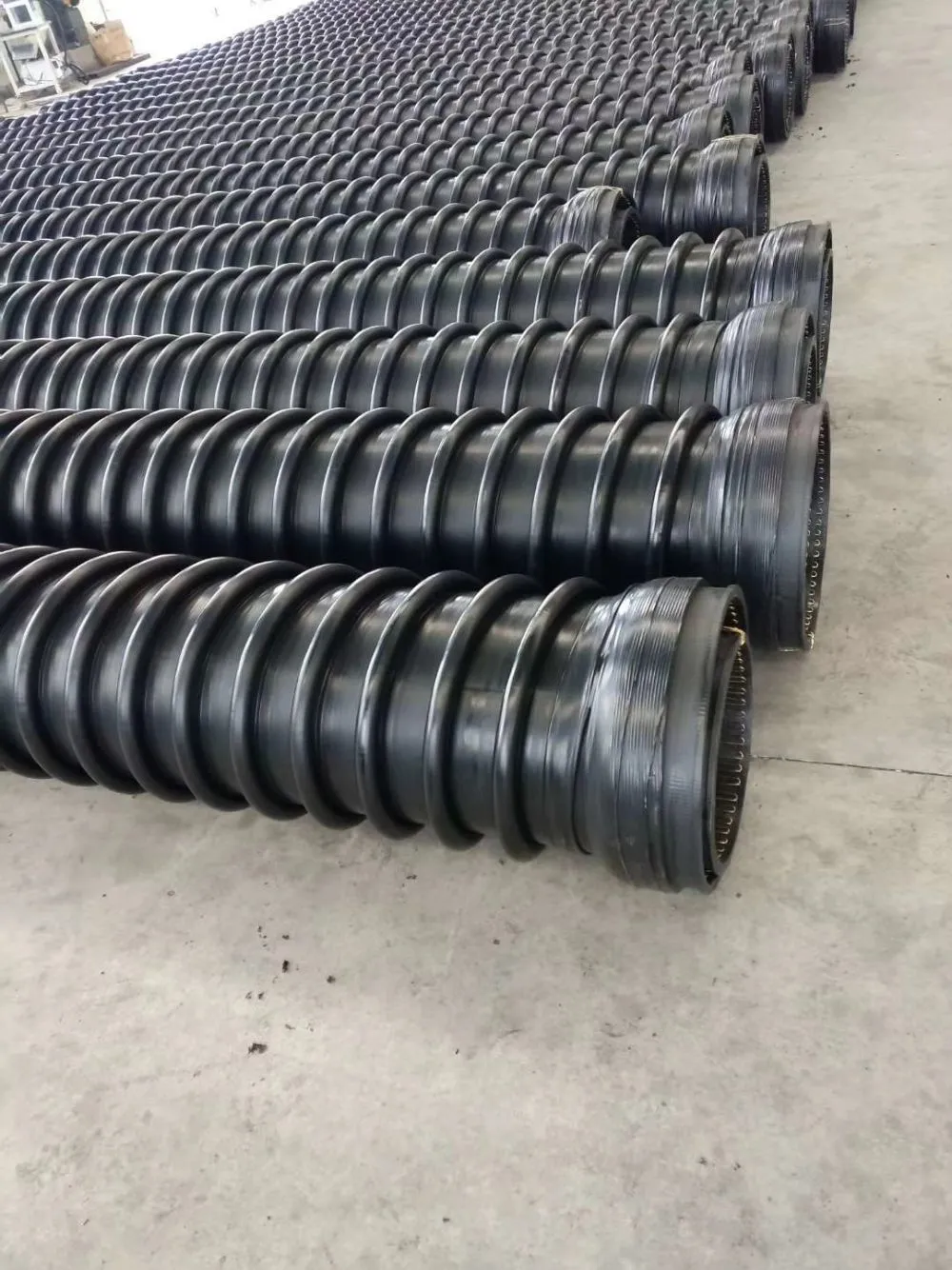
HDPE resists the corrosion that destroys metal and concrete in aggressive soils, which extends service life for buried water mains far beyond traditional materials. Its smooth inner wall keeps friction low, so pumping energy stays manageable across long conveyance runs that would otherwise dominate operating cost.
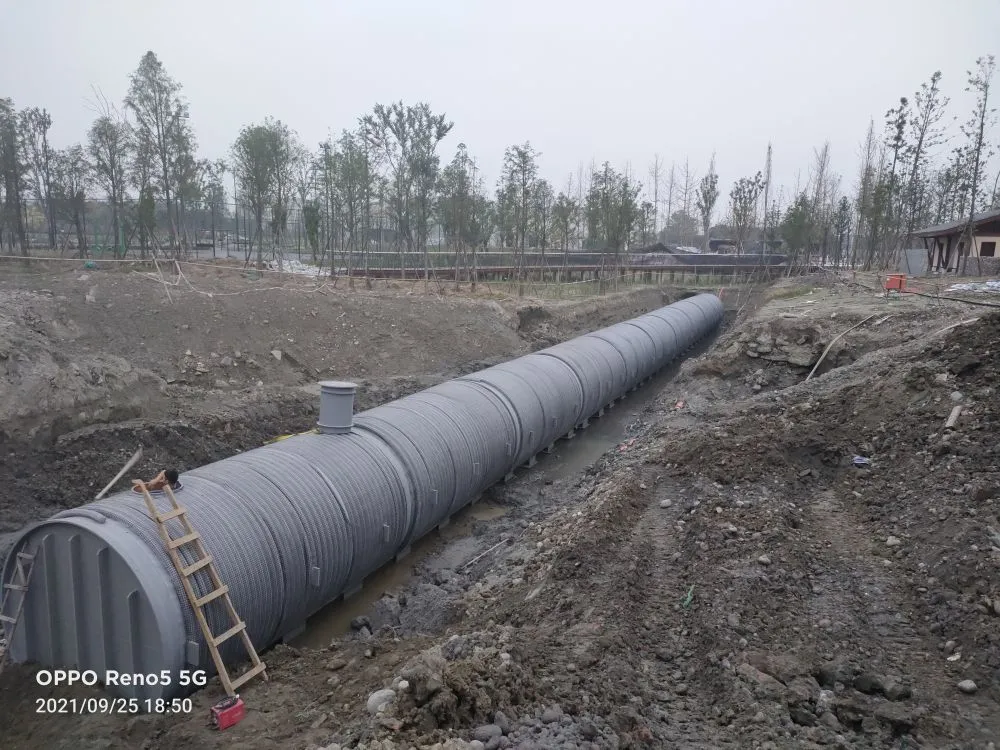
These traits make it a practical choice where the ground chemistry is unkind to traditional materials and where lifetime cost matters more than first price. Spiral construction adds a structural wall without solid thickness, so large diameters stay light enough to handle and install with modest equipment.
Qingdao Yongke Machinery builds lines that serve DN300 up to DN5000, covering both distribution mains and large interceptor-scale conveyance from one machine family. Authorities also value joint integrity, because leaks in a water main are not just lost revenue but a public-health concern.
Properly fused spiral pipe forms continuous runs that limit infiltration and exfiltration, protecting water quality in transit. Local approvals for contact with potable water vary by region, so confirm the applicable standard and any listing before you supply a project.
2. Matching Machine Output to Demand
Water supply projects span a wide diameter range, so the production line must match the contract mix rather than a generic catalog figure. A distribution network may need mostly DN400-DN800, while a trunk conveyance order could call for DN2000 and above within the same program.
The table below shows typical project bands and where they sit in the machine's working range.
| Project type | Typical diameter | Wall focus |
|---|---|---|
| Local distribution | DN300-DN800 | Single wall |
| District trunk | DN900-DN1800 | Single or double |
| Regional conveyance | DN2000-DN4000 | Double wall |
Our team recommends sizing the line to the dominant band rather than the occasional peak, because tooling for the peak sits idle most of the year. A focused band keeps output realistic and tooling cost contained within the budget.
Yongke Machinery documents capacity per diameter so utilities and their producers can verify supply before tendering. Producers serving several authorities should still plan for the largest recurring diameter in their region rather than the largest single bid.
3. Material and Fusion Considerations
For water conveyance, HDPE grade selection matters because the resin sets long-term strength under pressure and against slow crack growth. The profile strip must weld cleanly at the seam so the pipe wall performs as one continuous structure rather than a stack of coils.
Winding angle and fusion temperature are the two variables operators tune most on the floor. The company builds lines with closed-loop temperature control at the fusion zone, which keeps seam quality steady across a shift instead of drifting as the heater warms.
Stable control is especially important for water pipe, where a weak seam can become a leak path under pressure that is expensive to excavate and repair. Buyers should confirm the resin grade their local standards expect for the pressure class involved.
Request a fusion-quality record from trial runs before committing volume production, because that record also supports any approvals process the authority requires for the installed main and shortens the audit later.
4. Hydraulic and Pressure Performance
Smooth-walled HDPE keeps the flow coefficient high, meaning more flow for less energy pumped through the system over its lifetime. For pressurized water mains, wall stiffness and joint design carry the operating pressure rather than raw thickness alone, which is where profile engineering helps.
Spiral profile engineering lets the pipe meet stiffness classes without becoming heavy and unwieldy on the truck. Practical operating pressures for buried water mains typically sit in the low-to-moderate range, and spiral HDPE handles these with margin when specified correctly by a competent designer.
Qingdao Yongke Machinery sizes profiles to the required stiffness class so the installed pipe performs as designed under soil load and internal pressure. Operators should still verify each diameter's rated performance against the project specification before production begins.
Pressure rating varies with wall design, so a single generic number from a brochure is never sufficient for a water authority's tender and will be rejected at review.
5. Installation and Jointing in the Field
Spiral HDPE pipe is lighter than concrete, which reduces crane and crew size during laying and shortens the trench-side window. Field joints use thermal fusion or configured couplers depending on the system, and trained crews can close long runs quickly once the method is established.
The table below compares handling factors that drive the contractor's installed cost on a typical municipal job.
| Factor | Spiral HDPE | Concrete (typical) |
|---|---|---|
| Weight per meter | Low | High |
| Crew size | Smaller | Larger |
| Corrosion need | Minimal | Lining required |
| Joint method | Fusion or coupler | Gasket or pour |
Our team notes that lighter pipe also lowers transport cost from the production hall to the trench, which matters on remote rural schemes. Yongke Machinery ships lines that produce pipe in lengths suited to standard truck loading, which streamlines the logistics chain for municipal contractors.
Crew training in the chosen jointing method remains essential, because even a light pipe fails if its seams are poorly made on site by an unprepared team.
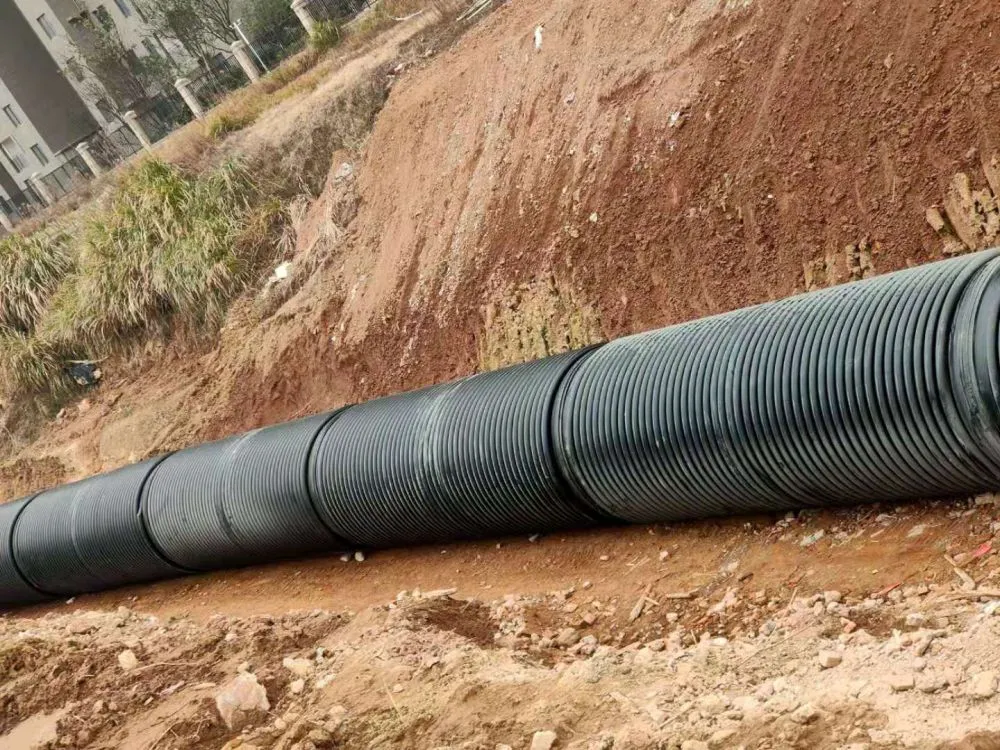
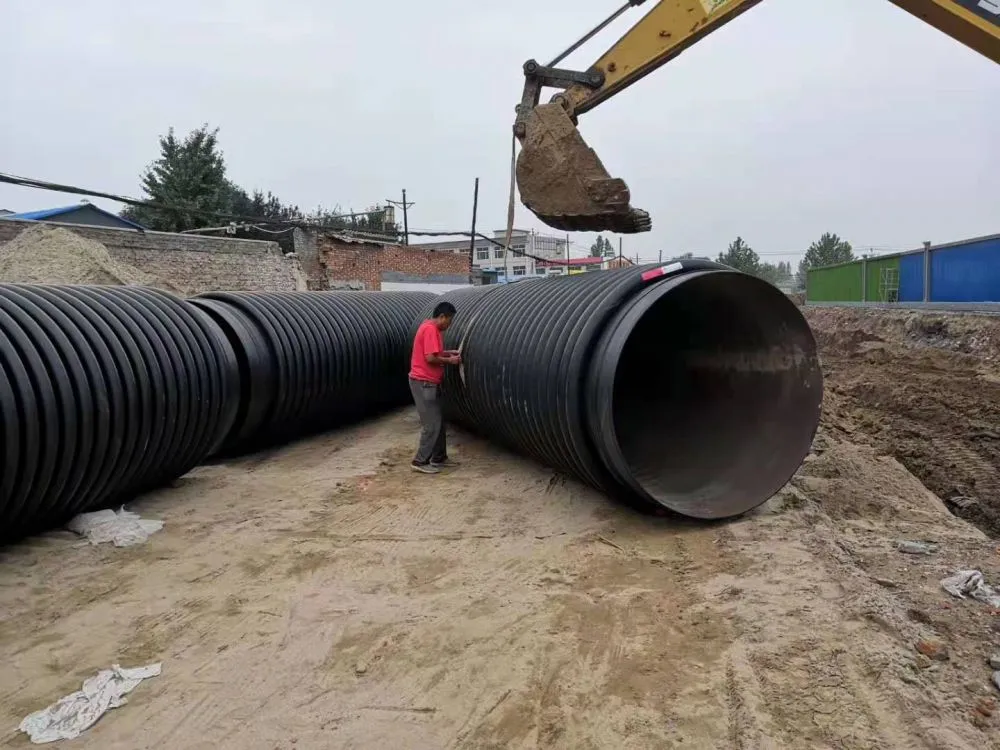
6. Quality Checks During Production
Water pipe demands disciplined quality control, more so than drainage, because the consequence of failure reaches consumers directly. Beyond seam fusion, producers check wall thickness at the profile, ring stiffness by sample, and dimensional accuracy at cut ends against the drawing.
A logging control system makes these checks repeatable and auditable rather than dependent on the operator's mood. The company equips its lines with PLC monitoring that records temperature and speed, so a deviation is caught before it becomes scrap that has already been paid for.
Qingdao Yongke Machinery also runs pre-shipment checks on the line itself so the producer starts with a calibrated machine rather than one that drifts from day one. Utilities increasingly ask for a production data trail, and a well-instrumented line supplies it without extra paperwork or manual logs.
Sampling frequency should follow the authority's specification rather than a generic default, since water mains carry a higher consequence of failure than a storm drain does.
7. Case: Regional Water Trunk on a DN1800 Line
Some time ago a utility in Southern Europe needed a DN1800 trunk to link a treatment outlet to a storage reservoir roughly twelve kilometers away. The contractor ran the pipe on a spiral profile line configured for double-wall profiles suited to the burial depth.
The line produced sections that arrived at the trench ready to fuse, with consistent wall readings across the order. The lighter weight cut crane time noticeably compared with the concrete alternative the utility had used on an earlier phase of the same program.
Commissioning recorded steady fusion quality across the order, and the smooth inner wall met the hydraulic target without upsizing the pump station that fed the line. The project closed within its handling budget and avoided the usual trench-side delays.
The producer later reused the same line for a DN1200 distribution order by swapping mandrel sections in a single shift. That flexibility is why the plant chose a winding line over a fixed-die extruder for mixed-diameter water work that spanned several contract sizes.
8. Case: Island Supply Main Replacing Corroded Steel
A few years back an island municipality replaced a corroded steel water main that had burst repeatedly in salty soil near the coast. The replacement specification called for HDPE spiral pipe in DN600 and DN900 sizes to resist the same environment that killed the steel.
The local producer ran both diameters on one modular line, shifting mandrel and winding settings between orders without new tooling or a long changeover. Because HDPE shrugs off the saline environment, the utility expected a far longer life than the steel it retired at considerable cost.
Installation crews finished the smaller diameter sections in roughly half the crane time they had budgeted for the old material, freeing equipment for other works. The producer reported stable output and minimal start-up scrap after the line's commissioning support wrapped up.
The supplier included that commissioning as part of delivery, which helped the new crew reach consistent seam quality during the first production runs rather than after a costly learning period that would have delayed the utility's supply restoration.
9. Planning Your Water-Supply Production
If you intend to serve water authorities, plan the line around your region's dominant diameters and the stiffness classes its standards require before you order steel for the mandrel. Confirm resin grade, request fusion records, and budget for jointing training in the field so the pipe performs once buried.
The table below summarizes the planning inputs that determine whether the investment pays back on schedule.
| Planning input | Action |
|---|---|
| Diameter mix | Size line to dominant band |
| Stiffness class | Select profile accordingly |
| Resin grade | Match local standard |
| Jointing method | Train crew in fusion or coupler |
Qingdao Yongke Machinery supports this planning with capacity estimates and on-site commissioning so the producer reaches stable water-pipe output quickly rather than through a long, scrap-heavy trial. Producers new to the sector should also build a relationship with a local testing lab for periodic verification that authorities trust.
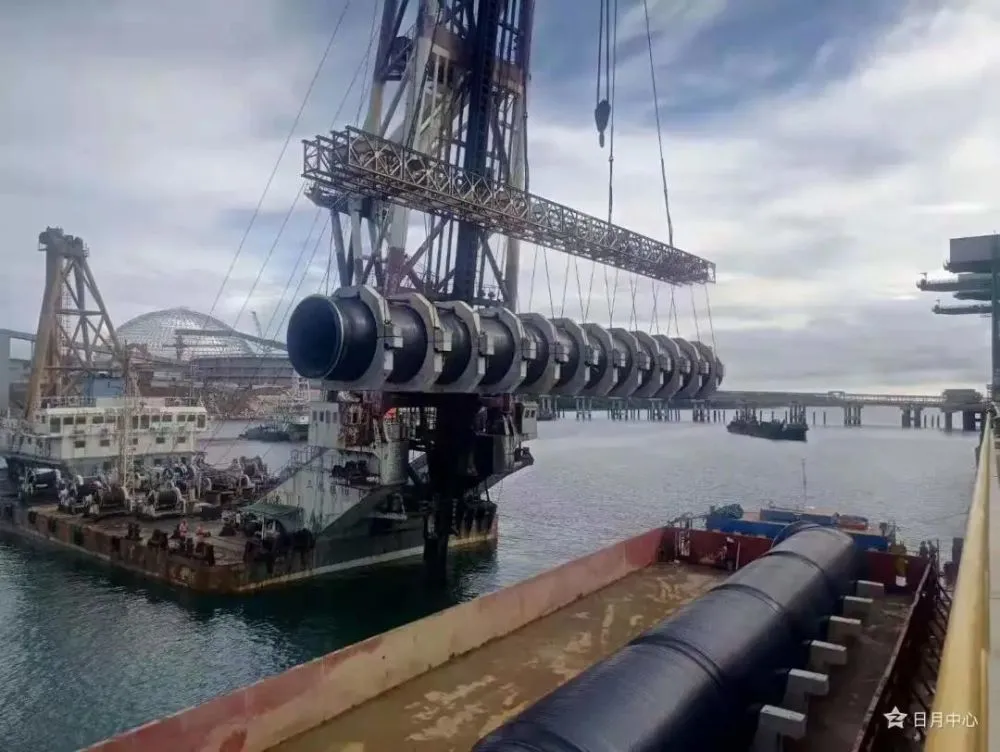
10. Frequently Asked Questions
10.1 Can one line serve both distribution and trunk diameters?
Yes, a modular spiral profile pipe machine covers a wide band by swapping mandrel sections and adjusting winding settings, so the same floor can make DN600 distribution pipe and DN2000 trunk pipe without a second machine. The practical limit is that very large diameters run slower and use more material per meter, so plan the dominant band first to keep utilization healthy.
Qingdao Yongke Machinery sizes each line to a target range and documents the capacity curve so you can confirm coverage before purchase. Most plants settle on a working band such as DN300-DN1800 rather than using the full DN300-DN5000 daily, which keeps output realistic and tooling cost contained within the original budget while still serving most regional schemes.
10.2 What makes spiral HDPE suitable for water mains?
HDPE resists corrosion in aggressive soils where steel and concrete fail, and its smooth inner wall keeps friction low so pumping energy stays manageable across the system's life. Spiral construction adds structural stiffness without solid thickness, keeping large diameters light for handling and transport to site.
Properly fused seams form continuous runs that limit leakage and protect water quality in transit. The company builds lines with closed-loop fusion control so seam quality stays consistent across a shift instead of drifting. Always confirm the resin grade and any local approvals your water authority requires, since standards for contact with potable water vary by region and application and are not optional.
10.3 How is quality verified during production?
Producers check wall thickness at the profile, sample ring stiffness, and verify dimensional accuracy at cut ends, while the control system logs temperature and speed so deviations are caught early rather than after the pipe is buried. A well-instrumented line turns these checks into repeatable records rather than manual guesses that vary by shift.
Qingdao Yongke Machinery runs pre-shipment calibration on the line and includes commissioning support so the producer starts calibrated and confident. Utilities increasingly ask for this production data trail, and a logging PLC supplies it without extra paperwork, which also speeds any later audit of the installed main and supports approvals renewals over time.
10.4 Does lighter pipe really cut installation cost?
In most municipal projects it does, because lighter spiral HDPE needs smaller cranes and crews than concrete, and the smoother handling reduces trench-side time that often drives the total installed cost. Transport from hall to trench is also cheaper per meter, which helps on remote rural schemes where haul distance is long.
The trade-off is that large diameters still need careful fusion jointing, so budget for crew training in that method and do not assume lightness removes skill requirements. Yongke Machinery ships lines that produce lengths suited to standard truck loading, which streamlines logistics for contractors. The net effect on the cases we have seen is lower crane time and fewer handling delays rather than a dramatic per-meter saving alone.
Recently Posted
-
Qingdao Yongke Machinery: Full-Category Spiral Pipe Equipment from China's Qingdao
September 1, 2026Choosing a machinery supplier for large-diameter plastic pipe production is a long-term decision, because the line you install wil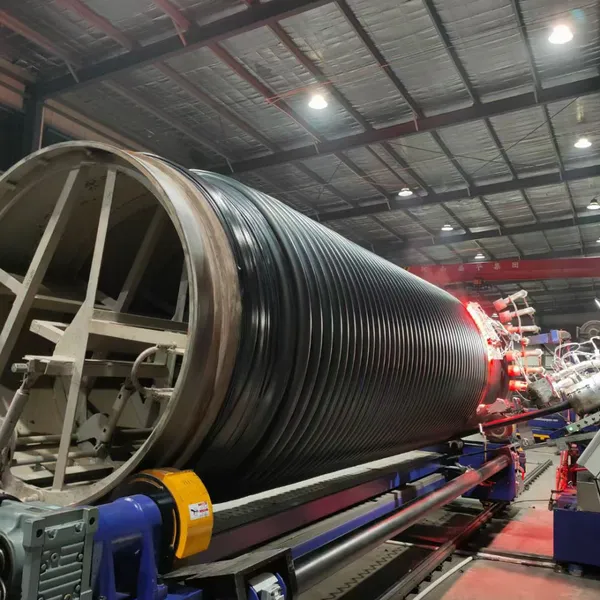 Read More
 -
Quality Control in Spiral Pipe Machine Manufacturing
August 31, 2026A buyer in South America some time ago received a winding line that looked complete on the surface but suffered repeated seam defe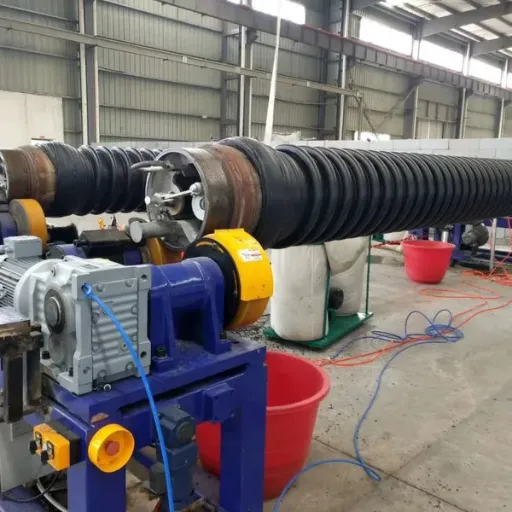 Read More
 -
Spiral Pipe for Sewage and Drainage Networks: Production Notes
August 28, 2026A municipal contractor in Eastern Europe some time ago took delivery of spiral-wound sewer pipe that looked flawless on the line.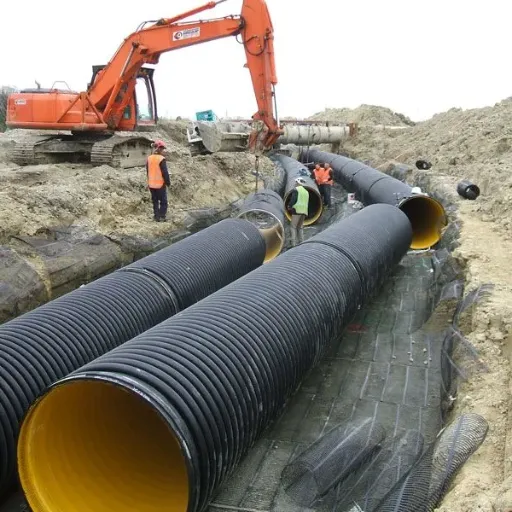 Read More
 -
DN300 to DN5000: Diameter Range and Machine Configuration
August 27, 2026A plant owner in Central Asia once asked for a line "up to DN5000" because a future tender mentioned large storage tanks Read More

Contact Us
Recommended Products
-
 CIPP Glass Fibre Liner MachineNegotiableMOQ: 1 Set
 -
HDPE Helically Wound Tank MachineUS$ 10MOQ: 1 Set
-
CIPP Glass Liner MachineNegotiableMOQ: 1 Set
-
CIPP Felt Liner Manufacturing MachineNegotiableMOQ: 1 Set
-
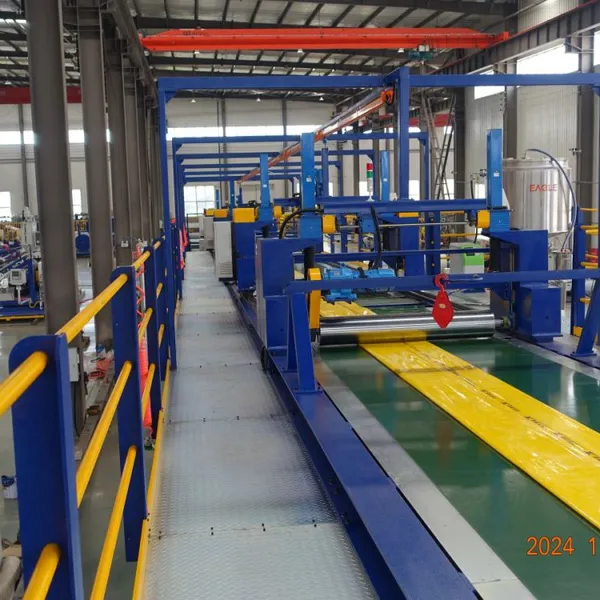
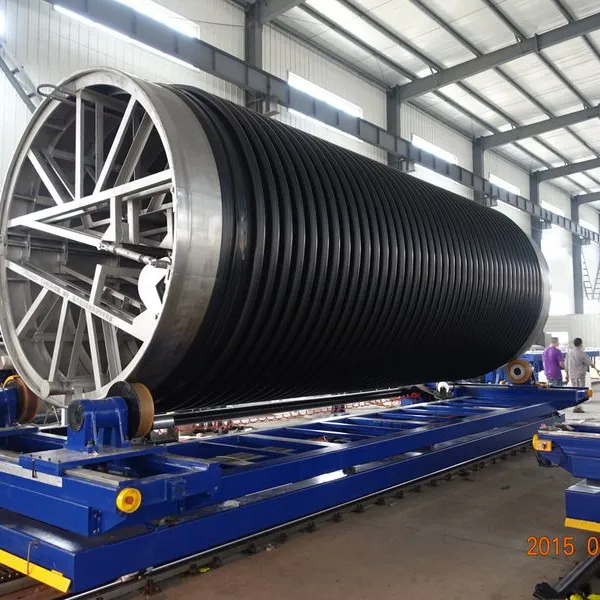
Large Diameter HDPE Sea Intake Outfall Structured Wall Pipe Making MachineNegotiableMOQ: 1 Set
-
UV-CIPP Glass Fibre Liner Manufacturing MachineUS$ 1000 - 110000MOQ: 10 Meters
-
HDPE Pipe Extrusion Machine / PE Pipe Production Line With High OutputNegotiableMOQ: 1 Set
-
UV-CIPP Glass Fiber Liner Hose Production LineUS$ 1000 - 110000MOQ: 1 Set
-
HDPE Spiral Structure Wall Pipe MachineNegotiableMOQ: 1 Set
-
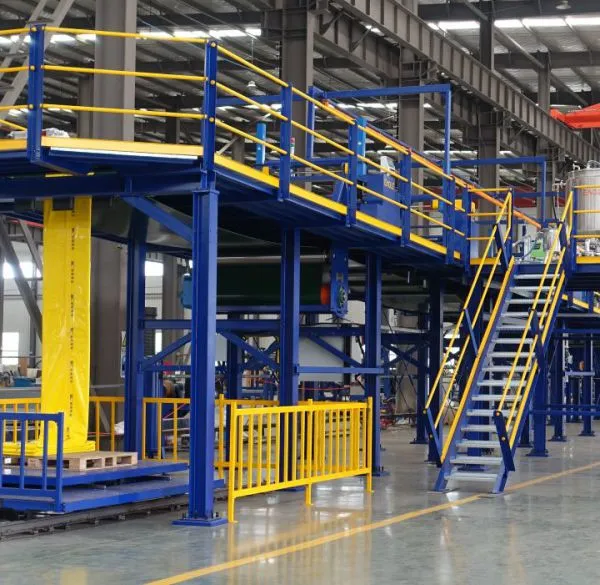
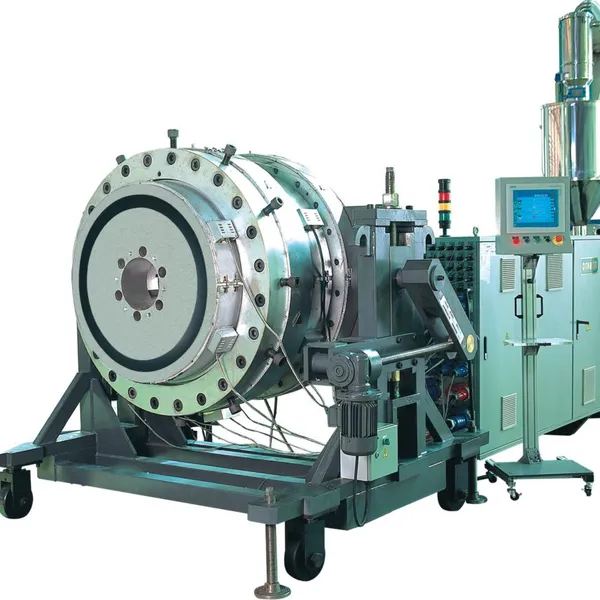
HDPE Spiral Pipe MachineNegotiableMOQ: 1 Set
-
HDPE Spiral Tank MachineNegotiableMOQ: 1 Set
-
Krah Pipe MachineNegotiableMOQ: 1 Set
-
Plastic HDPE PVC PPR Pipe Extrusion Making Machine Extrusion LineNegotiableMOQ: 1 Set
-
PVC Pipe Extrusion Production Line for Electrical Conduit and Water Supply PipesNegotiableMOQ: 1 Set
-
Hot Sell Single Wall Corrugated Pipe Extrusion Line With Competitive PriceNegotiableMOQ: 1 Set
-
HDPE Krah Profild Pipe MachineUS$ 10000MOQ: 1 Set
-
Plastic Tank CNC Holes Boring MachineUS$ 10000MOQ: 1 Set
-
Double Wall Corrugated Pipe Extrusion LineNegotiableMOQ: 1 Set
-
Single Wall Corrugated Pipe Extrusion LineNegotiableMOQ: 1 Set
-
Inversion CIPP Liner Tube Manufacturing MachineNegotiableMOQ: 1 Set