
 Business License
UV CIPP Lining: A Complete Guide to UV-Cured Pipe Rehabilitation Technology
UV CIPP lining is a trenchless pipe rehabilitation method that uses ultraviolet light to cure resin-impregnated fiberglass liners inside damaged host pipes, creating a new structural pipe-within-a-pipe in one to three hours. The process eliminates the need for hot water or steam curing equipment, reduces installation time by 60 to 75%, and produces a liner with consistent mechanical properties regardless of ambient temperature or host pipe conditions.
Last spring, a municipal contractor in Rotterdam faced a critical sewer line failure beneath a busy four-lane intersection. The city couldn't afford a two-week road closure for traditional excavation, and the existing brick sewer, built in 1952, couldn't handle another winter without structural reinforcement. The contractor chose UV CIPP lining. They inserted a DN600 UV-CIPP liner at 06:00 on a Saturday, ran the UV light train through the pipe by 09:30, and reopened the road to traffic before noon. The total surface disruption: one manhole cover and a single work van.
That's the practical advantage municipalities and contractors are discovering worldwide. This guide explains how UV CIPP lining works, why it's replacing traditional inversion methods in many markets, and what equipment manufacturers need to produce UV-CIPP liners that meet international standards.
Key Takeaways
UV CIPP lining cures fiberglass liners in 1-3 hours using portable UV light equipment, compared to 4-12 hours for hot water or steam curing.
Uncured UV-CIPP liners store for 6-12 months without refrigeration, giving contractors flexibility and reducing waste.
UV-CIPP achieves excellent bend accommodation and performs reliably in DN150 to DN1200 pipes with multiple diameter transitions.
Manufacturing UV-CIPP liners requires specialized felt tube production, vacuum resin impregnation, and UV-transparent inner film application equipment.
Liners must meet ASTM F1216 or EN ISO 11296 standards with 35-45% resin content and minimum flexural strength of 4,500 psi.
What Is UV CIPP Lining and How Does It Work?
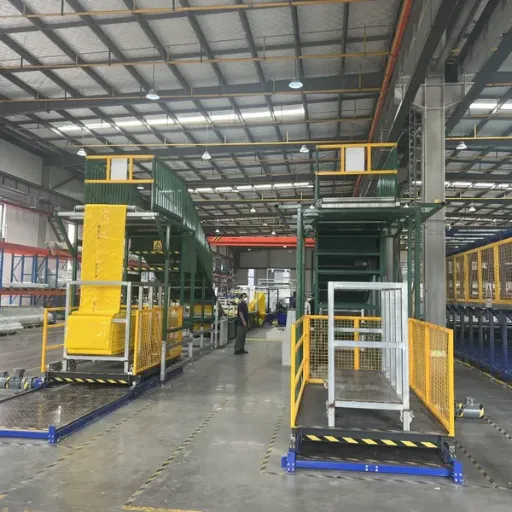
Cured-In-Place Pipe (CIPP) technology has been the backbone of trenchless rehabilitation since the 1970s. The basic concept hasn't changed: insert a flexible liner tube into a damaged host pipe, cure the resin to harden the liner, and leave a smooth, structural new pipe inside the old one. What has changed is how that resin cures.
UV CIPP lining replaces hot water, steam, and ambient curing with ultraviolet light. The liner consists of a fiberglass fabric tube saturated with UV-initiated resin, covered on the inside with a transparent PVC or PE film that allows UV wavelengths to pass through. During installation, a cable pulls a UV light train through the inflated liner. The light triggers a controlled chemical reaction that cures the resin from the inside out.
The UV Curing Mechanism
The chemistry behind UV CIPP lining is both precise and forgiving. The resin, usually epoxy or vinyl ester, contains photoinitiators that break down when exposed to UV light in the 320-400 nanometer range. These broken photoinitiators generate free radicals that start a chain reaction, cross-linking the polymer molecules into a solid, thermoset plastic.
Unlike thermal curing, where heat must transfer from the pipe wall inward through the liner thickness, UV curing starts at the inner surface and progresses outward. This creates several technical advantages:
Uniform cure: The UV light train moves at a calculated speed that ensures consistent energy delivery along the full pipe length.
Temperature independence: Curing works equally well in 5°C winter conditions or 35°C summer heat.
No water or steam infrastructure: Contractors don't need boiler trucks, water circulation pumps, or steam generators.
Real-time monitoring: Sensors on the light train measure temperature and UV intensity, verifying cure quality continuously.
How UV-CIPP Differs from Traditional Inversion CIPP
Traditional inversion CIPP uses water or air pressure to turn a resin-impregnated felt liner inside-out into the host pipe. Hot water or steam then circulates through the pipe to cure the resin over four to twelve hours. The method works, and it has decades of proven performance. But it carries operational constraints that UV CIPP lining avoids.
| Parameter | UV CIPP Lining | Inversion CIPP |
|---|---|---|
| Curing method | Ultraviolet light train | Hot water or steam circulation |
| Installation time | 1-3 hours | 4-12 hours |
| Shelf life (uncured) | 6-12 months | 2-4 weeks (refrigerated) |
| Curing control | Excellent, real-time monitoring | Variable, depends on host pipe |
| Environmental sensitivity | Low | Higher (ambient temperature affects cure) |
| Water/steam equipment | Not required | Required |
| Diameter range | DN150-DN1200 (typical) | DN100-DN3000+ |
| Bend accommodation | Excellent | Moderate |
The choice between UV CIPP lining and inversion CIPP depends on project requirements, pipe geometry, and contractor capabilities. For complex urban networks with multiple bends, active infiltration, or tight time windows, UV CIPP lining offers clear operational benefits.
Key Advantages of UV CIPP Lining for Municipal Contractors
Contractors and municipalities don't switch rehabilitation methods without good reason. UV CIPP lining has gained market share because it solves real problems that project managers face on every job site.
Shorter Installation Times
Time is money on municipal contracts. A traditional hot-water inversion cure might occupy a work zone for an entire day. UV CIPP lining compresses that window to a few hours. The reduction in traffic management costs, crew overtime, and equipment rental can save 30 to 50% on installation labor compared to thermal curing methods.
Controlled, Predictable Curing
Hot water curing depends on water temperature, flow rate, and heat transfer through the host pipe wall. If the host pipe is cracked and groundwater is flowing in, the water temperature drops. If the pipe has diameter transitions, circulation slows. These variables make cure times unpredictable.
UV CIPP lining decouples curing from the host pipe environment. The UV light train generates its own curing energy. The transparent inner film protects the resin from premature exposure. The result is a liner with consistent flexural strength, modulus, and thickness from the first meter to the last.
Extended Shelf Life
A UV-CIPP liner can sit in a contractor's warehouse for six to twelve months without curing, provided it's protected from UV exposure and kept within reasonable temperature limits. Inversion liners using polyester resin typically require refrigeration and must be installed within two to four weeks of impregnation.
That shelf life changes inventory management. Contractors can order liners in advance, stock standard diameters, and respond to emergency callouts without waiting for wet-out facilities to prepare a fresh liner.
Reduced Site Impact
No boiler trucks. No water discharge. No steam hoses running across sidewalks. A UV CIPP lining crew arrives with the liner, an inflation compressor, and a compact UV light unit. The equipment fits in a standard service van. For densely built urban areas where staging space is limited, this matters.
The UV CIPP Liner Manufacturing Process
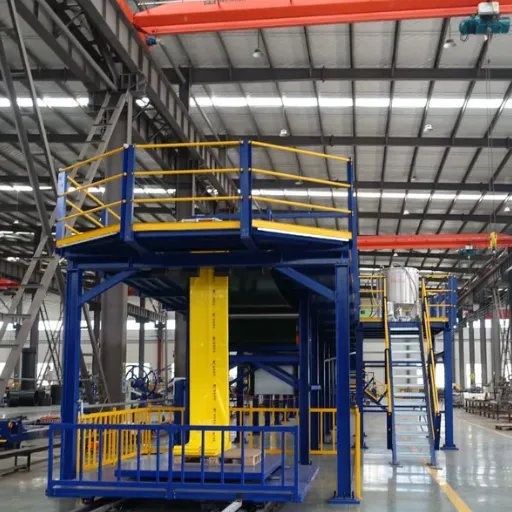
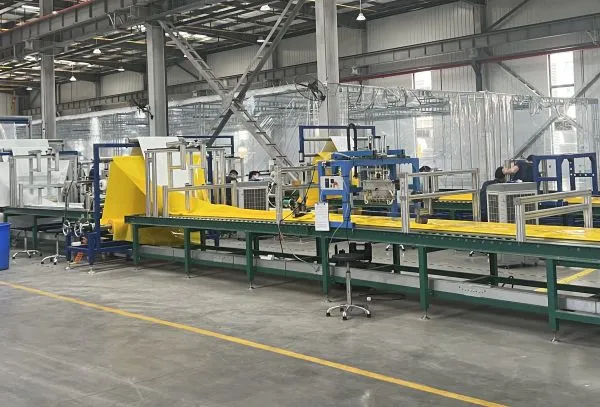
For companies entering the CIPP liner production market, understanding the manufacturing process is the first step toward configuring the right production line. At Qingdao Yongke Machinery, we've delivered UV-CIPP liner hose manufacturing machines to producers in Europe, Southeast Asia, and the Middle East. Here's what the production process involves.
Tube Fabrication and Resin Impregnation
The process begins with fiberglass fabric or needle-punched felt, typically polyester or a polyester-glass composite. The material is formed into a seamless tube on specialized sewing or welding equipment. Tube diameter must match the host pipe size with appropriate clearance, usually 2 to 5% oversize to ensure the liner presses against the host pipe wall after inversion or pull-in.
Once the tube is formed, it moves to a vacuum impregnation chamber. The chamber removes air from the fabric pores, then introduces the resin under controlled vacuum. This ensures complete saturation without air pockets that would create weak spots in the cured liner.
Resin content is critical. ASTM F1216 specifies 35 to 45% resin by weight for structural liners. Too little resin and the liner lacks strength. Too much resin and the liner becomes brittle, and material costs rise without performance benefit. Quality manufacturers test resin content on every batch using ignition loss testing.
In 2023, a CIPP liner manufacturer in Poland contacted us about scaling their UV-CIPP production. They'd been hand-impregnating liners in open trays, and their resin content varied from 28% to 52%. After installing a vacuum impregnation line with automated resin metering, their batch-to-batch variation dropped to under 3%. Their rejection rate from third-party inspection fell by 80% within six months.
UV-Transparent Film Application
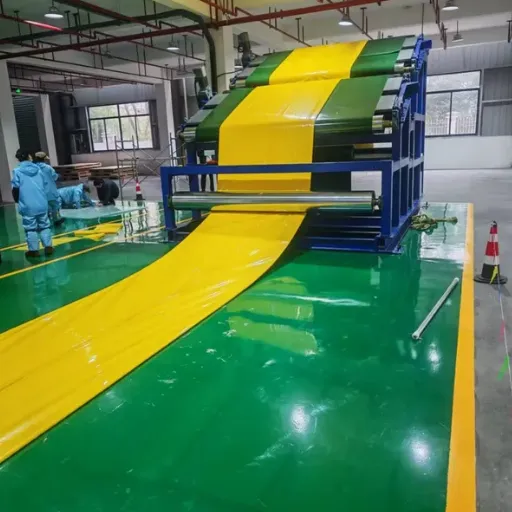
The defining feature of a UV-CIPP liner is the inner transparent film. This film, typically 0.1 to 0.3 mm PVC or polyethylene, allows UV light to penetrate and reach the resin while containing the uncured resin during storage and handling.
Film application must be uniform. Wrinkles, bubbles, or thickness variations create shadow zones where UV light doesn't reach the resin at full intensity. Modern production lines apply the film through heated lamination rollers that bond it to the felt without distorting the tube geometry.
Calibration, Winding, and Packaging
After film application, the liner passes over a calibration mandrel that verifies diameter and roundness. Automated length measurement and cutting equipment then section the liner to customer specifications.
Finally, the liner is folded or rolled for packaging. UV-CIPP liners are typically delivered in coils that fit through standard manholes. Protective outer wrapping blocks ambient UV during transport and storage. Each package includes curing parameters: recommended light train speed, UV intensity, and inflation pressure for the target diameter.
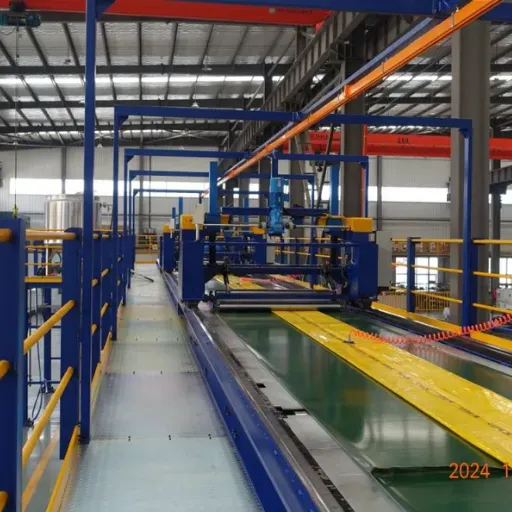
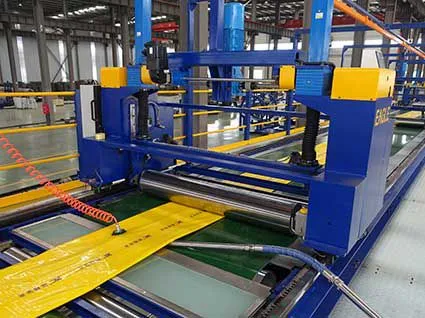
If you're evaluating equipment for UV-CIPP liner production, our UV-CIPP liner hose manufacturing machine includes integrated vacuum impregnation, film lamination, and calibration systems designed to produce liners meeting ASTM F1216 and EN ISO 11296.
UV CIPP Liner Installation: From Delivery to Cured Pipe
Manufacturing a quality liner is only half the equation. The installation process determines whether that liner performs as designed for its fifty-year design life.
Pre-Installation Inspection and Cleaning
Before any liner enters the pipe, the host pipe must be inspected with CCTV camera equipment. The inspection documents:
Pipe diameter and any diameter transitions
Location and extent of cracks, fractures, or missing wall sections
Active infiltration points
Obstructions, roots, or debris
Lateral connections that require reinstatement after lining
Cleaning follows inspection. High-pressure water jetting removes deposits, roots, and debris. In severely damaged pipes, localized spot repairs may be needed before lining to prevent the liner from bridging into voids.
Liner Insertion and Inflation
The UV-CIPP liner arrives at site in its protective wrapping. Crews remove the wrapping and attach a pull cable to the liner's leading end. Using a winch or cable puller, they draw the liner through an existing access point, usually a manhole, into the host pipe.
Once positioned, an air compressor inflates the liner with controlled pressure, typically 0.1 to 0.3 bar. The inflation presses the liner against the host pipe wall, ensuring contact across the full circumference. The transparent inner film faces inward, toward the pipe centerline.
UV Light Curing and Quality Verification
The UV light train enters the inflated liner through the same access point. Modern light trains contain multiple UV lamps arranged circumferentially, delivering uniform intensity around the full 360 degrees. A cable pulls the train through the liner at a speed calculated for the diameter, resin system, and wall thickness.
Temperature sensors on the light train monitor the exotherm, the heat released during curing. The data logs in real time, creating a cure record that contractors submit to project engineers as quality documentation. If any section shows insufficient temperature rise, the crew can re-run that section before demobilizing.
After curing completes, the crew allows the liner to cool, then removes the light train and any inflation equipment. A final CCTV inspection verifies liner position, continuity, and the quality of lateral reinstatements.
A crew in Barcelona recently installed a DN800 UV-CIPP liner through 340 meters of collector sewer beneath a historic market district. The pipe had four bends, two diameter transitions, and active infiltration at three points. Traditional inversion curing would have required closing the market's loading zone for two days. The UV CIPP lining crew completed the entire installation, including CCTV, cleaning, lining, and reinstatement, in eleven hours. The market never closed.
Applications and Diameter Range for UV CIPP Lining
UV CIPP lining isn't the right solution for every rehabilitation project. Understanding where it excels helps contractors and specifiers match the technology to the job.
Municipal Sewer and Drainage Networks
UV CIPP lining dominates in municipal gravity sewers from DN150 to DN1200. The technology handles the bends, diameter transitions, and active infiltration common in aging urban networks. Shorter cure times reduce the risk of sanitary sewer overflows during wet weather events.
Industrial Pipeline Rehabilitation
Factories and processing plants use UV-CIPP liners to rehabilitate process effluent lines, cooling water pipes, and chemical drainage systems. The controlled curing environment is especially valuable where process downtime must be minimized.
Pipe Geometries Suited to UV CIPP
| Pipe Condition | UV CIPP Suitability | Notes |
|---|---|---|
| Straight runs | Excellent | Fastest installation speeds |
| Multiple bends | Excellent | Light train navigates bends up to 90 degrees |
| Diameter transitions | Good | Requires tapered liner design |
| Active infiltration | Good | Fast cure seals leaks quickly |
| Large diameters (DN1200+) | Limited | UV penetration becomes challenging |
| Long straight runs (500m+) | Good | Standard light train cable lengths cover this |
For pipes larger than DN1200, inversion CIPP with hot water or steam curing often remains the practical choice. The UV light intensity required to penetrate thick liners at large diameters becomes difficult to achieve with portable equipment.
If your projects span both small-diameter UV CIPP and large-diameter inversion work, many contractors maintain capability in both technologies. Our inversion CIPP liner hose machine complements UV-CIPP production for manufacturers serving the full rehabilitation market.
Quality Standards and Performance Requirements
A CIPP liner is a structural component. It must resist groundwater pressure, soil loads, and traffic loads for decades. Quality standards exist to ensure that liners perform as engineered.
ASTM F1216 and EN ISO 11296
In North America, ASTM F1216 governs CIPP liner design and performance. In Europe, EN ISO 11296 serves the same function. Both standards specify minimum mechanical properties:
Flexural strength: Minimum 4,500 psi (31 MPa) for ASTM F1216
Flexural modulus: Minimum 250,000 psi (1,724 MPa)
Resin content: 35-45% by weight
Thickness uniformity: Variation not exceeding 10% around circumference
Manufacturers should design their liners to exceed these minimums by a safety margin, since host pipe conditions are never ideal and material properties can degrade over time.
In-House Quality Control
Every UV-CIPP liner manufacturing operation needs a quality control program that includes:
Batch testing of resin viscosity and gel time
Ignition loss testing for resin content verification
Thickness measurement at multiple points around the liner circumference
Flexural strength and modulus testing on cured samples
Seam strength testing for sewn liners
Dimensional verification against calibration standards
Manufacturing equipment should support these tests with sampling points, documentation procedures, and traceability from raw materials to finished liner.
FAQ: Common Questions About UV CIPP Lining
How long does UV CIPP lining take to install?
A typical UV CIPP lining installation takes one to three hours from liner insertion to completed cure, depending on pipe diameter, length, and liner thickness. This excludes pre-installation CCTV inspection and cleaning, which may add two to four hours.
What diameter pipes can UV CIPP lining repair?
UV CIPP lining is commonly used for pipes from DN150 to DN1200. Above DN1200, the UV light intensity required to cure thick liners through large diameters becomes challenging with standard portable equipment.
How long does a UV-CIPP liner last?
Engineers design CIPP liners for a minimum 50-year service life. The actual lifespan depends on the host pipe condition, loading, and chemical exposure. Fiberglass-reinforced UV-CIPP liners typically outlast felt liners because fiberglass doesn't degrade in moist environments the way organic felts can.
Is UV CIPP lining better than inversion CIPP?
Neither technology is universally better. UV CIPP lining offers faster installation, longer shelf life, and better curing control. Inversion CIPP handles larger diameters, requires lower equipment investment, and works with a broader range of resin systems. Many contractors use both.
What equipment is needed to manufacture UV-CIPP liners?
A complete UV-CIPP liner manufacturing line includes felt tube production equipment, a vacuum resin impregnation system, UV-transparent film lamination equipment, calibration mandrels, and packaging systems. All equipment should support the quality testing and documentation required by ASTM F1216 or EN ISO 11296.
Can UV-CIPP liners be stored before installation?
Yes. Uncured UV-CIPP liners store for six to twelve months if protected from UV light and kept within reasonable temperature ranges. This is a major advantage over hot-water cured inversion liners, which typically require refrigeration and installation within two to four weeks.
Conclusion
UV CIPP lining has matured from a niche technology into a standard rehabilitation method for municipal and industrial pipe networks. The combination of fast installation, controlled curing, and long shelf life makes it attractive to contractors who need predictable results in unpredictable urban environments.
For pipe rehabilitation specialists considering in-house liner production, the manufacturing process is well-defined and equipment is available from experienced machinery suppliers. The key is matching production capacity to your target market's diameter range, volume requirements, and quality standards.
At Qingdao Yongke Machinery, we manufacture both UV-CIPP liner hose manufacturing machines and inversion CIPP liner production equipment at our ISO 9001, ISO 14001, and ISO 45001 certified facility in Qingdao, China. Our equipment is designed to produce liners meeting international standards, with engineer installation support and operator training included.
For detailed quotations, technical specifications, or production planning assistance, contact Mr. Zhou Maozhen at machinery@eaglegroup.cn or via WhatsApp at +86-13583232887.
Recently Posted
-
How to Choose a Spiral Profile Pipe Machine: A Buyer's Checklist
August 21, 2026A procurement officer in South America once shortlisted three suppliers using only the lowest quoted price. He then discovered aft Read More
 -
Krah Machine vs Conventional Extrusion: Which Pipe Production Method Fits
August 20, 2026A distributor in Eastern Europe once split a budget between two production ideas without weighing how each matched his order book.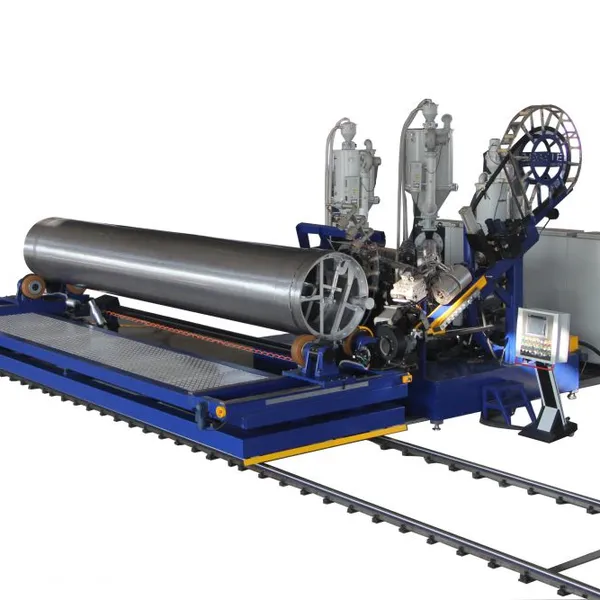 Read More
 -
What Is a Krah Pipe Machine? A Plain-Language Guide
August 19, 2026A processing plant in Southeast Asia once took delivery of a large-diameter pipe line based almost entirely on a supplier's ca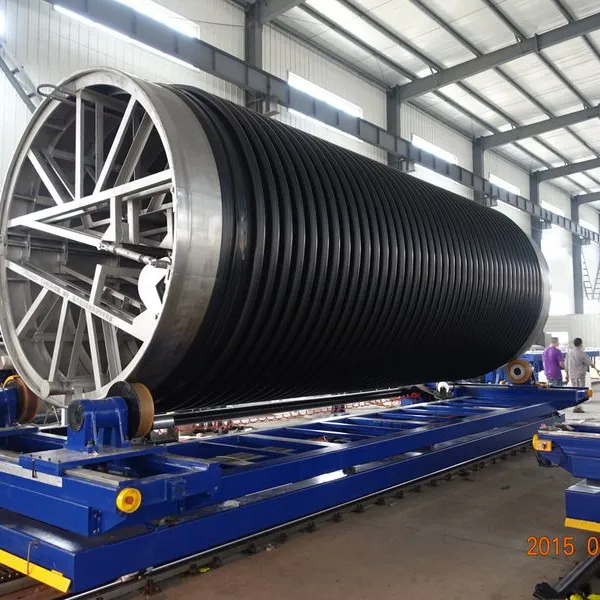 Read More
 -
HDPE Pipe Standards: A Practical Guide for Engineers and Buyers
June 30, 2026A municipal contractor in Southeast Asia once accepted a shipment of HDPE pipe based only on a supplier's diameter claim. Six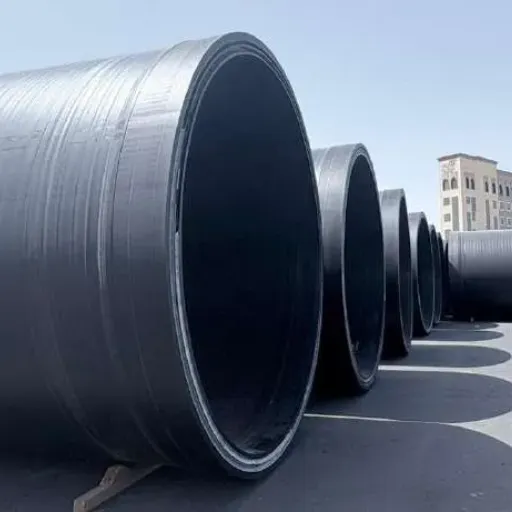 Read More

Contact Us
Recommended Products
-
 CIPP Glass Fibre Liner MachineNegotiableMOQ: 1 Set
 -
HDPE Helically Wound Tank MachineUS$ 10MOQ: 1 Set
-
CIPP Glass Liner MachineNegotiableMOQ: 1 Set
-
CIPP Felt Liner Manufacturing MachineNegotiableMOQ: 1 Set
-
Large Diameter HDPE Sea Intake Outfall Structured Wall Pipe Making MachineNegotiableMOQ: 1 Set
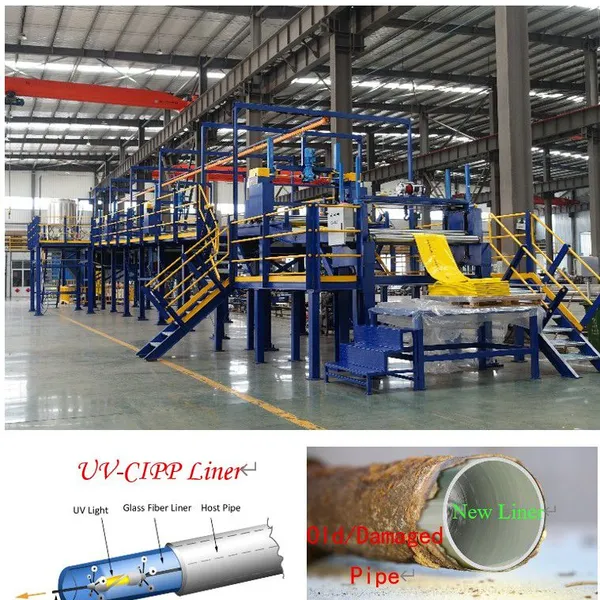
-
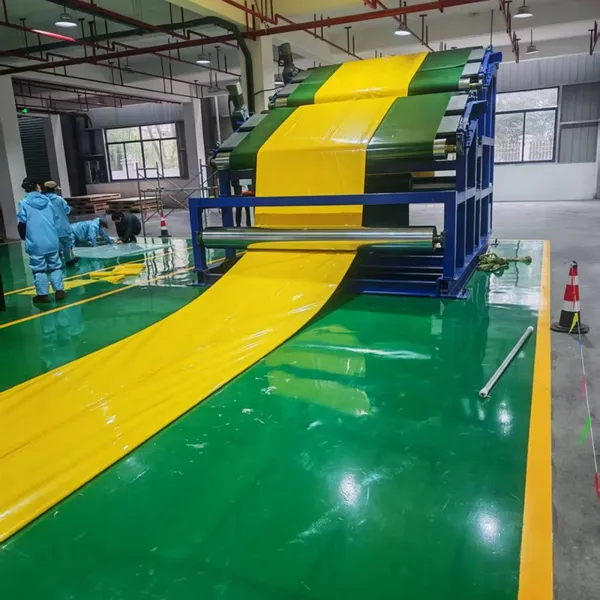
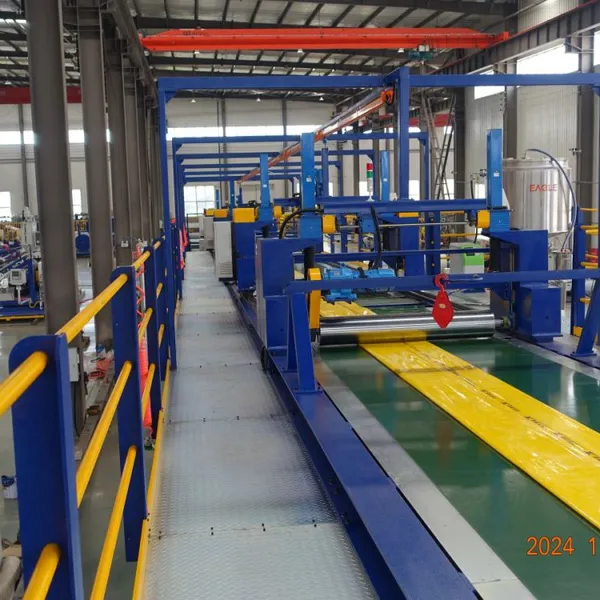
UV-CIPP Glass Fibre Liner Manufacturing MachineUS$ 1000 - 110000MOQ: 10 Meters
-
HDPE Pipe Extrusion Machine / PE Pipe Production Line With High OutputNegotiableMOQ: 1 Set
-
UV-CIPP Glass Fiber Liner Hose Production LineUS$ 1000 - 110000MOQ: 1 Set
-
HDPE Spiral Structure Wall Pipe MachineNegotiableMOQ: 1 Set
-
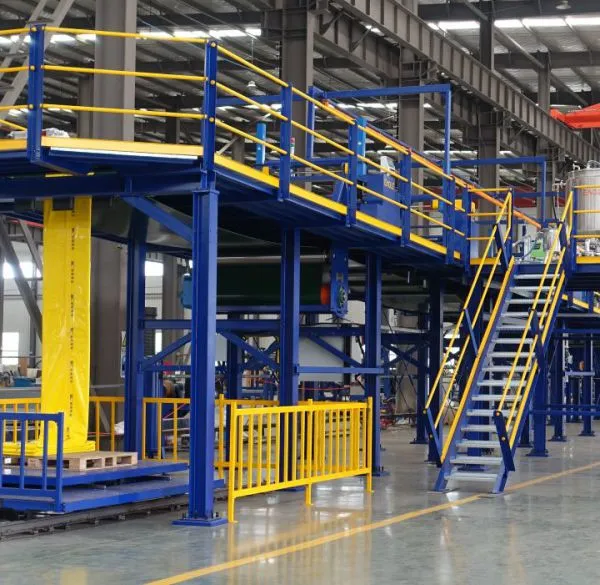
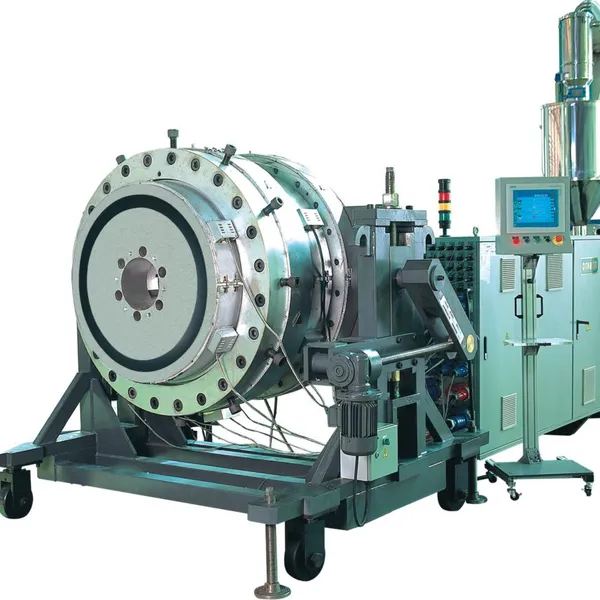
HDPE Spiral Pipe MachineNegotiableMOQ: 1 Set
-
HDPE Spiral Tank MachineNegotiableMOQ: 1 Set
-
Krah Pipe MachineNegotiableMOQ: 1 Set
-
Plastic HDPE PVC PPR Pipe Extrusion Making Machine Extrusion LineNegotiableMOQ: 1 Set
-
PVC Pipe Extrusion Production Line for Electrical Conduit and Water Supply PipesNegotiableMOQ: 1 Set
-
Hot Sell Single Wall Corrugated Pipe Extrusion Line With Competitive PriceNegotiableMOQ: 1 Set
-
HDPE Krah Profild Pipe MachineUS$ 10000MOQ: 1 Set
-
Plastic Tank CNC Holes Boring MachineUS$ 10000MOQ: 1 Set
-
Double Wall Corrugated Pipe Extrusion LineNegotiableMOQ: 1 Set
-
Single Wall Corrugated Pipe Extrusion LineNegotiableMOQ: 1 Set
-
Inversion CIPP Liner Tube Manufacturing MachineNegotiableMOQ: 1 Set