
 Business License
HDPE Pipe Recycling: How to Turn Scrap Into Structural Pipe Products
HDPE pipe recycling is the process of collecting, sorting, cleaning, and reprocessing high-density polyethylene pipe scrap into reusable resin that can be extruded into new pipes, sheets, or profiles. Modern spiral profile and co-extrusion pipe lines can incorporate recycled HDPE into the outer layers of structural wall pipes while maintaining the mechanical performance required for municipal and industrial applications.
In 2024, a pipe producer in Eastern Europe faced a problem that is becoming common worldwide. Landfill tipping fees had doubled, and municipal buyers were starting to ask for recycled content in their stormwater pipe specifications. The producer had access to post-industrial HDPE trimmings from a nearby conduit factory but no clear process to turn that scrap into specification-grade pipe. Within eighteen months, they had installed a grinding and washing line, adjusted their spiral profile pipe extrusion system for co-extrusion, and began supplying DN800mm SN8 pipes with forty percent recycled content in the outer profile layer.
This article explains how HDPE pipe recycling works, what equipment pipe manufacturers need, and how to maintain quality when recycled resin becomes part of your raw material strategy. Whether you are evaluating recycling as a cost-saving measure or responding to customer demand for sustainable products, the following framework will help you implement it profitably.
Key Takeaways
HDPE pipe recycling reprocesses post-industrial and post-consumer scrap into reusable polyethylene resin for new pipe production.
Co-extrusion allows recycled HDPE to be used in outer structural layers while virgin resin protects the inner functional surface.
Proper sorting, washing, and melt filtration are essential to remove contaminants and maintain pipe quality.
Spiral profile pipe machines can process blends with up to 80% recycled content in non-critical layers.
Recycled-content HDPE pipes can meet ASTM F894, EN 13476, and ISO 21138 standards when designed and manufactured correctly.
Why HDPE Pipe Recycling Matters for Pipe Manufacturers

High-density polyethylene is one of the most recyclable thermoplastics used in infrastructure. Unlike cross-linked or multi-material products, HDPE can be melted, filtered, and re-extruded multiple times without catastrophic degradation. This recyclability creates both environmental and business advantages for pipe producers.
Market Drivers
Several trends are pushing manufacturers toward recycled content:
Regulatory requirements: Governments in the European Union, several U.S. states, and parts of Asia now mandate minimum recycled content in public procurement contracts.
Customer demand: Municipalities and utilities increasingly report sustainability metrics and prefer suppliers who can document recycled material usage.
Cost volatility: Virgin HDPE prices fluctuate with crude oil and natural gas markets. Recycled resin can stabilize raw material costs when sourced locally.
Waste reduction: Post-industrial scrap generated during pipe production, such as startup purge, edge trim, and rejected lengths, has immediate reuse value.
Environmental Credentials
Producing pipe with recycled HDPE reduces landfill burden and lowers the embodied carbon of infrastructure projects. According to the U.S. Environmental Protection Agency, recycling HDPE consumes significantly less energy than producing virgin resin from feedstock. For pipe manufacturers, these credentials translate into competitive advantage during public tenders where lifecycle assessment and sustainability scoring influence award decisions.
The Eastern European producer discovered that sustainability claims alone were not enough. Buyers wanted documentation: certificates of recycled content, batch traceability, and test reports showing that pipes still met SN8 ring stiffness requirements. Once those systems were in place, the recycled-content pipe line became their fastest-growing product segment.
Sources and Types of HDPE Pipe Scrap
Not all HDPE scrap is equally valuable. The quality of recycled resin depends heavily on the source material and how cleanly it can be separated from contaminants.
Post-Industrial Scrap
Post-industrial material comes from manufacturing operations and is generally the cleanest source. Common forms include:
Pipe production trimmings: Cutoffs from profile extrusion, corrugation, and calibration operations
Startup and color-change purge: Material produced during line setup before steady-state conditions are reached
Rejected pipe sections: Pipes that fail dimensional, visual, or mechanical inspection
Injection molded fittings and scrap: Clean HDPE components from fitting production
Industrial packaging: Drums, crates, and pallets made from HDPE
Post-industrial scrap has predictable melt flow index, density, and contamination levels. It is the easiest feedstock to reintroduce into pipe production without extensive quality testing.
Post-Consumer Scrap
Post-consumer material comes from products that have completed their service life. For HDPE pipe recycling, this includes:
Retired water and gas pipes: Excavated PE80 or PE100 pipes removed from utility networks
Agricultural drainage pipe: Used corrugated HDPE tubing from farms
Municipal drainage and sewer pipe: Removed during rehabilitation or replacement projects
Consumer containers: Milk jugs, detergent bottles, and cleaning product containers
Post-consumer feedstock is more variable. It may contain soil, sediment, labels, adhesives, and mixed polymer contamination. It requires more intensive washing, sorting, and melt filtration before it can be used in structural pipe applications.
Scrap Grading
Recyclers typically grade HDPE scrap by color, contamination level, and melt flow properties. Higher grades command better prices and can be used in more demanding applications. Lower grades may be limited to non-structural layers, drainage pipes with less stringent requirements, or downcycled products such as pallets and decking.
The HDPE Pipe Recycling Process

Turning scrap into pipe-ready resin involves several mechanical and thermal steps. Each stage affects the final quality, so manufacturers must design the recycling line to match their feedstock and end-product requirements.
Step 1: Collection and Sorting
Scrap arrives at the recycling facility in bales, loose pieces, or bulk loads. The first task is to remove obvious contaminants such as metal, wood, rubber, and other polymers. Manual sorting, magnetic separation, and near-infrared optical sorting are common methods. Separation by color may also be necessary if the final product has aesthetic requirements.
Step 2: Size Reduction
Large pipe sections and fittings must be reduced to flakes small enough for washing and extrusion. This is done with:
Shredders: Break pipe into coarse pieces
Granulators: Produce smaller, more uniform flakes
Wet grinders: Combine size reduction with initial washing
Flake size affects washing efficiency and melt behavior. Smaller flakes clean more thoroughly but can degrade faster if overheated.
Step 3: Washing and Drying
Washing removes dirt, sand, oils, labels, and adhesives. A typical wash line includes:
Pre-washing: Removes loose surface contamination
Friction washing: Scrubs flakes mechanically in water
Caustic or detergent washing: Dissolves oils and some adhesives
Rinsing: Removes cleaning chemicals
Drying: Centrifugal dryers and thermal dryers reduce moisture content
Moisture is one of the biggest enemies of recycled HDPE extrusion. Even small amounts of residual water can cause bubbles, voids, and poor weld strength in finished pipe. Drying systems must achieve moisture levels below 0.05% for most pipe applications.
Step 4: Melt Reprocessing and Filtration
Cleaned flakes are fed into a single-screw or twin-screw extruder where they are melted, homogenized, and filtered. Key components include:
Melt pump: Provides consistent flow and pressure
Screen changer: Removes remaining solid contaminants such as sand, paper, and metal particles
Degassing vent: Extracts moisture and volatile contaminants
Pelletizer or direct sheet extrusion: Forms recycled resin into pellets, sheet, or profile
Pelletizing produces a stable, storable intermediate product. Some pipe manufacturers prefer direct in-line recycling, where cleaned flake is fed directly into the pipe extrusion line without pelletizing.
Step 5: Compounding and Quality Testing
For critical applications, recycled HDPE is compounded with virgin resin, stabilizers, colorants, and processing aids to achieve consistent properties. Quality tests typically include:
Melt flow index (MFI): Confirms processability
Density: Verifies material grade
Tensile strength and elongation: Checks mechanical integrity
Oxidative induction time (OIT): Evaluates long-term thermal stability
Contamination screening: Detects non-PE materials or gels
Recycled resin batches should be tested against incoming virgin material specifications before release to production.
Using Recycled HDPE in New Pipe Production
The most practical way to use recycled HDPE in pipe manufacturing is co-extrusion, where different material formulations form separate layers of the pipe wall.
Co-Extrusion Architecture
In a typical three-layer spiral profile or corrugated pipe, the structure may be arranged as follows:
Inner layer: Virgin HDPE or PP for smooth hydraulic surface and chemical resistance
Middle or outer structural layer: Recycled HDPE blended with virgin material for ring stiffness
Outer skin: Virgin or pigmented recycled layer for UV resistance and appearance
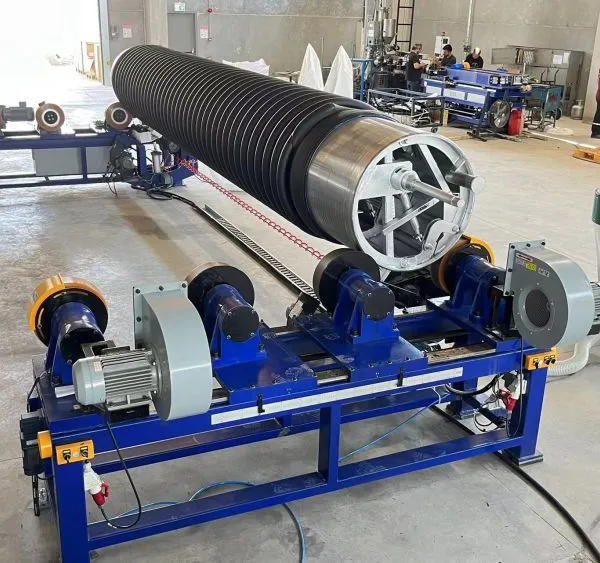
This architecture keeps the functional inner surface in contact with virgin material while maximizing recycled content in the structural ribs or hollow chambers. Our HDPE/PP spiral profile pipe machines can be configured for multi-layer co-extrusion, allowing manufacturers to optimize material cost without sacrificing performance.
Recycled Content Limits
The maximum percentage of recycled HDPE depends on the application and standard:
Non-pressure drainage and stormwater pipes: Up to 70-80% recycled content in outer layers is achievable with proper quality control
Sewer pipes with chemical exposure: Typically 30-50% recycled content to maintain resistance
Potable water pipes: Most standards restrict or prohibit recycled content due to migration and hygiene requirements
Structural wall pipes: Recycled content is usually limited to the outer profile layer, with virgin material in the inner liner
Pipe manufacturers should work with customers and certifying bodies to confirm acceptable recycled content levels for each project.
Processing Considerations
Recycled HDPE has different processing characteristics than virgin resin:
Melt viscosity: Recycled resin may have lower or higher viscosity depending on molecular weight degradation
Thermal stability: Multiple heat histories reduce oxidative stability, requiring additional stabilizers
Color variation: Mixed-color recycled feedstock produces darker or inconsistent colors unless sorted or pigmented
Odor: Post-consumer material may retain odors from previous use unless properly washed and degassed
Extruder screw design, temperature profiles, and die geometry may need adjustment when running high percentages of recycled material.
Ahmed, a production manager at a pipe plant in North Africa, initially tried running 100% recycled HDPE in a solid-wall drainage pipe. The pipes passed visual inspection but failed ring stiffness testing because the recycled batch had a broader molecular weight distribution than the virgin resin. After switching to a co-extruded structure with recycled material only in the outer corrugated layer, his plant achieved a fifty percent overall recycled content while meeting SN4 and SN8 requirements consistently.
Quality Standards for Recycled-Content HDPE Pipes

Pipes containing recycled HDPE must meet the same installation and performance standards as virgin pipes. The key is to demonstrate that the final product, not just the raw material, performs as specified.
Relevant Standards
Common standards for HDPE and PP pipes include:
ASTM F894: Polyethylene profile wall pipe specifications
EN 13476: Plastics piping systems for non-pressure underground drainage
ISO 21138: Structured-wall plastics piping systems
ASTM D3350: Cell classification for polyethylene pipe and fittings
These standards specify physical and mechanical requirements such as ring stiffness, impact resistance, tensile properties, and dimensional tolerances. They do not typically prohibit recycled content, but they require that the finished pipe meet all performance criteria.
Testing Protocol
Manufacturers should implement a testing protocol that includes:
Incoming resin testing: MFI, density, OIT, and contamination for every recycled batch
Process validation: Trial production runs to confirm extrusion parameters and pipe properties
Finished pipe testing: Ring stiffness, impact resistance, pipe stiffness, and visual inspection per standard
Traceability: Batch records linking recycled feedstock to finished pipe lots
Third-party certification may be required for municipal contracts. Certification bodies will audit the manufacturing process, quality system, and test records.
Long-Term Performance
The main concern with recycled HDPE in pipes is long-term durability. Oxidative degradation during processing and service can reduce service life if stabilizers are inadequate. Proper formulation with antioxidants, UV stabilizers, and processing aids is essential. Accelerated aging tests, such as oven aging and environmental stress cracking resistance (ESCR) tests, help validate long-term performance.
Equipment Needed for Integrated HDPE Pipe Recycling
Pipe manufacturers who want to bring recycling in-house need more than just a pipe extrusion line. A complete recycling operation includes size reduction, washing, drying, reprocessing, and quality testing equipment.
Recycling Line Components
Shredder or grinder: Reduces scrap to manageable flake size
Wash line: Cleans and separates contaminants
Dryer: Removes moisture before extrusion
Recycling extruder: Melts and filters cleaned flake
Pelletizer: Forms uniform pellets for storage or direct feeding
Material handling: Conveyors, silos, and dosing systems blend recycled and virgin resin
Pipe Extrusion Line Configuration
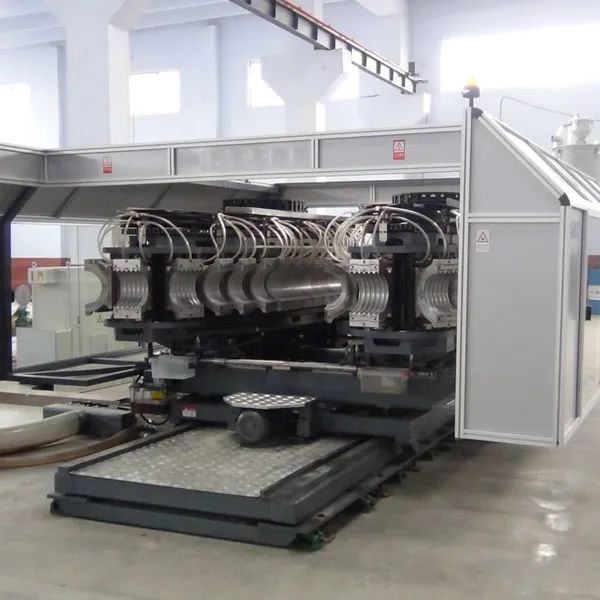
The pipe extrusion line must support co-extrusion if recycled material is used in outer layers. At Qingdao Yongke Machinery, our spiral profile pipe production lines can be configured with multiple extruders for multi-layer pipe construction. Key capabilities include:
Single-screw extruders: Optimized for HDPE, PP, and recycled polyolefin blends
Co-extrusion die heads: Engineered flow channels for uniform layer distribution
Vacuum calibration and cooling: Maintains dimensional stability across material variations
PLC control systems: Recipe storage for virgin, recycled, and blended formulations
For pipe producers who want to start with lower recycled content, our lines can be upgraded from single-layer to multi-layer operation as recycling volumes grow.
Auxiliary Equipment
Additional equipment that supports recycling operations:
Inline densifiers: Compact low-bulk-density flake for easier handling
Melt filters: Remove fine contaminants before pelletizing or pipe extrusion
Color feeders: Add carbon black or pigments to standardize appearance
Quality lab instruments: MFI tester, density column, tensile tester, OIT analyzer
Economic and Operational Benefits of HDPE Pipe Recycling

Beyond environmental marketing, recycling can improve the economics of pipe manufacturing when implemented correctly.
Cost Reduction
Local recycled HDPE can cost thirty to sixty percent less than virgin resin, depending on feedstock availability and quality. For pipe producers located near scrap sources such as demolition contractors, utility networks, or packaging manufacturers, transportation costs are also lower.
Waste Minimization
In-house recycling of production scrap reduces disposal costs and landfill dependency. Trim waste, rejected pipes, and startup purge can be reprocessed instead of discarded. This closed-loop approach improves overall material yield.
Market Differentiation
Manufacturers who offer certified recycled-content pipes can access public procurement contracts with sustainability requirements. They can also serve private developers and utilities that have adopted environmental, social, and governance (ESG) targets.
Risks to Manage
Recycling is not without risks. Common challenges include:
Feedstock inconsistency: Post-consumer scrap varies in quality and composition
Higher processing costs: Washing, drying, and filtration add energy and labor costs
Quality control demands: More testing is required to verify recycled resin and finished pipe
Market price overlap: When oil prices are low, the cost advantage of recycled resin may shrink
Successful recycling operations manage these risks through supplier qualification, batch testing, and conservative recycled content targets.
Frequently Asked Questions About HDPE Pipe Recycling
Can HDPE pipe be recycled into new HDPE pipe?
Yes. HDPE pipe can be ground, washed, melted, and re-extruded into new pipe products. The most common approach is co-extrusion, where recycled HDPE forms the outer structural layer and virgin resin forms the inner functional layer.
What percentage of recycled HDPE can be used in pipe production?
Recycled content levels range from 30% to 80% depending on the pipe application, standard requirements, and feedstock quality. Non-pressure drainage and stormwater pipes can use higher recycled content than pressure or potable water pipes.
Does recycled HDPE pipe meet industry standards?
Recycled-content HDPE pipe can meet ASTM F894, EN 13476, and ISO 21138 standards when properly formulated, processed, and tested. Standards focus on finished pipe performance rather than excluding recycled material outright.
What is the difference between post-industrial and post-consumer HDPE scrap?
Post-industrial scrap comes from manufacturing processes and is cleaner and more consistent. Post-consumer scrap comes from products after use and requires more intensive sorting, washing, and filtration.
What equipment is needed to recycle HDPE pipe scrap?
A basic recycling operation requires a shredder or grinder, wash line, dryer, recycling extruder with melt filtration, and pelletizer. The pipe production line must also support co-extrusion if recycled material is used in multi-layer pipe structures.
Conclusion
HDPE pipe recycling offers pipe manufacturers a practical path to lower raw material costs, reduce waste, and meet growing demand for sustainable infrastructure products. Success depends on understanding feedstock quality, investing in proper cleaning and filtration, and designing pipe structures that use recycled resin where it performs best.
Co-extrusion is the key enabler. By placing recycled HDPE in outer structural layers and protecting the inner surface with virgin material, manufacturers can achieve high recycled content without sacrificing ring stiffness, chemical resistance, or service life. Spiral profile pipe technology is particularly well-suited to this approach because the structural wall construction naturally separates functional and load-bearing layers.
At Qingdao Yongke Machinery, we engineer HDPE/PP spiral profile pipe production lines with co-extrusion capability for manufacturers who want to integrate recycled content into their product range. Our team can help you configure the right extruder arrangement, die head design, and process controls for your target recycled content level and pipe specifications.
Recently Posted
-
HDPE Pipe Standards: A Practical Guide for Engineers and Buyers
June 30, 2026A municipal contractor in Southeast Asia once accepted a shipment of HDPE pipe based only on a supplier's diameter claim. Six Read More
 -
Wastewater Collection System Design, Operation, and Renewal
June 30, 2026In late 2021, a coastal city in Southeast Asia discovered that its oldest wastewater collection system had been losing capacity fo Read More
 -
Wastewater Infrastructure Design, Assessment, and Renewal
June 29, 2026In March 2023, a wastewater treatment plant serving 400,000 residents in Southern Europe suffered a cascade failure. A single inte Read More
 -
Combined Sewer System Design, Operation, and Rehabilitation
June 29, 2026In August 2021, a single storm dropped 175mm of rain on a midwestern U.S. city in less than 36 hours. The city's aging combine Read More

Contact Us
Recommended Products
-
 CIPP Glass Fibre Liner MachineNegotiableMOQ: 1 Set
 -
HDPE Helically Wound Tank MachineUS$ 10MOQ: 1 Set
-
CIPP Glass Liner MachineNegotiableMOQ: 1 Set
-
CIPP Felt Liner Manufacturing MachineNegotiableMOQ: 1 Set
-
Large Diameter HDPE Sea Intake Outfall Structured Wall Pipe Making MachineNegotiableMOQ: 1 Set
-
UV-CIPP Glass Fibre Liner Manufacturing MachineUS$ 1000 - 110000MOQ: 10 Meters
-
HDPE Pipe Extrusion Machine / PE Pipe Production Line With High OutputNegotiableMOQ: 1 Set
-
UV-CIPP Glass Fiber Liner Hose Production LineUS$ 1000 - 110000MOQ: 1 Set
-
HDPE Spiral Structure Wall Pipe MachineNegotiableMOQ: 1 Set
-
HDPE Spiral Pipe MachineNegotiableMOQ: 1 Set
-
HDPE Spiral Tank MachineNegotiableMOQ: 1 Set
-
Krah Pipe MachineNegotiableMOQ: 1 Set
-
Plastic HDPE PVC PPR Pipe Extrusion Making Machine Extrusion LineNegotiableMOQ: 1 Set
-
PVC Pipe Extrusion Production Line for Electrical Conduit and Water Supply PipesNegotiableMOQ: 1 Set
-
Hot Sell Single Wall Corrugated Pipe Extrusion Line With Competitive PriceNegotiableMOQ: 1 Set
-
HDPE Krah Profild Pipe MachineUS$ 10000MOQ: 1 Set
-
Plastic Tank CNC Holes Boring MachineUS$ 10000MOQ: 1 Set
-
Double Wall Corrugated Pipe Extrusion LineNegotiableMOQ: 1 Set
-
Single Wall Corrugated Pipe Extrusion LineNegotiableMOQ: 1 Set
-
Inversion CIPP Liner Tube Manufacturing MachineNegotiableMOQ: 1 Set