
 Business License
Pipe Bending Techniques: Complete Guide for Pipe Fabricators
The most common pipe bending techniques are rotary draw bending, mandrel bending, roll bending, compression bending, and induction bending. Each method produces different bend radii, wall thinning characteristics, and surface finishes, so fabricators must match the technique to the material, diameter, and application requirements.
Every municipal contractor and pipe manufacturer has faced a project where straight pipe sections simply will not fit the trench layout, tank connection, or structural frame. A poorly executed bend creates wall thinning, ovality, or creasing that can fail under pressure or reduce flow capacity. At Qingdao Yongke Machinery, we have supported pipe producers and infrastructure contractors across more than thirty countries since 2010. We know that the quality of a finished pipeline depends as much on field and shop fabrication as it does on the original pipe manufacturing process. This guide explains the pipe bending techniques used across HDPE, PP, and metal pipe applications, and shows how to select the right method for your project.
Key Takeaways
Rotary draw bending and mandrel bending produce the highest-quality bends for tight radii and thin-wall pipe, while roll bending and induction bending suit larger radii and heavy-wall pipe.
Material behavior varies significantly: HDPE and PP require controlled heating and slow forming to avoid kinking, whereas steel and stainless steel may need mandrel or induction support to prevent wrinkling.
Wall thinning, springback, and ovality are the three most common defects; each can be controlled through tooling selection, bend speed, and process parameters.
Large-diameter thermoplastic pipes manufactured on spiral profile pipe lines often reduce field bending needs because they can be produced in custom lengths and with factory-formed fittings.
Always verify bend geometry against project standards such as ASTM F894 for profile wall pipe or relevant EN/ISO piping codes.
What Is Pipe Bending and Why Does It Matter?
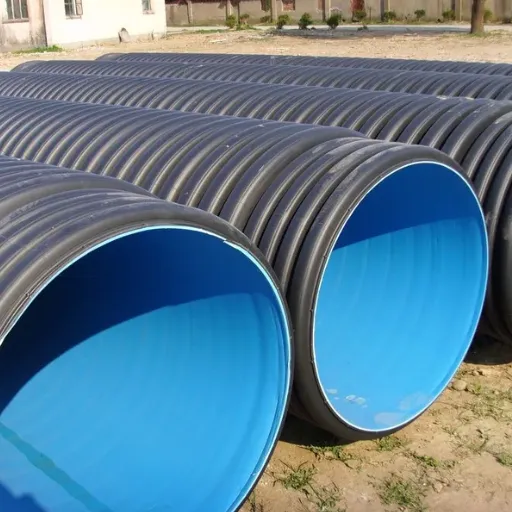
Pipe bending is the process of permanently deforming a straight pipe or tube into a curved shape without cutting and welding multiple sections. The goal is to change flow direction, route around obstacles, or connect equipment while maintaining the pipe's pressure rating, flow capacity, and structural integrity.
Fabricators choose bending over welded elbows for several reasons:
Fewer leak paths: Every welded joint introduces a potential failure point; a smooth bend eliminates that risk.
Lower material cost: Bends reduce the number of fittings and weld prep required.
Better flow characteristics: A properly formed bend creates less turbulence than a sharp elbow.
Faster installation: Pre-bent spools arrive ready to place, reducing field labor.
However, bending also introduces mechanical stresses. The outer wall of the bend stretches and thins, while the inner wall compresses and may thicken or wrinkle. The neutral axis, located roughly at the centerline of the pipe wall, experiences minimal strain. Controlling these deformations is what separates an acceptable bend from a rejected part.
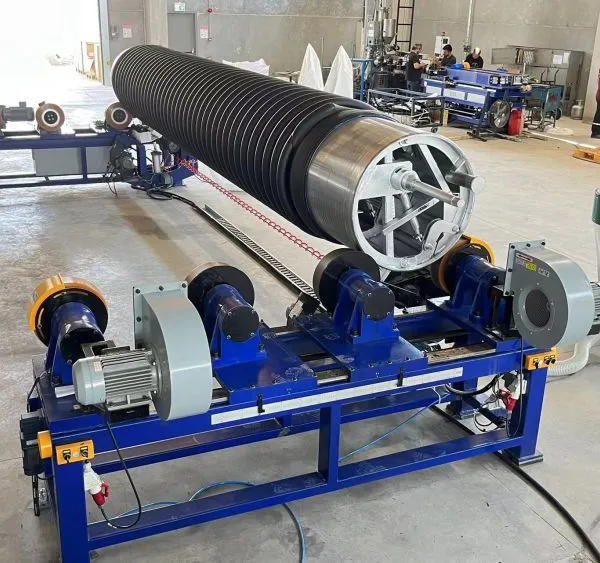
Want to reduce field bending challenges from the start? Our HDPE spiral profile pipe machine can produce pipes from DN300mm to DN5000mm in custom lengths, helping you minimize joints and fittings on large-diameter projects.
Common Pipe Bending Techniques Explained
Rotary Draw Bending
Rotary draw bending is the most widely used technique for precision pipe and tube bending. The pipe is clamped to a rotating bend die, and as the die rotates, the pipe is drawn around a forming die. A pressure die holds the pipe against the forming die, while a wiper die prevents wrinkling on the inside radius.
This method excels at producing:
Tight radius bends with minimal distortion
Consistent bend angles across production runs
High-quality surface finishes on coated or polished pipe
Rotary draw bending is common in automotive exhaust, furniture, and process piping where appearance and dimensional accuracy matter. For thin-wall tubing, a mandrel is inserted inside the pipe to support the wall and prevent collapse.
Mandrel Bending
Mandrel bending is essentially rotary draw bending with internal support. A mandrel, usually a series of ball-shaped segments linked on a rod, is placed inside the pipe at the bend point. The mandrel supports the inner wall during deformation, preventing ovality, wrinkling, and collapse.
Key applications include:
Aerospace and automotive tubing: Thin-wall pipes with tight bend radii
Food and pharmaceutical process lines: Hygienic bends with no internal ripples
High-pressure hydraulic lines: Bends that must maintain full pressure rating
The mandrel must be properly lubricated and positioned. Too far forward and it scars the inner surface; too far back and it fails to prevent wrinkles. For pipe manufacturers, mandrel bending demonstrates why uniform wall thickness from the extrusion process matters: inconsistent pipe wall produces inconsistent bends.
Roll Bending
Roll bending, also called pyramid rolling or profile rolling, uses three or more powered rollers to gradually curve a pipe or section. The pipe passes back and forth through the rollers while the center roller is adjusted to increase the bend radius.
This technique is ideal for:
Large-radius curves in structural and process pipe
Heavy-wall pipe and large diameters that other methods cannot handle
Spiral or curved handrails, frames, and architectural elements
Roll bending does not produce tight radii, and some ovality is common because the pipe is not internally supported. It is best suited for applications where the bend radius is large and dimensional tolerance is relaxed.
Compression Bending
In compression bending, the pipe is clamped behind a stationary bend die. A compression die, mounted on a hydraulic or mechanical arm, pushes the pipe around the forming die. The method is faster and less expensive than rotary draw bending because it requires fewer tooling components.
Compression bending works well for:
Thick-wall pipe with generous bend radii
High-volume production of simple bends
Applications where some inner-wall wrinkling is acceptable
The main limitation is that compression bending tends to produce more distortion on the inner radius than rotary draw bending. For pressure pipe and thin-wall tubing, mandrel or rotary draw methods are usually preferred.
Induction Bending
Induction bending heats a narrow band of pipe to a plastic state using electromagnetic induction, then bends the heated section around a forming die. After bending, the pipe is cooled to set the shape. This method is commonly used for large-diameter and heavy-wall steel pipe in oil and gas, power generation, and petrochemical projects.
Advantages include:
Ability to bend thick-wall pipe with large diameters
Controlled heating reduces residual stress
Can produce very large bend radii and compound bends
Induction bending requires specialized equipment and is usually performed in dedicated fabrication shops rather than on job sites.
Material Considerations for Pipe Bending
HDPE and PP Pipe Bending
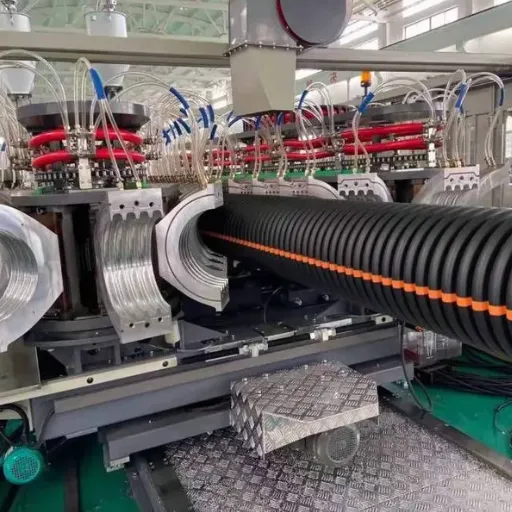
High-density polyethylene (HDPE) and polypropylene (PP) are thermoplastics with excellent flexibility compared to metals. However, that flexibility can be misleading. Cold bending HDPE or PP pipe beyond manufacturer recommendations causes kinking, stress whitening, and reduced long-term strength.
Best practices for thermoplastic pipe include:
Use controlled heating: Heat the bend zone evenly to the material's recommended forming temperature, typically 120-150°C for HDPE and 150-170°C for PP, depending on grade.
Bend slowly: Rapid bending creates uneven wall distribution and residual stress.
Support the inner radius: Use a forming shoe or sand filling to prevent collapse on tight radii.
Allow controlled cooling: Cool the bend while holding it in position to minimize springback.
Many HDPE and PP pipe producers reduce field bending by manufacturing pipe in long coils for small diameters, or by supplying factory-fabricated fittings for larger diameters. For structural wall pipes such as spiral profile pipes, field bending is generally not recommended because the profile wall can deform at the bend. Instead, custom fittings or factory-produced angled sections maintain ring stiffness and hydraulic performance.
Steel and Stainless Steel Pipe Bending
Steel pipe has high tensile strength but low ductility compared to thermoplastics. Bending steel requires more force and often internal support to prevent wrinkling on the compression side.
Important factors include:
Bend radius: Minimum bend radius is typically 3-5 times the pipe outside diameter for structural steel and 2-3 times for some stainless grades.
Wall thinning: The outer wall can thin by 10-25% depending on radius and method; high-pressure applications require engineering review.
Springback: Steel springs back after bending, so over-bend by a calculated angle to achieve the final dimension.
Heat treatment: Some alloy steels require post-bend heat treatment to relieve stress and restore mechanical properties.
Copper and Aluminum Pipe Bending
Copper and aluminum are softer and more ductile than steel, making them easier to bend by hand or with simple tooling. However, their softness also makes them prone to flattening and kinking.
For these materials:
Use tube benders with a forming wheel and follow bar
For tight radii, use internal springs or mandrels
Annealed copper bends more easily than hard-drawn copper
Aluminum work-hardens quickly; avoid multiple re-bends
When Marcus, a project engineer in Jakarta, planned a municipal drainage upgrade in 2024, he assumed his crew could hand-bend DN250mm HDPE pipe around existing utilities. The first cold bend kinked badly, and the section had to be scrapped. After switching to factory-fabricated 45-degree and 90-degree HDPE fittings, his team completed the line with zero rejected bends and reduced installation time by roughly 30%.
Tooling and Equipment Selection
Selecting the right bending equipment depends on pipe diameter, wall thickness, bend radius, production volume, and required tolerances. The following table summarizes common options:
| Method | Typical Diameter Range | Best For | Limitations |
|---|---|---|---|
| Rotary draw | 6mm to 150mm OD | Precision, tight radius, thin wall | Higher tooling cost |
| Mandrel | 6mm to 200mm OD | Thin wall, cosmetic finish, high pressure | Requires mandrel maintenance |
| Roll bending | 25mm to 600mm+ OD | Large radius, heavy wall, structural | Limited tight radius capability |
| Compression | 10mm to 150mm OD | High volume, thick wall, simple bends | More inner-radius distortion |
| Induction | 100mm to 1200mm+ OD | Large heavy-wall steel pipe | Requires specialized shop equipment |
For thermoplastic pipe, heated mandrel benders and hot-air forming stations are common. For large-diameter HDPE and PP pipe, manufacturers often supply pre-formed bends and fittings rather than expecting contractors to bend pipe on site.
Quality Control and Common Defects
Wall Thinning
Wall thinning occurs on the outer radius of the bend because the material stretches. Standards typically limit thinning to 10-15% of nominal wall thickness for pressure pipe. Thinning can be minimized by:
Using a mandrel for internal support
Selecting an appropriate bend radius
Reducing bend speed to allow material flow
Using pipe with adequate wall thickness for the intended bend
Ovality
Ovality, or out-of-roundness, reduces flow area and can prevent proper joint assembly. It is especially problematic for pipes joined by electrofusion or mechanical fittings. Mandrel bending, internal pressure, or filling the pipe with sand can reduce ovality.
Wrinkling
Wrinkles form on the inner compression side of the bend when excess material buckles instead of compressing smoothly. They are caused by:
Bend radius too tight for the material
Lack of internal support
Excessive pushing force relative to drawing force
Improper wiper die setup
Wrinkling is unacceptable in pressure pipe and should be rejected or re-worked.
Springback
Springback is the elastic recovery that occurs after the bending force is released. Metals exhibit more springback than thermoplastics. Fabricators compensate by over-bending to a calculated angle. The amount of springback depends on material modulus, wall thickness, and bend radius.
Visual and Dimensional Inspection
Quality control for bent pipe should include:
Measuring bend angle with a digital angle gauge or template
Checking ovality with a profile gauge or pi-tape
Measuring wall thickness on the outer radius
Inspecting inner and outer surfaces for cracks, wrinkles, or gouges
Verifying dimensions against isometric drawings
A pipe fabrication shop in Dubai invested in a digital mandrel bender for DN50-DN150mm stainless steel process lines. Within six months, their rejection rate for bend-related defects dropped from 12% to under 3%, and they eliminated the rework delays that had been costing them roughly one week per project.
Ready to improve your pipe production consistency? Uniform pipe wall and diameter are the foundation of good bends. Contact our sales team to discuss how our high-speed PP corrugated pipe extrusion line delivers consistent dimensions for downstream fabrication.
Pipe Bending for Large-Diameter Applications
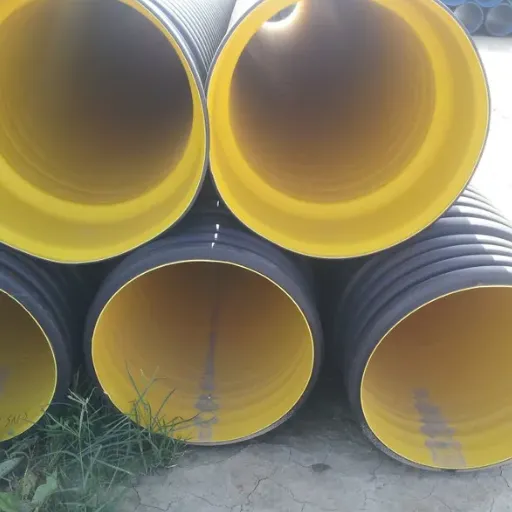
Large-diameter pipe, typically DN600mm and above, presents unique bending challenges. The forces required are substantial, ovality control becomes more difficult, and tight radii are rarely achievable.
For large-diameter HDPE and PP pipe used in municipal sewage and drainage:
Avoid field bending: Structural wall pipes, including spiral profile pipes, should not be bent in the field because the profile geometry can collapse or delaminate.
Use factory-fabricated fittings: Custom elbows, tees, and wyes maintain structural and hydraulic performance.
Plan trench alignment: Route trenches to use gentle curves and long-radius changes in direction instead of sharp bends.
Specify long coils for small diameters: DN315mm and smaller HDPE pipe is often supplied in coils, reducing joints and allowing gentle laying curves.
For large-diameter steel pipe in industrial applications, induction bending is usually the only practical method. The bend is performed in a shop, heat-treated if required, and inspected using ultrasonic testing or radiography.
Safety Considerations for Pipe Bending Operations
Pipe bending involves high forces, hot surfaces, and heavy material handling. A safe operation requires:
Machine guarding: Keep hands and loose clothing away from rotating bend dies and pinch points.
Heat management: Use thermal gloves and shields when bending heated thermoplastic pipe.
Lifting plans: Large pipe and bending equipment require proper rigging and lifting equipment.
Training: Operators must understand setup, tooling changes, and emergency stops.
PPE: Safety glasses, steel-toe boots, and hearing protection are minimum requirements.
Frequently Asked Questions
What is the best pipe bending technique for thin-wall tubing?
Mandrel bending is the best technique for thin-wall tubing because the internal mandrel supports the pipe wall and prevents collapse, wrinkling, and ovality. It produces smooth, repeatable bends suitable for high-pressure and cosmetic applications.
Can HDPE pipe be bent in the field?
Small-diameter HDPE pipe can be laid in gentle curves without formal bending, but tight or tight-radius bends require controlled heating and forming. Large-diameter HDPE and structural wall pipes should not be bent in the field; use factory-fabricated fittings instead.
What causes pipe bending defects like wrinkles and wall thinning?
Wrinkles form on the inner compression side when the bend radius is too tight or internal support is missing. Wall thinning occurs on the outer tension side when material stretches beyond its limits. Both can be controlled through proper tooling, bend radius, and process speed.
How do you calculate springback in pipe bending?
Springback depends on the material's elastic modulus, wall thickness, and bend radius. Fabricators typically measure springback empirically on sample pieces and then adjust the bend angle accordingly, often over-bending by 2-10 degrees depending on the material.
What standards apply to bent pipe for municipal projects?
Municipal plastic pipe projects commonly reference EN 13476, ASTM F894, and ISO 21138 for pipe and fitting performance. Always confirm the applicable local standard and any project-specific bend quality requirements.
Conclusion
Pipe bending techniques range from simple hand bending for small copper tubes to induction bending for heavy-wall steel in power plants. The right method depends on material, diameter, wall thickness, bend radius, and quality requirements. For HDPE and PP municipal pipe, controlled heating and proper tooling produce reliable bends, but large-diameter structural wall pipe is best served by factory-fabricated fittings and long-length production.
Key takeaways for your next project:
Match the bending technique to the pipe material and application requirements.
Control wall thinning, ovality, and wrinkling through tooling and process parameters.
Plan large-diameter thermoplastic installations to minimize field bending.
Reference applicable standards such as ASTM, EN, and ISO for quality acceptance.
For pipe producers looking to supply long-length, large-diameter HDPE/PP pipe with consistent quality, Qingdao Yongke Machinery manufactures spiral profile pipe production lines covering DN300mm to DN5000mm. Our ISO 9001, ISO 14001, and ISO 45001 certified facility in Qingdao, China, has delivered machinery to clients in more than thirty countries.
Recently Posted
-
Qingdao Yongke Machinery: Full-Category Spiral Pipe Equipment from China's Qingdao
September 1, 2026Choosing a machinery supplier for large-diameter plastic pipe production is a long-term decision, because the line you install wil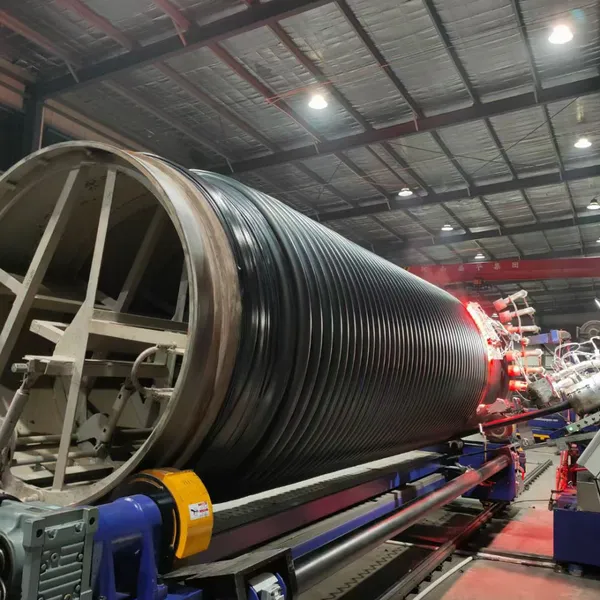 Read More
 -
Quality Control in Spiral Pipe Machine Manufacturing
August 31, 2026A buyer in South America some time ago received a winding line that looked complete on the surface but suffered repeated seam defe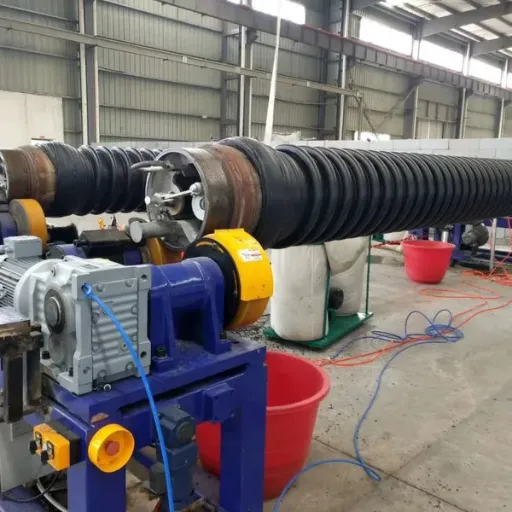 Read More
 -
Spiral Pipe for Sewage and Drainage Networks: Production Notes
August 28, 2026A municipal contractor in Eastern Europe some time ago took delivery of spiral-wound sewer pipe that looked flawless on the line.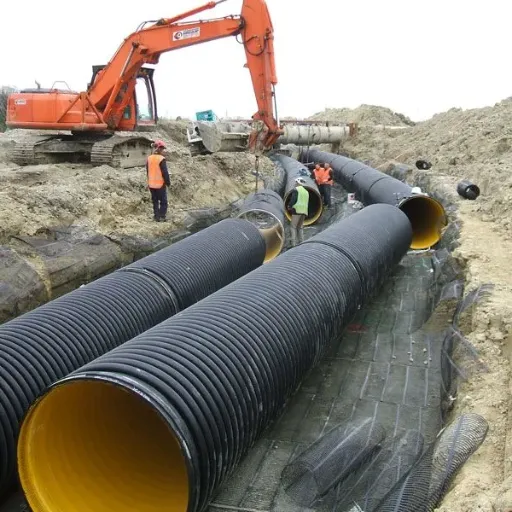 Read More
 -
DN300 to DN5000: Diameter Range and Machine Configuration
August 27, 2026A plant owner in Central Asia once asked for a line "up to DN5000" because a future tender mentioned large storage tanks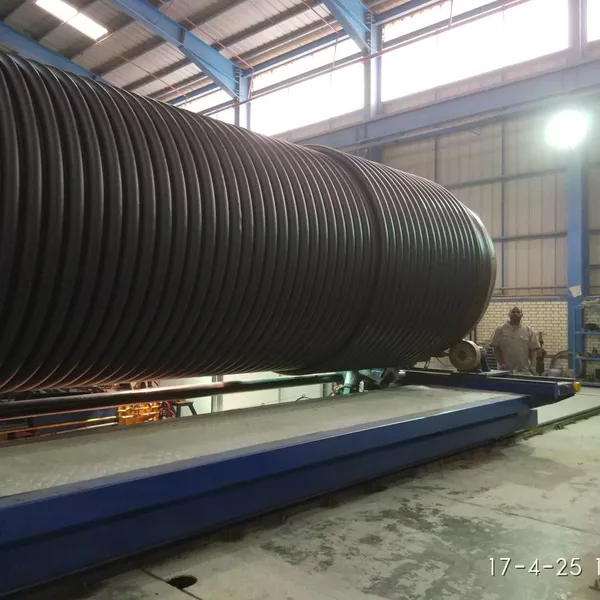 Read More

Contact Us
Recommended Products
-
 CIPP Glass Fibre Liner MachineNegotiableMOQ: 1 Set
 -
HDPE Helically Wound Tank MachineUS$ 10MOQ: 1 Set
-
CIPP Glass Liner MachineNegotiableMOQ: 1 Set
-
CIPP Felt Liner Manufacturing MachineNegotiableMOQ: 1 Set
-
Large Diameter HDPE Sea Intake Outfall Structured Wall Pipe Making MachineNegotiableMOQ: 1 Set
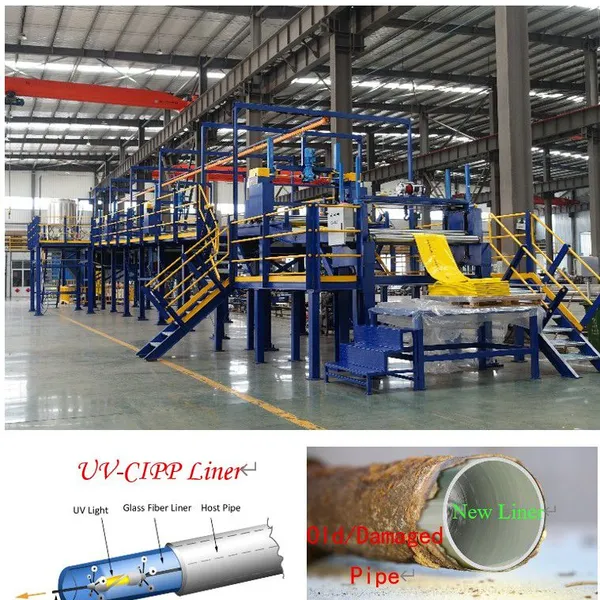
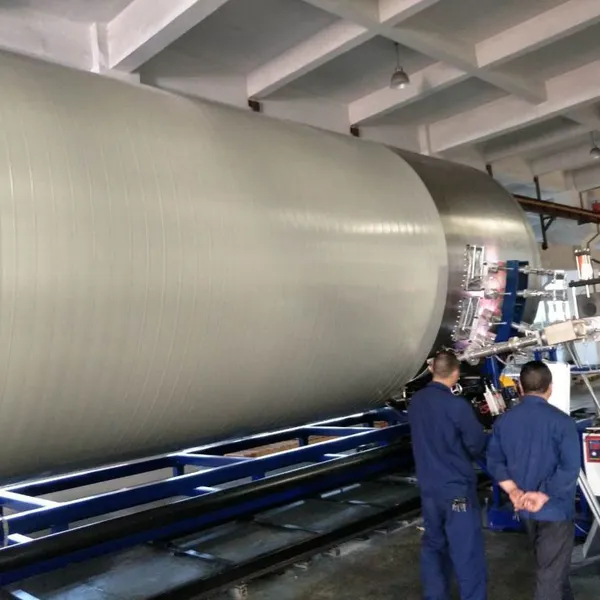
-
UV-CIPP Glass Fibre Liner Manufacturing MachineUS$ 1000 - 110000MOQ: 10 Meters
-
HDPE Pipe Extrusion Machine / PE Pipe Production Line With High OutputNegotiableMOQ: 1 Set
-
UV-CIPP Glass Fiber Liner Hose Production LineUS$ 1000 - 110000MOQ: 1 Set
-
HDPE Spiral Structure Wall Pipe MachineNegotiableMOQ: 1 Set
-
HDPE Spiral Pipe MachineNegotiableMOQ: 1 Set
-
HDPE Spiral Tank MachineNegotiableMOQ: 1 Set
-
Krah Pipe MachineNegotiableMOQ: 1 Set
-
Plastic HDPE PVC PPR Pipe Extrusion Making Machine Extrusion LineNegotiableMOQ: 1 Set
-
PVC Pipe Extrusion Production Line for Electrical Conduit and Water Supply PipesNegotiableMOQ: 1 Set
-
Hot Sell Single Wall Corrugated Pipe Extrusion Line With Competitive PriceNegotiableMOQ: 1 Set
-
HDPE Krah Profild Pipe MachineUS$ 10000MOQ: 1 Set
-
Plastic Tank CNC Holes Boring MachineUS$ 10000MOQ: 1 Set
-
Double Wall Corrugated Pipe Extrusion LineNegotiableMOQ: 1 Set
-
Single Wall Corrugated Pipe Extrusion LineNegotiableMOQ: 1 Set
-
Inversion CIPP Liner Tube Manufacturing MachineNegotiableMOQ: 1 Set