
 Business License
Stormwater Storage Tank: Design and Production Guide
A Florida county engineer watched a summer storm dump 150 millimeters of rain in six hours. The new commercial development downstream had no place for that water to go. Flooding reached the parking decks, and the county faced six months of insurance claims, repairs, and permit disputes.
The next project included a stormwater storage tank sized for the 100-year storm. Runoff entered the underground system, released slowly into the municipal network, and the development stayed dry through the following hurricane season. That experience showed how the right stormwater storage tank can turn a flooding liability into a controlled, permit-compliant asset.
Stormwater storage tank design is now a standard requirement for commercial, industrial, and municipal projects in many jurisdictions. Engineers must balance hydrology, structural loads, material selection, installation constraints, and long-term maintenance. For contractors and pipe producers, understanding how these tanks are manufactured opens opportunities to supply critical infrastructure more efficiently.
Demand for stormwater pipe production equipment is growing as municipalities replace aging drainage systems and new developments add detention and retention capacity. Producers who can manufacture both pipe and tank components from HDPE or PP gain a competitive advantage on multi-discipline infrastructure contracts. A complete stormwater pipe production equipment line can include extruders, winding units, welding stations, and cutting systems for both pipe and tank fabrication.
In this guide, we explain what a stormwater storage tank is, how detention and retention systems differ, which materials perform best, and how spiral winding technology produces large-diameter HDPE and PP tanks on-site or in a production facility. If your operation is evaluating stormwater pipe production equipment, our spiral tank winding machine page outlines the production line configurations Yongke Machinery supplies for tank manufacturing.
What Is a Stormwater Storage Tank?
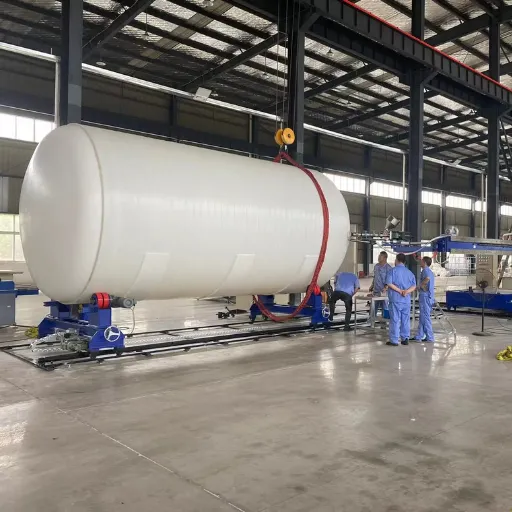
A stormwater storage tank is an underground or aboveground structure that collects, stores, and controls the release of rainfall runoff. These tanks reduce peak flow rates, prevent flooding, protect downstream waterways from erosion, and help developments meet municipal discharge permits.
Municipalities and environmental agencies increasingly require stormwater management for new construction. The United States Environmental Protection Agency identifies controlled discharge as a core element of stormwater management for commercial and industrial sites. Similar regulations exist across Europe, Australia, the Middle East, and Southeast Asia.
Stormwater storage tanks serve several purposes:
Flow attenuation: Slowing the rate at which runoff enters sewers, streams, or treatment plants
Volume reduction: Retaining water for infiltration, evaporation, or reuse
Water quality improvement: Settling sediments, oils, and debris before discharge
Flood protection: Preventing overloaded drainage systems from surcharging during extreme events
The Water Environment Federation publishes guidance on stormwater best management practices, including design approaches for water quality treatment and volume control.
Tanks can be installed beneath parking lots, roads, parks, and building footprints. This makes a stormwater storage tank practical for dense urban sites where open detention ponds are not feasible. When space is limited, an underground stormwater storage tank often becomes the only viable solution.
Detention vs Retention: Two Different Jobs
The terms detention and retention are often used interchangeably, but they describe different functions. Specifying the wrong type can lead to permit rejection or poor hydraulic performance.
Stormwater Detention Tank
A detention tank temporarily holds runoff and releases it at a controlled rate through a restricted outlet. The stormwater storage tank empties completely after the storm passes. Detention is common in urban developments where the goal is to match pre-development peak flow rates and avoid overwhelming downstream infrastructure.
Detention tanks are usually designed for a specific storm event, such as a 10-year or 100-year rainfall. The outlet structure includes orifices, weirs, or vortex flow controls calibrated to the permitted discharge rate.
Stormwater Retention Tank
A retention tank holds water permanently or semi-permanently. In this stormwater storage tank configuration, the stored water may infiltrate into the ground, evaporate, or be reused for irrigation, cooling, or non-potable applications. Retention tanks are common in areas with sandy soils, water scarcity, or green-building requirements.
Retention systems often include infiltration trenches, perforated walls, or pumps for water reuse. Because water remains in the tank, material selection must account for long-term immersion, groundwater pressure, and potential chemical exposure.
When Ahmed Hassan, a civil engineer in Dubai, designed a logistics park in 2024, he specified retention tanks for irrigation reuse. The tanks captured 40% of annual rooftop runoff, reducing municipal water purchases and keeping the development within its discharge permit. The decision turned a regulatory requirement into an operational cost saving.
Stormwater Storage Tank Materials: Why HDPE and PP Dominate
Material selection affects stormwater storage tank service life, structural performance, installation cost, and environmental compatibility. The most common materials include reinforced concrete, steel, fiberglass, and thermoplastics such as HDPE and PP.
Reinforced Concrete
Concrete tanks offer high structural strength and are widely used for large municipal installations. However, they are heavy, require extensive excavation, and can crack under differential settlement or freeze-thaw cycles. Concrete is also susceptible to corrosion from hydrogen sulfide in sewer environments.
Steel
Steel tanks provide high strength and can be fabricated in large diameters. Corrosion protection is essential, typically through coatings, linings, or cathodic protection. Steel tanks are often used for industrial applications but carry higher maintenance costs than an HDPE stormwater tank or PP alternative.
Fiberglass
Fiberglass reinforced plastic (FRP) tanks are lightweight and corrosion-resistant. They work well for smaller diameters and chemical storage. Large-diameter FRP stormwater tanks can become expensive due to shipping constraints and field joint complexity.
HDPE and PP
High-density polyethylene (HDPE) and polypropylene (PP) have become the dominant materials for many stormwater storage tank applications. An HDPE stormwater tank combines corrosion resistance with lightweight handling, making it suitable for buried installations beneath roads, parking areas, and building footprints.
These thermoplastics offer:
Chemical resistance: Long-term performance in acidic, alkaline, and hydrocarbon environments
Lightweight construction: Easier handling, reduced transportation cost, and faster installation
Flexibility: Tolerance for ground movement and settlement without cracking
Leak-free joints: Welded seams and extrusion-wound construction minimize infiltration and exfiltration
Long service life: HDPE and PP can exceed 50 years when properly installed
HDPE is governed by standards such as ASTM D3350, which defines cell classification for density, melt index, and environmental stress crack resistance. PP offers higher temperature resistance and stiffness, making it suitable for hot climates or buried applications with heavy surface loads. Both materials can be recycled at end of life, supporting sustainable infrastructure goals.
Stormwater Storage Tank Design Considerations
A well-designed stormwater storage tank begins with hydrologic analysis and ends with structural verification. Skipping either step risks failure during the design storm. Whether you are designing a stormwater detention tank for peak flow control or a stormwater retention tank for reuse, the same fundamental principles apply.
Hydrologic Modeling
Engineers calculate runoff volume using rainfall intensity, catchment area, land cover, soil type, and time of concentration. Common methods include the Rational Method for small catchments and hydrologic modeling software for larger or more complex sites. The modeling approach differs slightly for a stormwater detention tank, where peak outflow is the critical parameter, and a stormwater retention tank, where total captured volume matters more.
The required storage volume depends on:
Design storm return period
Pre-development and post-development runoff rates
Downstream system capacity
Local discharge limits
Required detention time or retention volume
Structural Loading
Buried tanks must withstand soil pressure, groundwater buoyancy, and live loads from traffic or structures. An HDPE stormwater tank designed for road loading requires sufficient ring stiffness and wall thickness to prevent deformation under these loads. The design should consider:
Overburden depth: Deeper burial increases vertical soil pressure
Traffic loads: Roads and parking areas require higher ring stiffness
Groundwater table: High groundwater creates hydrostatic pressure and uplift
Adjacent foundations: Nearby buildings may add lateral loads
Inlet and Outlet Design
Inlets must handle peak inflow without erosion or blockage. Outlets control the release rate and often include trash racks, energy dissipators, and flow restrictors. Maintenance access is essential for inspection and sediment removal.
Maintenance Access
Every stormwater storage tank needs safe access for cleaning, inspection, and debris removal. Manholes, ladders, and ventilation must meet local safety standards. Poor access design turns routine maintenance into an expensive confined-space operation.
When Lisa Park, a stormwater designer in Atlanta, specified a 1,200-cubic-meter detention tank beneath a retail parking lot, she added two 1,200-millimeter manholes and a sloped sump for sediment removal. Three years later, the maintenance contractor reported that cleaning took half the time of comparable tanks with single access points. See more installation examples from contractors who have produced stormwater storage tanks using spiral winding technology.
Manufacturing HDPE and PP Stormwater Storage Tanks
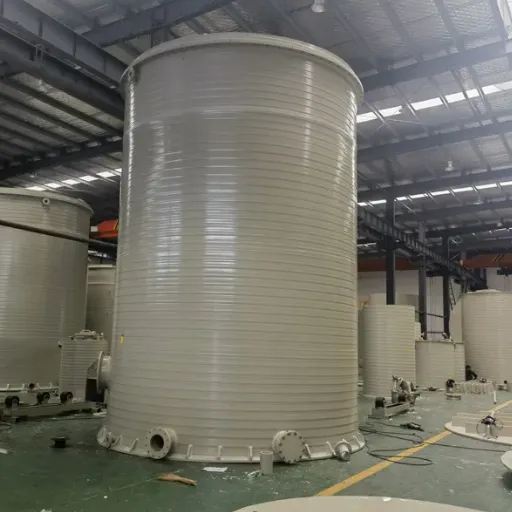
Traditional stormwater storage tank manufacturing involves molding, welding panels, or casting concrete on-site. Spiral winding offers an alternative that produces seamless, structural-wall tanks directly at the project site or in a nearby fabrication yard.
How Spiral Winding Works
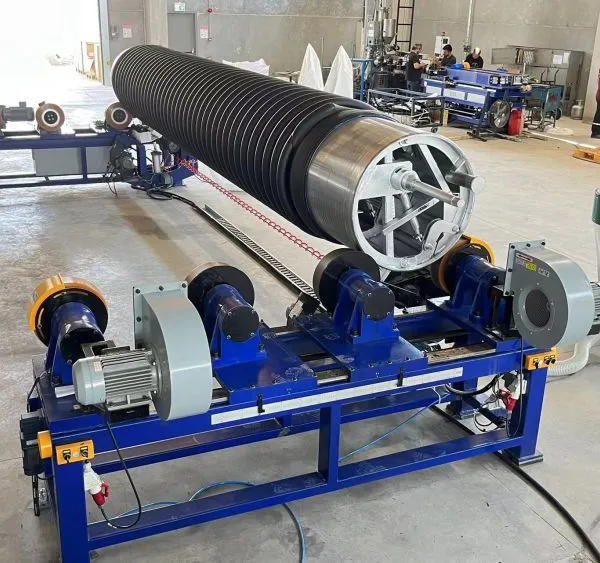
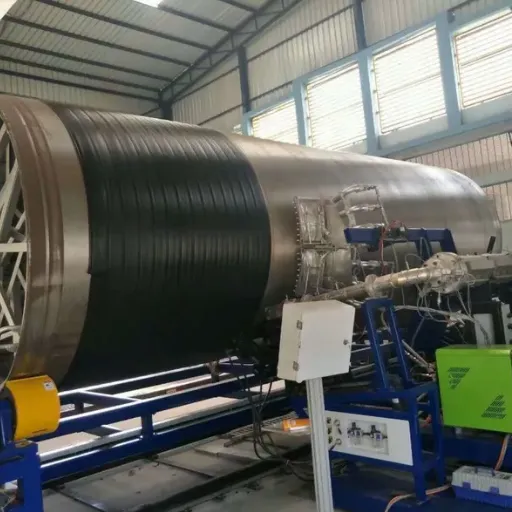
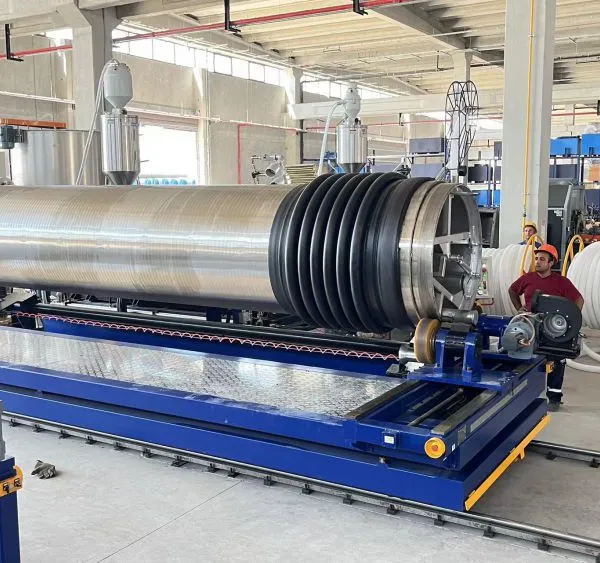
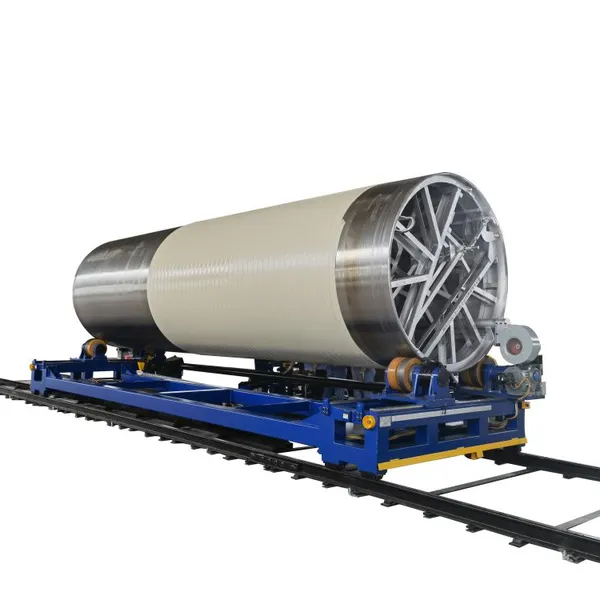
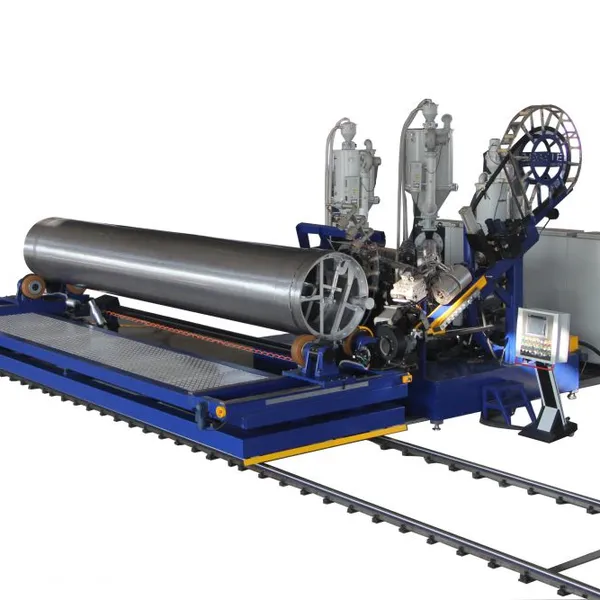
A spiral tank winding machine extrudes a thermoplastic profile strip and winds it continuously onto a rotating mandrel. Each profile overlap is welded to the previous turn, creating a cylindrical wall with integral structural ribs. The process produces tanks with diameters ranging from a few meters to more than five meters and volumes from tens to thousands of cubic meters.
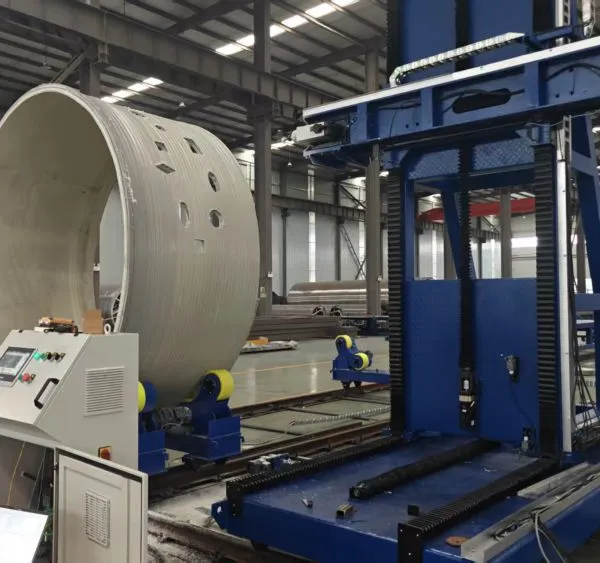
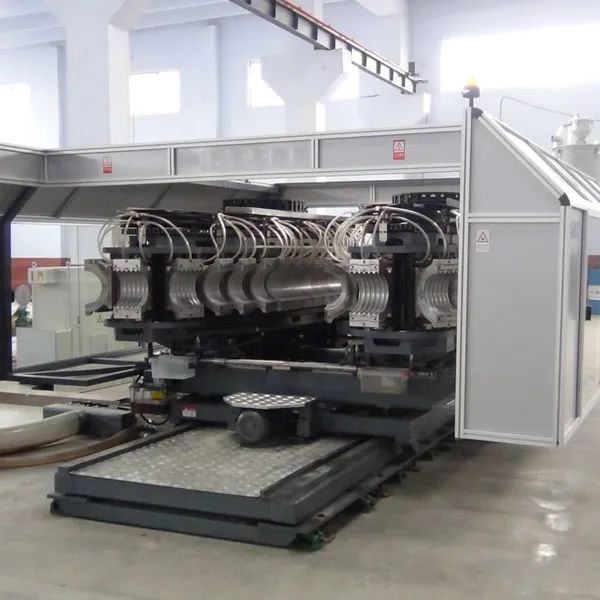
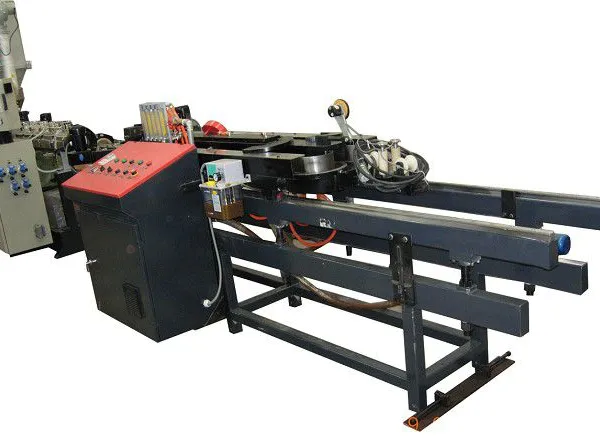
The key components of a spiral tank production line include:
Extruder: Melts HDPE or PP pellets and forms the profile strip
Winding unit: Rotates the mandrel and controls profile placement
Welding station: Joins profile overlaps with hot-plate or extrusion welding
Mandrel system: Determines the internal diameter of the tank
Cutting and finishing equipment: Prepares tank ends and openings
Control system: PLC-based automation for consistent wall thickness and production speed
Advantages of Spiral-Wound Tanks
Spiral-wound HDPE and PP tanks offer several advantages over conventional construction:
Seamless construction: Fewer joints reduce leak paths
Custom diameters: Tanks are produced to exact project dimensions
On-site production: A spiral tank winding machine can produce large tanks at the project site, reducing transportation cost
Fast assembly: Winding, welding, and installation proceed in parallel
Structural wall design: Ribbed profiles provide ring stiffness without excessive material
Material efficiency: Optimized profile design reduces resin use
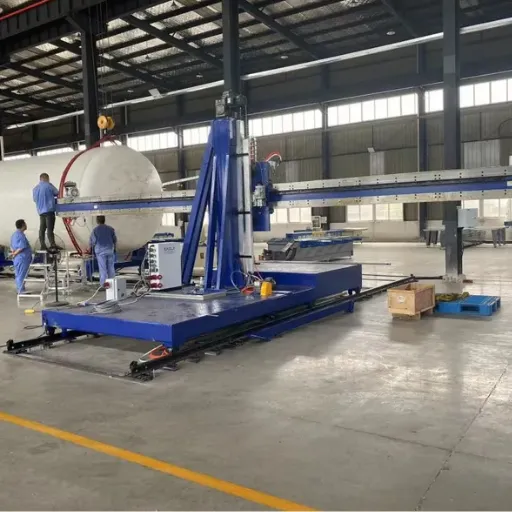
Yongke Machinery manufactures spiral tank winding machines for producing HDPE and PP tanks on-site or in dedicated production facilities. As part of a complete stormwater pipe production equipment package, these lines can also integrate with HDPE/PP spiral profile pipe machines for projects that require both pipe and tank components. The lines can be configured for diameters and volumes matching municipal stormwater, industrial containment, and agricultural storage applications.
Request a customized tank production line proposal for your target diameter range and project volume.
Sizing a Stormwater Storage Tank
Tank sizing combines hydrology, hydraulics, and site constraints. An undersized stormwater storage tank will surcharge during the design storm, while an oversized tank wastes capital and valuable site space. The following example illustrates a typical detention calculation.
Example Sizing Calculation
A 5-hectare commercial site in a region with a 100-year rainfall of 120 millimeters over six hours must limit discharge to the pre-development peak flow. Post-development runoff coefficients are higher due to pavement and rooftops.
Using a hydrologic model, the engineer calculates:
Post-development peak inflow: 2.8 cubic meters per second
Permitted peak outflow: 0.9 cubic meters per second
Required detention volume: 1,850 cubic meters
The stormwater storage tank is sized at 2,000 cubic meters to provide a safety margin. A cylindrical tank with a 16-meter diameter and 10-meter effective height provides the required volume with a footprint that fits beneath the proposed parking structure.
Diameter and Height Tradeoffs
Larger diameters reduce excavation depth but increase footprint. Taller tanks reduce footprint but require deeper excavation and stronger walls. The optimal geometry depends on site geometry, groundwater depth, and structural cost. For a stormwater detention tank beneath a road, a shallow wide profile may avoid conflicts with utilities. For a stormwater retention tank on a tight industrial lot, a deeper tank may be the only option.
Outlet Sizing
The outlet must discharge the stored volume over the required time. Orifice equations and stage-storage relationships determine the outlet diameter and configuration. Engineers typically model the full storm hydrograph to confirm performance. Low-flow orifices handle frequent small storms, while larger outlets pass extreme events without causing upstream flooding.
Installation Best Practices
Proper installation ensures the tank performs as designed for decades. Common failures result from poor bedding, inadequate compaction, or uncontrolled buoyancy.
Excavation and Bedding
The excavation for a stormwater storage tank should provide stable, level bedding free of debris, large rocks, and organic material. A sand or granular bedding layer protects the tank base and distributes loads. For HDPE and PP tanks, rounded bedding material prevents point loads that could damage the wall.
Backfill and Compaction
Backfill should be placed in lifts and compacted evenly around the tank. Uneven compaction can create differential loads and ovality. The backfill material and compaction level must match the structural design assumptions.
Buoyancy Control
Empty plastic tanks in high groundwater can float. Buoyancy calculations must consider the empty tank weight, backfill weight, and highest anticipated groundwater level. Anti-flotation measures may include concrete anchors, ballast slabs, or increased burial depth. A stormwater detention tank installed seasonally dry may need less buoyancy protection than a stormwater retention tank that remains full.
Connection Details
Inlet and outlet pipes must connect securely to the tank wall. Flexible connections accommodate settlement and thermal movement. Properly sealed connections prevent leakage and infiltration.
When a contractor in Sydney installed a 3,000-cubic-meter HDPE detention tank in 2023, the project team placed the first backfill lifts by hand to avoid mechanical damage. They compacted each 200-millimeter lift to 95% standard Proctor density. The HDPE stormwater tank remained within 1% of design roundness after backfill, and post-construction leak testing passed on the first attempt.
Cost Factors for Stormwater Storage Tanks
Project costs vary widely based on size, material, site conditions, and regulatory requirements. Understanding the main cost drivers helps engineers and contractors prepare accurate budgets.
Material and Fabrication
HDPE and PP tank material cost depends on resin prices, wall thickness, and tank volume. An HDPE stormwater tank produced by spiral winding typically costs less than an equivalent concrete tank when installation, transport, and jointing are included. On-site spiral winding can reduce transportation and panel-jointing costs for large tanks. Concrete tanks become cost-competitive for very large volumes but carry higher installation and restoration expenses.
Excavation and Dewatering
Deep tanks in dense urban areas require significant excavation, shoring, and dewatering. A stormwater detention tank beneath a roadway may need traffic decking and night work permits, while a stormwater retention tank in sandy soils may require less dewatering but more infiltration detail. High groundwater or contaminated soil adds further cost. These factors often influence the choice between shallow wide tanks and deep narrow tanks.
Structural Requirements
Tanks under roads or heavy loads require higher ring stiffness and thicker walls. Additional reinforcement, concrete surround, or structural backfill increases cost. Simpler installations in landscaped areas can use lighter designs.
Permits and Inspections
Stormwater systems require permits for discharge, construction, and environmental compliance. Inspections during and after installation add cost but protect against future liability.
Lifecycle Maintenance
Maintenance includes sediment removal, debris clearing, inlet and outlet inspection, and structural checks. Tanks with good access and smooth internal surfaces reduce long-term cleaning cost. HDPE and PP resist corrosion and biological growth, which lowers maintenance compared with concrete or steel.
For contractors evaluating whether to produce tanks in-house, a spiral tank winding machine converts tank fabrication from a purchased subcontract cost into a controlled manufacturing cost. This is especially valuable for contractors with recurring municipal stormwater programs. Pairing a spiral tank winding machine with stormwater pipe production equipment lets a single facility supply both pipe and tank products for infrastructure contracts.
Standards and Certifications for Stormwater Storage Tanks
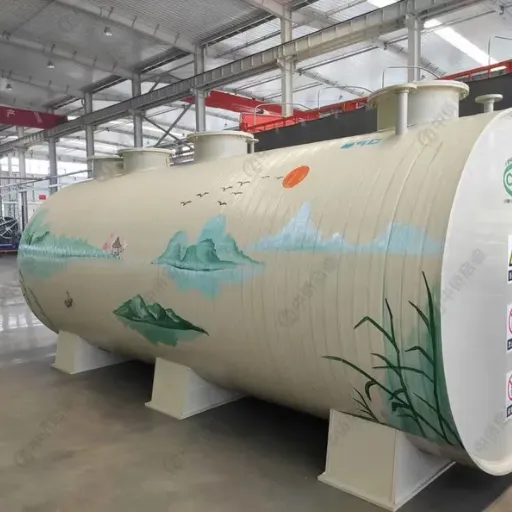
Stormwater storage tank projects must meet local building codes, environmental permits, and material standards. Understanding these requirements early prevents redesign and delays.
Material Standards
HDPE resins for tank production should meet ASTM D3350 or equivalent international standards. The cell classification confirms density, melt flow rate, slow crack growth resistance, and hydrostatic design basis. PP resins should meet relevant ISO or EN standards for pressure and environmental applications.
Structural Standards
Buried stormwater storage tank design often follows structural codes that account for soil loads, traffic loads, and hydrostatic pressure. In the United States, ASTM and AASHTO guidelines apply to buried thermoplastic structures. European projects may reference EN 13476 or EN 15382 for thermoplastic piping and tank systems.
Environmental Compliance
Discharge permits govern the rate, volume, and quality of water released from a stormwater storage tank. Projects may also require spill containment, oil separation, or sedimentation chambers depending on the catchment land use.
Yongke Machinery builds spiral tank winding machines under ISO 9001, ISO 14001, and ISO 45001 certified processes. This quality foundation helps tank producers meet the documentation and traceability requirements of municipal and industrial buyers. For a deeper explanation of what these certifications mean for machinery buyers, see our guide to ISO certifications for pipe machinery.
Stormwater Storage Tank vs Detention Pond
Engineers often compare underground tanks with open detention ponds. Each has advantages depending on the site.
| Factor | Underground Storage Tank | Open Detention Pond |
|---|---|---|
| Land use | Minimal surface footprint | Requires open land |
| Safety | Eliminates open water hazard | Requires fencing and maintenance |
| Aesthetics | Hidden beneath development | Visible landscape feature |
| Cost | Higher capital cost, less land cost | Lower capital cost, more land cost |
| Maintenance | Confined-space access | Easier surface access |
| Mosquito control | Enclosed, controlled | Requires management |
| Urban suitability | Excellent | Limited |
The right choice between a stormwater storage tank and an open pond depends on land cost, available space, safety requirements, and maintenance capacity. Underground tanks are usually the better choice where land value is high, open space is limited, or safety concerns rule out open ponds. Open ponds remain economical for large suburban or industrial sites with available land.
Maintenance and Inspection Requirements
A stormwater storage tank is only as reliable as its maintenance program. Neglect leads to sediment accumulation, reduced capacity, odor problems, and regulatory violations.
Routine Inspection
Schedule visual inspections at least annually and after major storms. Look for:
Sediment buildup
Debris blockage at inlets and outlets
Damage to walls, joints, or coatings
Evidence of infiltration or exfiltration
Proper function of flow controls
Cleaning and Sediment Removal
Remove sediment before it reduces effective storage volume. Vacuum trucks, high-pressure jetting, and manual removal are common methods. Tanks with sumps and multiple access points simplify cleaning. A stormwater detention tank may need cleaning less often than a stormwater retention tank because it drains completely between events, while retained water can promote biological growth.
Structural Monitoring
Monitor for wall deformation, settlement, or joint separation. Laser profiling and CCTV inspection can document changes over time. Early intervention prevents costly repairs.
Frequently Asked Questions About Stormwater Storage Tanks
What Is the Difference Between a Detention and Retention Tank?
A stormwater detention tank stores runoff temporarily and releases it slowly until empty. A stormwater retention tank holds water for infiltration, evaporation, or reuse. Detention controls peak flow, while retention reduces total runoff volume.
How Long Do HDPE Stormwater Storage Tanks Last?
An HDPE stormwater tank can last 50 years or more when properly designed, installed, and maintained. PP stormwater storage tanks offer similar longevity. Material resistance to corrosion, chemicals, and biological attack contributes to long service life. A stormwater detention tank may experience more frequent wet-dry cycles than a stormwater retention tank, but both benefit from the same durable thermoplastic construction.
Can Stormwater Storage Tanks Be Installed Under Roads?
Yes, underground tanks are commonly installed beneath roads, parking lots, and building footprints. The design must account for traffic loads, burial depth, and structural backfill requirements.
What Sizes Are Available for Spiral-Wound Stormwater Tanks?
Spiral-wound HDPE and PP tanks can be produced in diameters from approximately DN2000mm to DN5000mm or larger, depending on equipment configuration. Volume is determined by diameter and height, allowing customization for each project.
How Does a Stormwater Storage Tank Improve Water Quality?
Tanks reduce flow velocity, allowing sediments, oils, and debris to settle before controlled discharge. Some designs include pretreatment chambers, oil separators, or filtration components for additional treatment.
Is On-Site Tank Production Cost-Effective?
On-site spiral winding can reduce transportation cost and simplify logistics for large tanks or remote projects. For contractors with recurring tank demand, investing in stormwater pipe production equipment can lower per-unit cost and improve schedule control. A spiral tank winding machine also lets producers customize diameters and wall thickness for each stormwater storage tank project.
Conclusion: Build Smarter Stormwater Storage
A well-designed stormwater storage tank is essential infrastructure for managing runoff, preventing flooding, and protecting water quality in developed areas. The right stormwater storage tank combines accurate hydrologic design, durable materials, structural integrity, and practical maintenance access.
HDPE and PP tanks produced by spiral winding offer a modern alternative to concrete and steel. The seamless construction, corrosion resistance, and on-site production flexibility make them attractive for municipal, commercial, and industrial projects worldwide. Contractors who invest in stormwater pipe production equipment can extend their capabilities from pipe supply into stormwater storage tank fabrication, capturing more value from each project.
Yongke Machinery supports contractors and pipe producers entering the stormwater tank market with spiral tank winding machines and HDPE/PP spiral profile pipe production lines. With 16+ years of experience in large-diameter thermoplastic production equipment and a global after-sales support network, we help you configure, install, and commission tank production lines for your market.
Contact our engineering team to discuss your stormwater storage tank production requirements and request a customized equipment proposal.
Key Takeaways
A stormwater storage tank controls runoff volume and peak discharge to prevent flooding and protect downstream systems.
Detention tanks release water slowly, while retention tanks hold water for infiltration, evaporation, or reuse.
HDPE and PP offer corrosion resistance, flexibility, long service life, and leak-free welded construction.
Spiral winding produces seamless, structural-wall tanks on-site or in a fabrication yard, reducing transportation and jointing costs.
Proper sizing requires hydrologic modeling, structural load analysis, and outlet design verification.
Installation quality, including bedding, backfill, and buoyancy control, determines long-term performance.
Yongke Machinery supplies spiral tank winding machines and HDPE/PP pipe production lines for stormwater infrastructure projects.
Recently Posted
-
Qingdao Yongke Machinery: Full-Category Spiral Pipe Equipment from China's Qingdao
September 1, 2026Choosing a machinery supplier for large-diameter plastic pipe production is a long-term decision, because the line you install wil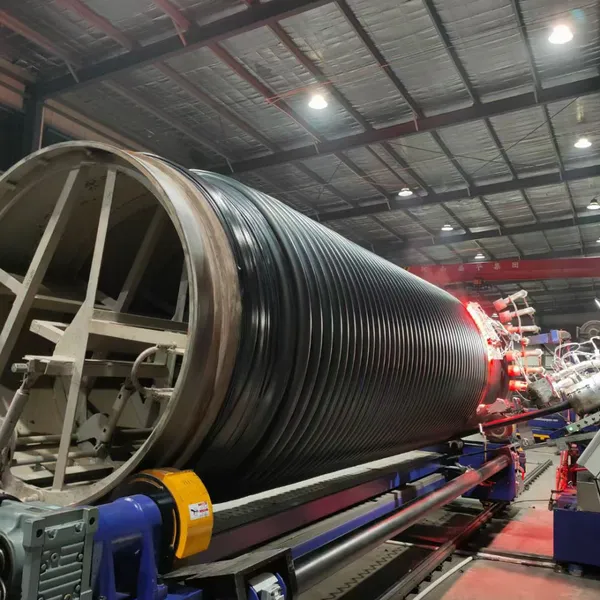 Read More
 -
Quality Control in Spiral Pipe Machine Manufacturing
August 31, 2026A buyer in South America some time ago received a winding line that looked complete on the surface but suffered repeated seam defe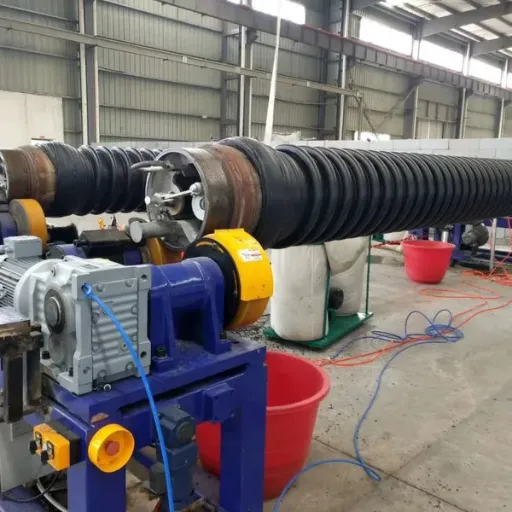 Read More
 -
Spiral Pipe for Sewage and Drainage Networks: Production Notes
August 28, 2026A municipal contractor in Eastern Europe some time ago took delivery of spiral-wound sewer pipe that looked flawless on the line.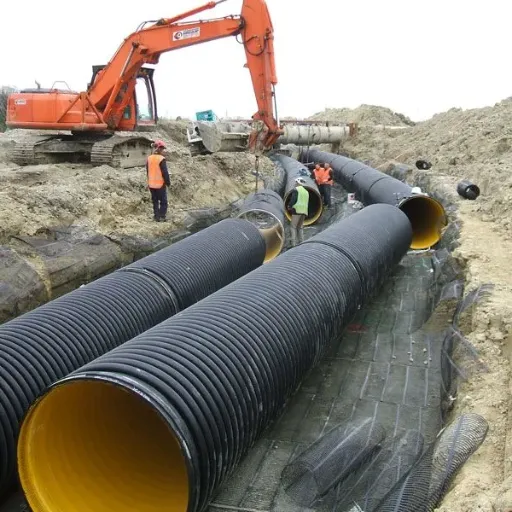 Read More
 -
DN300 to DN5000: Diameter Range and Machine Configuration
August 27, 2026A plant owner in Central Asia once asked for a line "up to DN5000" because a future tender mentioned large storage tanks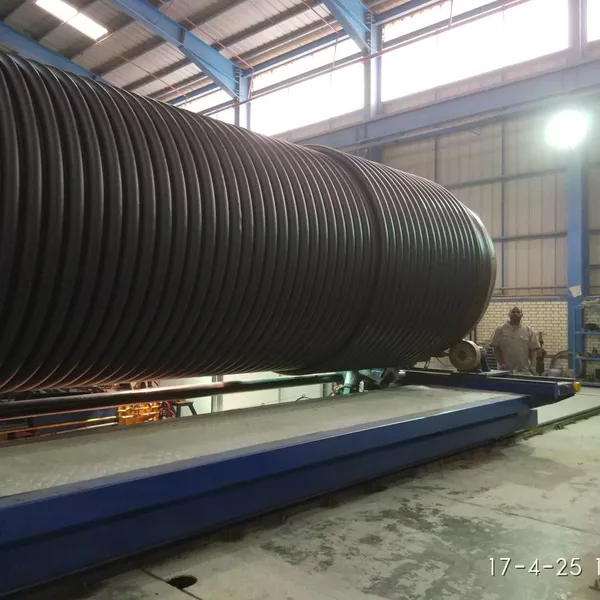 Read More

Contact Us
Recommended Products
-
 CIPP Glass Fibre Liner MachineNegotiableMOQ: 1 Set
 -
HDPE Helically Wound Tank MachineUS$ 10MOQ: 1 Set
-
CIPP Glass Liner MachineNegotiableMOQ: 1 Set
-
CIPP Felt Liner Manufacturing MachineNegotiableMOQ: 1 Set
-
Large Diameter HDPE Sea Intake Outfall Structured Wall Pipe Making MachineNegotiableMOQ: 1 Set
-
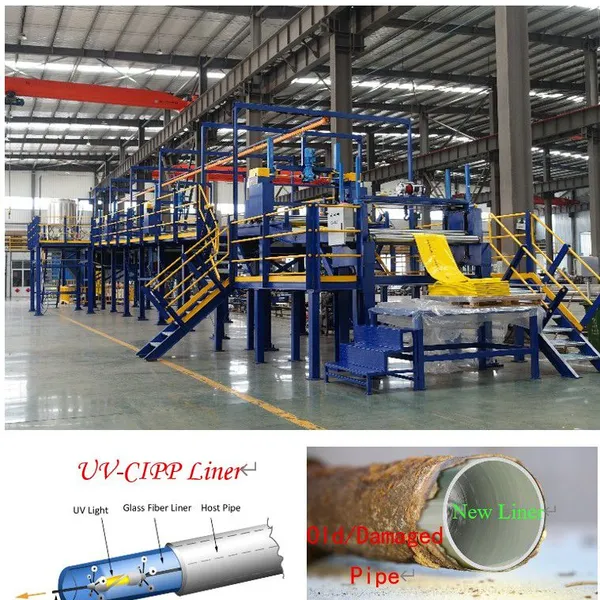
UV-CIPP Glass Fibre Liner Manufacturing MachineUS$ 1000 - 110000MOQ: 10 Meters
-
HDPE Pipe Extrusion Machine / PE Pipe Production Line With High OutputNegotiableMOQ: 1 Set
-
UV-CIPP Glass Fiber Liner Hose Production LineUS$ 1000 - 110000MOQ: 1 Set
-
HDPE Spiral Structure Wall Pipe MachineNegotiableMOQ: 1 Set
-
HDPE Spiral Pipe MachineNegotiableMOQ: 1 Set
-
HDPE Spiral Tank MachineNegotiableMOQ: 1 Set
-
Krah Pipe MachineNegotiableMOQ: 1 Set
-
Plastic HDPE PVC PPR Pipe Extrusion Making Machine Extrusion LineNegotiableMOQ: 1 Set
-
PVC Pipe Extrusion Production Line for Electrical Conduit and Water Supply PipesNegotiableMOQ: 1 Set
-
Hot Sell Single Wall Corrugated Pipe Extrusion Line With Competitive PriceNegotiableMOQ: 1 Set
-
HDPE Krah Profild Pipe MachineUS$ 10000MOQ: 1 Set
-
Plastic Tank CNC Holes Boring MachineUS$ 10000MOQ: 1 Set
-
Double Wall Corrugated Pipe Extrusion LineNegotiableMOQ: 1 Set
-
Single Wall Corrugated Pipe Extrusion LineNegotiableMOQ: 1 Set
-
Inversion CIPP Liner Tube Manufacturing MachineNegotiableMOQ: 1 Set