
 Business License
Large Diameter HDPE Pipe: Production Technology and Applications from DN300 to DN5000mm
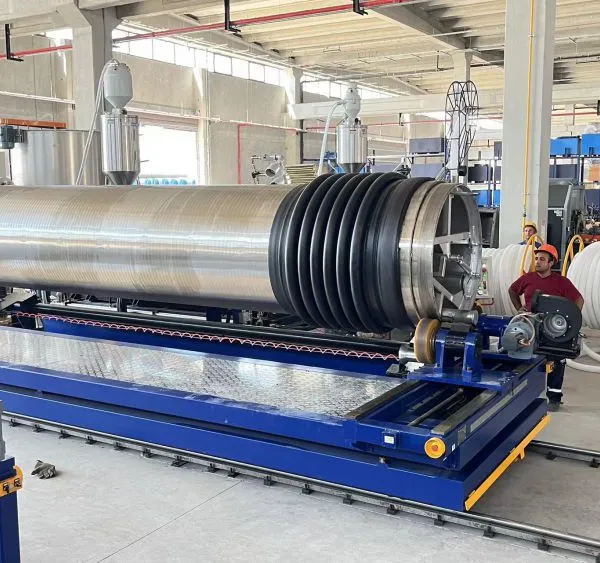
Large diameter HDPE pipe is a high-density polyethylene structural wall pipe used for municipal sewer, drainage, stormwater, water supply, and industrial applications with diameters typically ranging from DN300mm to DN5000mm. The most common production method for diameters above DN800mm is spiral profile pipe technology, also known as Krah pipe manufacturing.
What if a single production line could supply every pipe diameter your municipal contracts require, from small collector lines to major interceptor sewers? That is exactly what modern HDPE spiral profile pipe production lines deliver. At Qingdao Yongke Machinery, we have manufactured large diameter pipe machines since 2010, and our equipment now serves pipe producers across more than thirty countries. This guide explains the technology, specifications, and selection criteria for producing HDPE pipes from DN300mm to DN5000mm.
In this article, you will learn how large diameter HDPE pipes are manufactured, why spiral profile technology dominates the DN800-DN5000mm range, which applications demand specific diameters, and what equipment capabilities to evaluate when selecting a production line.
Key Takeaways
Large diameter HDPE pipes cover DN300mm to DN5000mm and serve municipal sewer, drainage, stormwater, and industrial applications.
Spiral profile pipe technology, or Krah pipe production, is the most versatile method for producing HDPE pipes from DN800mm to DN5000mm.
HDPE spiral profile pipes offer high ring stiffness, corrosion resistance, long service life, and efficient material usage compared to concrete or metal alternatives.
Key specifications to evaluate include diameter range, ring stiffness rating, material compatibility, and production output capacity.
Qingdao Yongke Machinery manufactures HDPE spiral profile pipe production lines from DN300mm to DN5000mm with ISO 9001, ISO 14001, ISO 45001, and CE certification.
What Is Large Diameter HDPE Pipe?
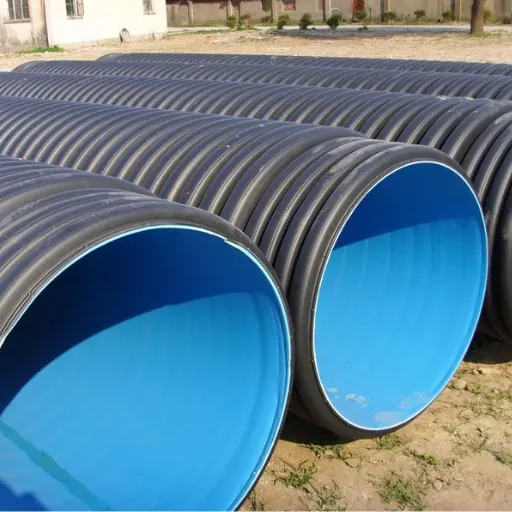
Large diameter HDPE pipe refers to high-density polyethylene pipes with nominal diameters typically starting at DN300mm and extending to DN5000mm or larger. These pipes are used in infrastructure projects where high flow capacity, chemical resistance, and long service life are essential.
Unlike small-diameter solid-wall HDPE pipes, large diameter HDPE pipes usually feature structural wall construction. The most common structural designs include:
Spiral profile pipes: Hollow-profile walls wound helically to create ring stiffness with reduced material usage
Double-wall corrugated pipes: Outer corrugated wall bonded to smooth inner wall, common for DN300-DN800mm
Solid-wall pipes: Used for pressure applications and smaller diameters
For diameters above DN800mm, spiral profile pipe technology becomes the dominant manufacturing method. The winding process enables production of pipe sizes that would be impractical or uneconomical to extrude as solid walls.
When the procurement team at Midwest Infrastructure in Illinois prepared bids for a regional sewer interceptor in 2023, they needed pipes from DN1200mm to DN3000mm. Concrete pipes would have required heavy equipment, longer installation times, and more joints. They specified large diameter HDPE spiral profile pipes instead. The contractor installed the line 40% faster, reduced truck movements by half, and eliminated many of the joints that create long-term leakage risk.
How Large Diameter HDPE Pipe Is Manufactured
A complete large diameter HDPE pipe production line integrates several systems that transform polyethylene resin into finished structural wall pipe. Understanding each stage helps buyers evaluate machine capabilities and production economics.
Material Feeding and Drying
HDPE resin, typically PE80 or PE100 grade, is fed into the extrusion system. Virgin material is common for pressure or critical sewer applications. Co-extrusion systems can also process recycled HDPE in outer layers, supporting sustainability targets and cost reduction.
Extrusion
A single-screw extruder melts and homogenizes the HDPE resin. For large diameter pipe production, extruder sizes typically range from 90mm to 150mm screw diameter depending on output and pipe wall thickness requirements. The extruder must maintain stable melt temperature and pressure to ensure consistent profile dimensions.
Profile Forming
For spiral profile pipe machines, the molten polymer passes through a spiral mandrel die that shapes it into a hollow profile strip. The die geometry determines wall thickness, rib height, and hollow chamber dimensions. Vacuum calibration immediately holds the profile shape while cooling water solidifies the outer surface.
Winding
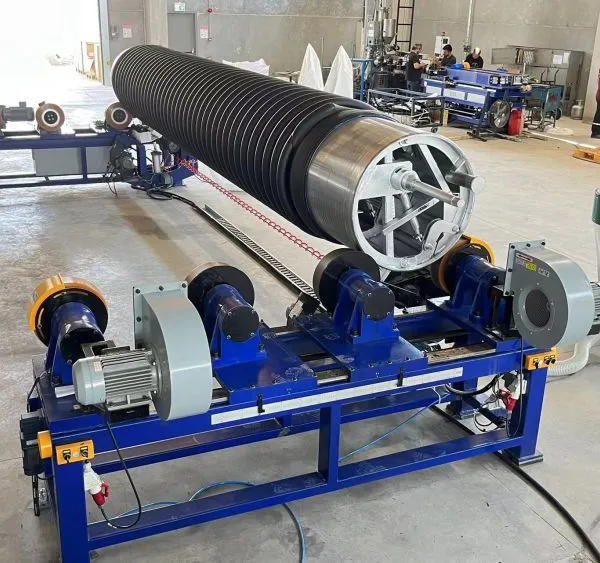
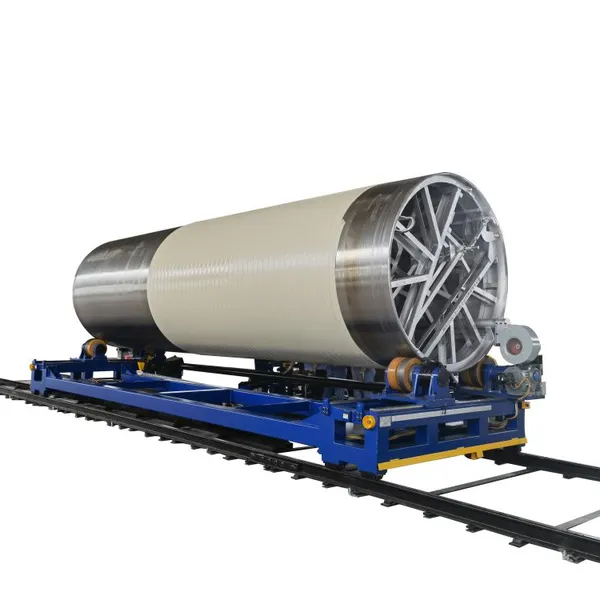
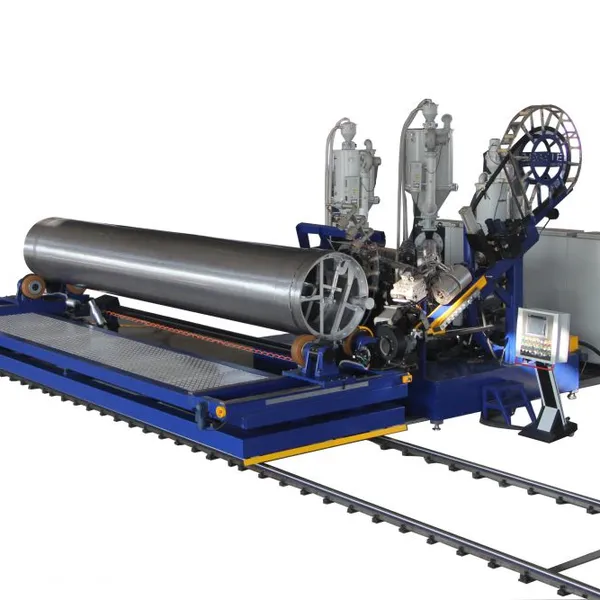
The cooled profile strip feeds onto a rotating mandrel at a controlled helical angle. Each winding overlaps the previous turn, and a heating element fuses the overlap to create a continuous structural wall. Winding parameters including angle, overlap width, and weld temperature must be precisely controlled to achieve full fusion without degrading the polymer.
Cutting and Handling
When the pipe reaches the specified length, a flying cut-off saw severs the pipe without stopping production. Automated ejection and stacking systems prepare finished pipes for storage or shipment.
Spiral Profile Pipe vs Corrugated Pipe vs Solid Wall
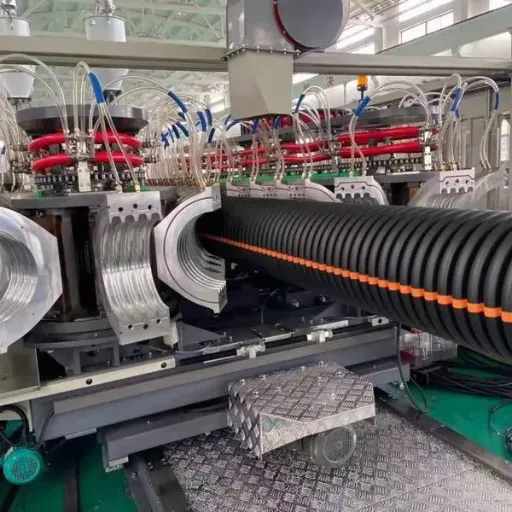
Not every large diameter HDPE pipe uses the same manufacturing technology. Each method has distinct advantages, cost structures, and ideal diameter ranges.
Solid Wall HDPE Pipe
Solid wall pipes are extruded as continuous cylinders with uniform wall thickness. They offer maximum pressure capability and are common for water supply and gas distribution. However, material usage increases rapidly with diameter, making solid-wall construction uneconomical for large gravity sewer and drainage pipes.
Double-Wall Corrugated HDPE Pipe
Double-wall corrugated pipes combine a smooth inner wall with a corrugated outer wall for ring stiffness. They are efficient for DN300-DN800mm applications such as drainage, stormwater, and smaller sewer lines. Production is fast, and material usage is low. Above DN800mm, corrugated pipe manufacturing becomes more complex.
Spiral Profile HDPE Pipe
Spiral profile pipes use a helically wound hollow-profile strip to create structural wall pipes. This method excels from DN800mm to DN5000mm and beyond.
| Parameter | Solid Wall | Double-Wall Corrugated | Spiral Profile |
|---|---|---|---|
| Typical diameter range | DN20-DN630 | DN300-DN1200 | DN300-DN5000+ |
| Pressure capability | High | Low | Low to moderate |
| Ring stiffness options | Limited | SN4-SN16 | SN4-SN16+ |
| Material efficiency | Low for large diameters | High | High |
| Production flexibility | High speed, fixed diameter | Moderate | Adjustable diameter |
| Main applications | Water supply, gas | Drainage, stormwater | Sewer, large drainage, industrial |
For pipe producers serving municipal infrastructure, the ability to manufacture large diameter HDPE spiral profile pipes opens access to the largest and most demanding projects.
Applications by Diameter Range
Different infrastructure applications require different pipe diameters. Understanding these relationships helps pipe producers target their production capabilities effectively.
DN300-DN600: House Connections and Small Collectors
These smaller diameters serve house connections, small commercial developments, and minor drainage systems. Double-wall corrugated pipes are common in this range because of high production speed and low cost.
DN800-DN1200: Neighborhood and District Collectors
This range represents the transition point where spiral profile pipe technology becomes competitive. Pipes in this range serve neighborhood sewer collectors, stormwater trunk lines, and industrial effluent systems.
DN1200-DN2000: Trunk Sewers and Main Collectors
Trunk sewers convey wastewater from district collectors to treatment facilities. Spiral profile HDPE pipes dominate this range because they offer high ring stiffness, lightweight installation, and long lengths with minimal joints.
DN2200-DN4000: Interceptor Sewers and Transport Lines
Interceptor sewers are major infrastructure assets. Large diameter HDPE spiral profile pipes provide corrosion resistance, hydraulic efficiency, and the structural strength needed for deep burial and heavy traffic loading.
DN4000-DN5000: Outfalls and Major Transport Systems
The largest diameters serve treatment plant outfalls, marine outfalls, and regional transport sewers. Spiral profile pipe technology is one of the few practical methods for manufacturing these very large diameters in HDPE.
At Qingdao Yongke Machinery, our HDPE spiral profile pipe production lines cover the full DN300mm to DN5000mm range, enabling producers to serve applications from small collectors to major outfalls.
Key Specifications to Evaluate
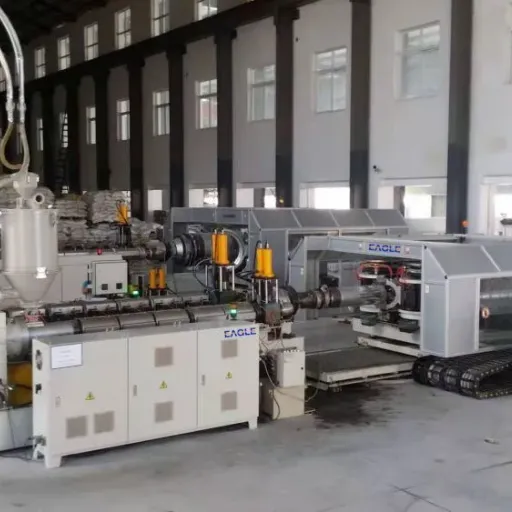
When selecting a large diameter HDPE pipe production line, several technical specifications determine whether the equipment meets your market requirements.
Diameter Range
The most fundamental specification is the diameter range the machine can produce. Machines optimized for DN300-DN1200 will not efficiently produce DN4000 pipes, and vice versa. Confirm that the machine's mandrel sizes, winding geometry, and extruder capacity match your target range.
Ring Stiffness
Ring stiffness, designated as SN in European standards or PS in American standards, measures resistance to external deformation. Common ratings include:
SN4 / PS 46: Light traffic and shallow burial
SN8 / PS 115: Standard municipal sewer applications
SN16 / PS 230: Deep burial or heavy traffic loading
The achievable ring stiffness depends on profile design, material grade, and winding precision.
Material Compatibility
Modern large diameter pipe machines should process HDPE, PP, and polyolefin compounds. Some machines also support co-extrusion with recycled material layers, which is increasingly important for sustainable infrastructure projects.
Production Output
Output is typically expressed in kilograms per hour or meters per hour. For a given pipe specification, output depends on extruder capacity, profile cross-section, winding speed, and cooling capacity. A DN800mm SN8 line with a 120mm extruder might achieve 200-300 kg/hour.
Control System
PLC-based control systems with HMI interfaces coordinate extrusion, winding, cutting, and downstream handling. Recipe storage, real-time monitoring, and remote diagnostic capability improve operational efficiency and reduce downtime.
Quality Standards and Certifications
Large diameter HDPE pipes and the machinery that produces them must comply with international standards. At Qingdao Yongke Machinery, our manufacturing facility maintains ISO 9001, ISO 14001, and ISO 45001 certifications, and our machinery carries CE marking.
Relevant product standards for HDPE pipes include:
EN 13476: European standard for plastics piping systems, including structured-wall pipes
ASTM F894: American standard for polyethylene profile wall pipe
ISO 21138: International standard for plastics piping systems with structured walls
Buyers should request documentation demonstrating that the machine manufacturer designs equipment for compliance with applicable standards. This includes technical drawings, electrical schematics, and quality control procedures.
Selecting the Right Large Diameter Pipe Machine
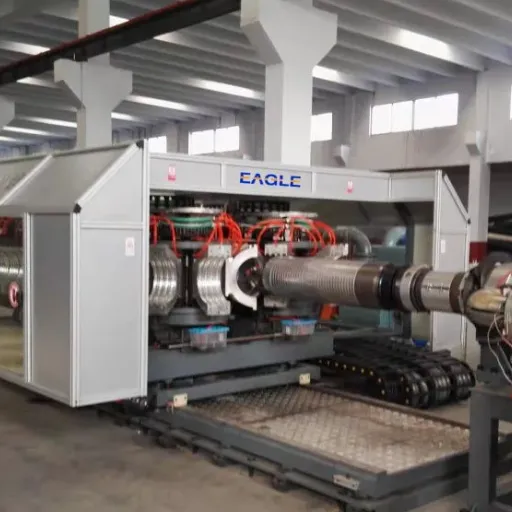
Choosing the right production line requires matching machine capabilities to your target market and project pipeline.
Assess Your Project Pipeline
Estimate your typical and maximum pipe diameter requirements. If most projects fall within DN600-DN2000, a machine optimized for that range will deliver better efficiency than an oversized machine. If you occasionally need DN4000 pipes, a more versatile line may be justified.
Define Material Strategy
Determine whether you will use HDPE, PP, or both. This affects extruder screw design, die head geometry, and processing temperature ranges. Some machines offer quick-change configurations for material flexibility.
Calculate Production Volume
High-volume operations benefit from faster, more automated lines. Lower-volume producers may prioritize flexibility and lower capital investment. Calculate required annual output in meters or tons before selecting equipment.
Consider Local Conditions
Climate, power supply stability, and operator skill level influence machine configuration. Tropical climates may need enhanced cooling. Regions with voltage fluctuations require robust electrical protection.
For manufacturers evaluating large diameter HDPE pipe production lines, contact our sales team to discuss your diameter range, material strategy, and output targets.
Installation, Training, and Support
A large diameter pipe production line represents a significant investment. Reputable manufacturers should provide comprehensive support to ensure successful operation.
On-site installation supervision: Experienced engineers oversee mechanical and electrical setup
Operator training: Comprehensive training on operation, maintenance, and troubleshooting
Technical documentation: Manuals, electrical schematics, and spare parts lists
After-sales support: Remote diagnostics and spare parts availability
At Qingdao Yongke Machinery, we provide engineer installation guidance, operator training, and ongoing technical support via email, phone, and WhatsApp at +86-13583232887.
Conclusion
Large diameter HDPE pipe technology gives municipal and industrial pipe producers a proven solution for manufacturing structural wall pipes from DN300mm to DN5000mm. Spiral profile pipe production lines offer the greatest flexibility for large diameters, delivering high ring stiffness, corrosion resistance, and efficient material usage.
Understanding diameter ranges, ring stiffness requirements, material compatibility, and production output enables buyers to select equipment that aligns with their market opportunities. The right production line not only expands product capability but also positions manufacturers for the largest infrastructure projects.
Qingdao Yongke Machinery manufactures HDPE spiral profile pipe production lines for the full DN300-DN5000mm range at our ISO-certified facility in Qingdao, China. For quotations, technical specifications, or production planning assistance, contact Mr. Zhou Maozhen at machinery@eaglegroup.cn or via WhatsApp at +86-13583232887.
Recently Posted
-
HDPE Pipe Standards: A Practical Guide for Engineers and Buyers
June 30, 2026A municipal contractor in Southeast Asia once accepted a shipment of HDPE pipe based only on a supplier's diameter claim. Six Read More
 -
Wastewater Collection System Design, Operation, and Renewal
June 30, 2026In late 2021, a coastal city in Southeast Asia discovered that its oldest wastewater collection system had been losing capacity fo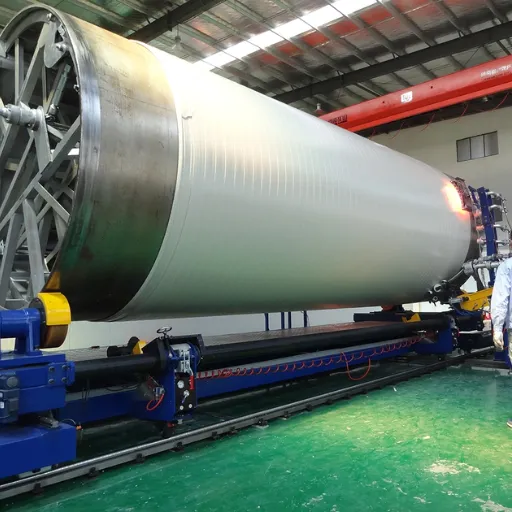 Read More
 -
Wastewater Infrastructure Design, Assessment, and Renewal
June 29, 2026In March 2023, a wastewater treatment plant serving 400,000 residents in Southern Europe suffered a cascade failure. A single inte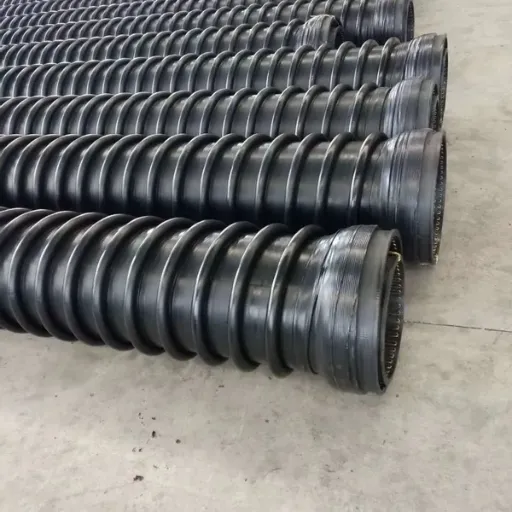 Read More
 -
Combined Sewer System Design, Operation, and Rehabilitation
June 29, 2026In August 2021, a single storm dropped 175mm of rain on a midwestern U.S. city in less than 36 hours. The city's aging combine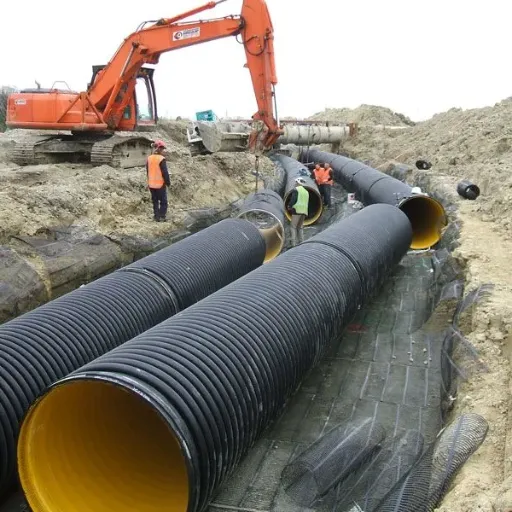 Read More

Contact Us
Recommended Products
-
 CIPP Glass Fibre Liner MachineNegotiableMOQ: 1 Set
 -
HDPE Helically Wound Tank MachineUS$ 10MOQ: 1 Set
-
CIPP Glass Liner MachineNegotiableMOQ: 1 Set
-
CIPP Felt Liner Manufacturing MachineNegotiableMOQ: 1 Set
-
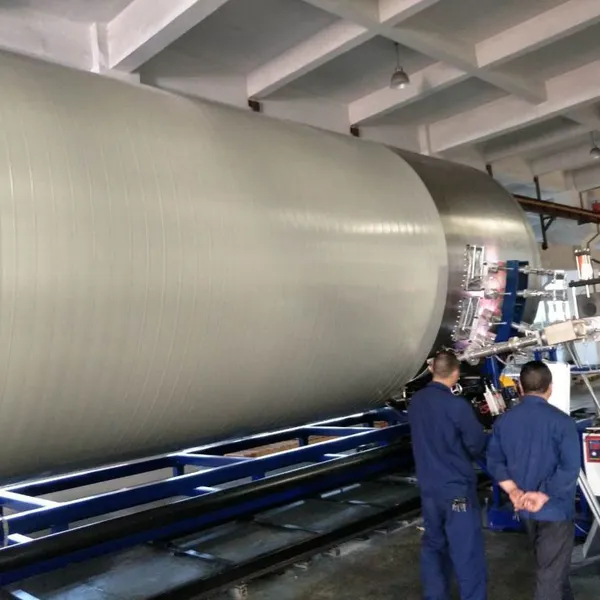
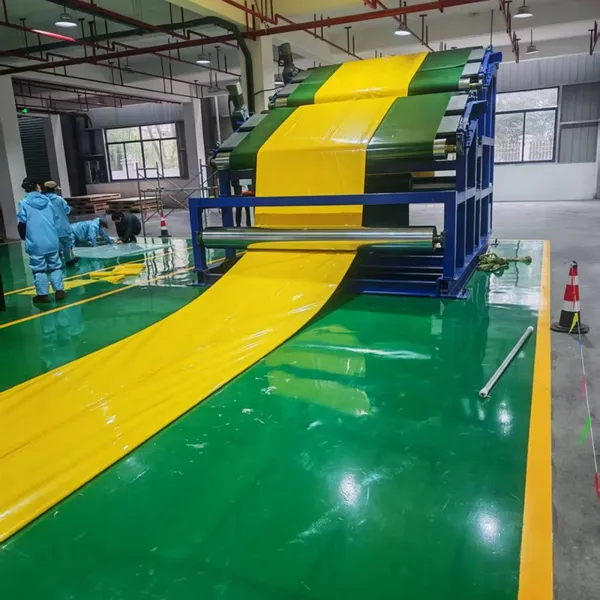
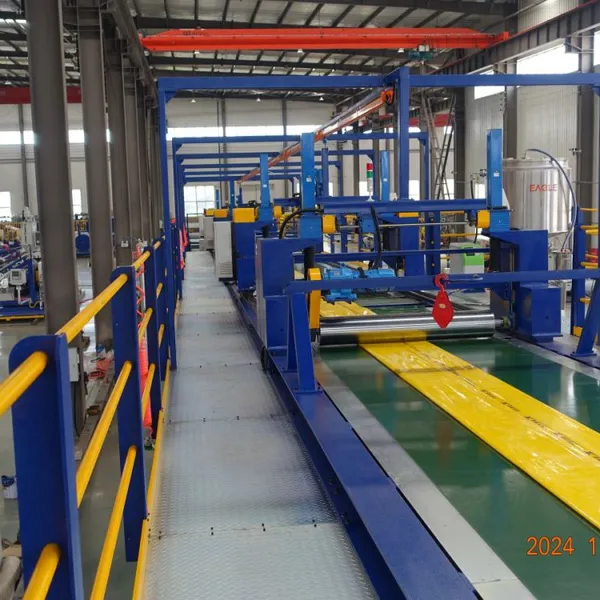
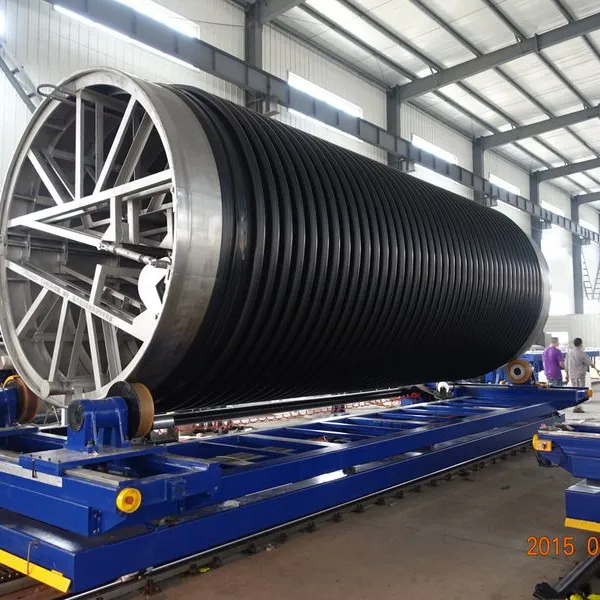
Large Diameter HDPE Sea Intake Outfall Structured Wall Pipe Making MachineNegotiableMOQ: 1 Set
-
UV-CIPP Glass Fibre Liner Manufacturing MachineUS$ 1000 - 110000MOQ: 10 Meters
-
HDPE Pipe Extrusion Machine / PE Pipe Production Line With High OutputNegotiableMOQ: 1 Set
-
UV-CIPP Glass Fiber Liner Hose Production LineUS$ 1000 - 110000MOQ: 1 Set
-
HDPE Spiral Structure Wall Pipe MachineNegotiableMOQ: 1 Set
-
HDPE Spiral Pipe MachineNegotiableMOQ: 1 Set
-
HDPE Spiral Tank MachineNegotiableMOQ: 1 Set
-
Krah Pipe MachineNegotiableMOQ: 1 Set
-
Plastic HDPE PVC PPR Pipe Extrusion Making Machine Extrusion LineNegotiableMOQ: 1 Set
-
PVC Pipe Extrusion Production Line for Electrical Conduit and Water Supply PipesNegotiableMOQ: 1 Set
-
Hot Sell Single Wall Corrugated Pipe Extrusion Line With Competitive PriceNegotiableMOQ: 1 Set
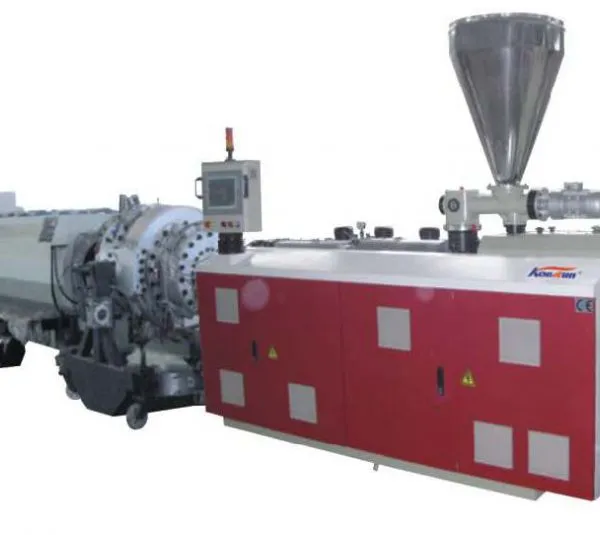
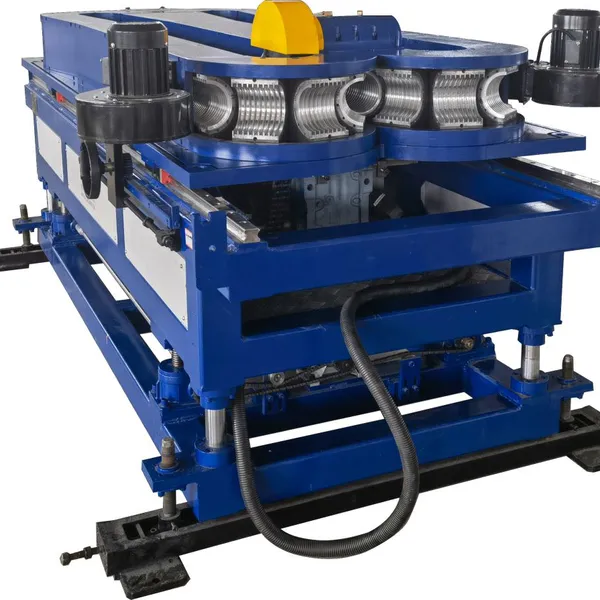
-
HDPE Krah Profild Pipe MachineUS$ 10000MOQ: 1 Set
-
Plastic Tank CNC Holes Boring MachineUS$ 10000MOQ: 1 Set
-
Double Wall Corrugated Pipe Extrusion LineNegotiableMOQ: 1 Set
-
Single Wall Corrugated Pipe Extrusion LineNegotiableMOQ: 1 Set
-
Inversion CIPP Liner Tube Manufacturing MachineNegotiableMOQ: 1 Set