
 Business License
UV-Cured Pipe Lining: A Complete Guide to Technology, Installation, and Equipment
UV-cured pipe lining is a trenchless rehabilitation method that installs a fiberglass-reinforced liner inside a damaged host pipe and hardens it with ultraviolet light, typically in 15 to 45 minutes. The result is a new, structural pipe-within-a-pipe that restores flow capacity and extends service life without excavation.
In older cities, replacing a single sewer line can shut down streets for weeks and displace traffic, residents, and businesses. A few years ago, a municipal contractor in a historic European city center faced exactly that problem: the host pipe ran beneath a pedestrian plaza that could not be excavated. The crew chose UV-cured pipe lining, installed the liner overnight, and reopened the plaza the next morning. That is the practical value UV-CIPP delivers, and it is why municipalities and industrial operators increasingly specify it over open-cut replacement.
This guide explains how UV-cured pipe lining works, how it compares with hot water inversion CIPP, which standards govern liner quality, and what equipment is required to produce UV-CIPP liners at scale. Whether you are a contractor evaluating rehabilitation methods or a manufacturer considering UV-CIPP liner production, you will find the technical foundation and buying context you need.
Key Takeaways
UV-cured pipe lining (UV-CIPP) cures fiberglass-reinforced liners in 15-45 minutes using UV light, compared with several hours for hot water or steam CIPP.
The installation process requires only one access point and produces no hot-water discharge, making it ideal for dense urban and environmentally sensitive sites.
UV-CIPP liners must meet ASTM F1743 or ASTM F2019 requirements, typically requiring flexural strength of at least 4,500 psi and flexural modulus of at least 250,000 psi.
Qingdao Yongke Machinery manufactures UV-CIPP liner hose manufacturing machines that enable contractors to produce liners in-house rather than rely on external suppliers.
Common applications include municipal sewer rehabilitation, industrial process pipe repair, and stormwater renewal for diameters from DN150 to DN1200 and beyond.
What Is UV-Cured Pipe Lining?
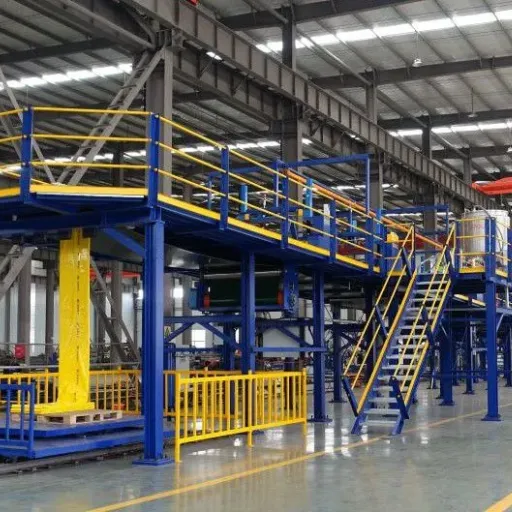
UV-cured pipe lining, also called UV-CIPP or ultraviolet cured-in-place pipe, is a no-dig rehabilitation technology. A flexible liner tube made from polyester felt or fiberglass fabric is saturated with UV-curable resin, inserted into the existing pipe, and then exposed to UV light. The light triggers a controlled chemical reaction that hardens the resin into a strong, smooth, corrosion-resistant inner pipe.
Unlike traditional CIPP, which cures with hot water or steam, UV-CIPP uses a mobile UV light train that travels through the liner at a controlled speed. The curing process is fast, repeatable, and largely independent of ambient temperature or host-pipe conditions. Because no water or steam is introduced, the site footprint is smaller and cleanup is minimal.
A UV-CIPP liner system has three essential components:
Structural carrier: Typically a polyester felt or fiberglass-reinforced tube that provides the liner's shape and tensile strength during installation.
UV-curable resin: Usually epoxy or vinyl ester, formulated to cure rapidly when exposed to UV light within a specific wavelength range.
Inner transparent film: A thin UV-transparent layer that contains the resin, prevents leakage, and allows light to penetrate evenly through the liner wall.
The finished liner is designed as a fully structural rehabilitation solution, not merely a coating. When properly specified and installed, it can carry soil, groundwater, and traffic loads independently of the deteriorated host pipe.
How UV-CIPP Installation Works (Step-by-Step)
The installation process follows a clear sequence. Understanding each step helps contractors estimate productivity, specify equipment, and identify quality risks.
Step 1: CCTV Inspection and Pipe Cleaning
Before any liner enters the pipe, a CCTV camera inspects the full length of the host pipe. The inspection identifies cracks, offsets, root intrusion, infiltration points, and structural defects. Severe damage may require local repair before lining.
The pipe is then cleaned, usually by high-pressure water jetting, to remove grease, debris, roots, and mineral deposits. A clean host pipe is essential for liner adhesion, uniform thickness, and proper curing. Any obstruction left in place can create thin spots or voids in the finished liner.
Step 2: Liner Impregnation and Vacuum Calibration
The liner tube is impregnated with resin under controlled conditions. Vacuum impregnation removes air bubbles and ensures complete saturation of the felt or fiberglass carrier. Resin content is typically targeted at 35-45% by weight, depending on liner thickness and structural requirements.
After impregnation, the liner is loaded into a calibration hose or inner film that maintains the correct diameter and prevents resin migration during handling. The liner is then transported to the installation site, often on a refrigerated truck if the working window extends beyond a few hours.
Step 3: Liner Inversion or Pull-In Placement
UV-CIPP liners can be installed by inversion or by pull-in placement.
Inversion: The liner is turned inside-out into the host pipe using air pressure. The resin-coated side faces the host pipe wall, while the inner film faces the flow path.
Pull-in placement: The liner is winched into position from a single access point, often through a downstream manhole. This method is common for UV-CIPP because it keeps the inner film, the UV-transparent layer, on the inside where the light train travels.
Both methods require only one access point, which is one reason UV-CIPP works well in constrained urban sites.
Step 4: UV Light Curing Process
Once the liner is in position and sealed at both ends, a UV light train is pulled through the pipe at a controlled speed. The train carries powerful UV lamps that emit light at wavelengths matched to the resin's photoinitiator. As the train moves, the resin cures progressively from the inside out.
Curing speed depends on liner thickness, pipe diameter, resin formulation, and lamp intensity. Typical speeds range from 0.5 to 2.5 meters per minute. A 100-meter DN600 sewer line can often be cured in well under one hour.
During curing, operators monitor temperature, pressure, and lamp output in real time. The process is highly controllable, and crews can pause or adjust speed if any anomaly appears.
Step 5: Cooling, Trimming, and Final Inspection
After curing, the liner is cooled with air to stabilize the resin and prevent thermal distortion. The ends are trimmed at manholes or clean-outs, and any lateral connections are reopened with robotic cutters.
A final CCTV inspection confirms liner position, thickness, and integrity. Some projects also require sample coupons for laboratory testing of flexural strength, modulus, and wall thickness.
Typical Curing Times by Pipe Diameter
| Pipe Diameter | Typical UV-CIPP Cure Time per Meter | Typical Hot Water CIPP Cure Time per Meter |
|---|---|---|
| DN150-DN300 | 0.5-1.0 minute | 2-4 minutes |
| DN400-DN600 | 0.8-1.5 minutes | 3-6 minutes |
| DN800-DN1000 | 1.5-2.5 minutes | 5-10 minutes |
| DN1200+ | 2.5-4.0 minutes | 8-15 minutes |
These figures are approximate and depend on resin system, liner thickness, and equipment. The overall trend is clear: UV-CIPP shortens curing time by a factor of three to five compared with hot water methods.
UV-CIPP vs Hot Water Inversion CIPP
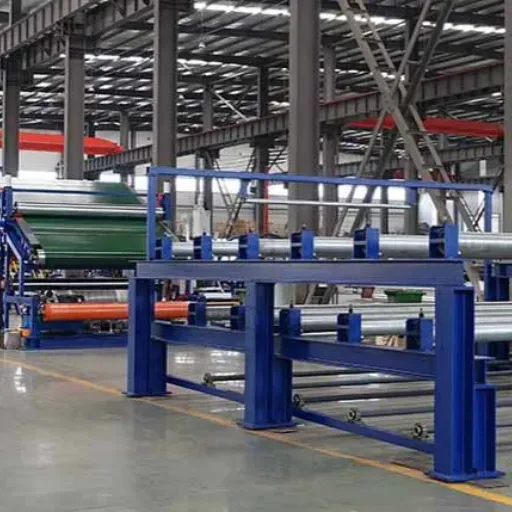
Contractors and specifying engineers often compare UV-CIPP with hot water inversion CIPP. Both are proven trenchless rehabilitation methods, but they differ in curing mechanism, site logistics, and economics.
Curing Mechanism Comparison
UV-CIPP cures by photochemical reaction. The resin contains photoinitiators that activate under UV light. Curing starts and stops almost instantly with the lamp, giving operators precise control.
Hot water inversion CIPP cures by thermal energy. Hot water circulates through the inverted liner until the resin reaches its cure temperature, then the pipe is cooled before dewatering. The process is effective but slower and more sensitive to host-pipe temperature and groundwater infiltration.
Speed and Productivity Differences
For a typical municipal sewer project, UV-CIPP can reduce curing time from several hours to less than one hour. This matters in high-traffic areas, on industrial sites where production cannot stop, and in climates where cold groundwater extends hot-water curing cycles.
Shorter curing also means fewer crew hours per meter installed. Over a full season, contractors can complete more projects with the same labor force.
Environmental and Site Impact
UV-CIPP produces no hot water discharge. There is no need for water heating trucks, no discharge to manage, and minimal risk of thermal damage to nearby utilities or pavements. The site footprint is limited to one access point plus the liner impregnation and curing equipment.
Hot water inversion requires water supply, heating capacity, and discharge management. In environmentally sensitive areas or winter conditions, this adds complexity.
Cost Considerations
UV-CIPP equipment has a higher capital cost than basic inversion wet-out equipment. However, the faster curing, reduced site labor, and lower consumable use can offset the initial investment over time. For contractors with steady project volume, UV-CIPP often delivers lower cost per installed meter.
For manufacturers entering the liner supply market, UV-CIPP liner production offers another advantage: longer shelf life. Uncured UV liners can often be stored for several months if protected from light, whereas hot-water inversion liners typically require refrigerated transport and shorter use windows.
| Parameter | UV-CIPP | Hot Water Inversion CIPP |
|---|---|---|
| Curing method | Ultraviolet light | Circulating hot water |
| Typical curing time | 15-45 minutes | 3-8 hours |
| Shelf life (uncured) | 3-12 months | 2-4 weeks refrigerated |
| Site water discharge | None | Requires management |
| Diameter range | DN150-DN1200+ | DN100-DN3000+ |
| Bend accommodation | Excellent | Moderate |
| Capital investment | Higher | Lower |
| Process control | Excellent | Variable with host conditions |
UV-CIPP Standards and Specifications
Liner quality is governed by international standards that define materials, testing, and mechanical properties. The two most relevant ASTM standards for UV-CIPP are ASTM F1743 and ASTM F2019.
ASTM F1743 Pulled-In-Place Requirements
ASTM F1743 covers thermosetting resin cured-in-place pipe liners installed by pull-in or inversion methods. It specifies requirements for:
Resin and tube materials
Impregnation and wet-out procedures
Installation and curing parameters
Mechanical property testing
Quality assurance documentation
For pulled-in-place UV-CIPP, compliance with ASTM F1743 ensures that the liner is manufactured and installed under controlled conditions and that samples are tested for the properties specified in the design.
ASTM F2019 UV-Cured GRP CIPP Requirements
ASTM F2019 specifically addresses ultraviolet-light-cured glass-reinforced polymer (GRP) CIPP liners. It provides detailed requirements for:
Glass reinforcement content and orientation
Resin systems and photoinitiators
Curing equipment and verification
Sampling and test methods
Marking and certification
This standard is particularly important for fiberglass UV-CIPP liners, which are increasingly used for structural rehabilitation of municipal sewers and industrial pipes.
Key Mechanical Properties
The design of a UV-CIPP liner depends on the structural loads it must carry. Two properties are especially critical:
Flexural strength: The stress at which the liner material fails in bending. Typical minimum values range from 4,500 to 6,500 psi, depending on the standard and application.
Flexural modulus: A measure of stiffness. Higher modulus means less deformation under load. Typical minimum values range from 250,000 to 350,000 psi.
Wall thickness is calculated using structural design methods such as ASTM F1216 or EN ISO 11296, taking into account groundwater level, soil cover, traffic loads, and host pipe condition. A thicker liner provides more strength but increases material cost and may reduce flow capacity.
How to Specify Liner Quality for Your Project
When writing specifications or purchasing liners, request:
Compliance statement with ASTM F1743 or ASTM F2019
Certified test reports for flexural strength, flexural modulus, and wall thickness
Resin content and glass content by weight
Curing records from installation, including lamp speed and temperature profile
Third-party inspection or factory acceptance testing where required
For contractors who produce their own liners, in-house quality control becomes the foundation of compliance. That is where liner manufacturing equipment and process discipline become essential.
UV-CIPP Equipment and Manufacturing
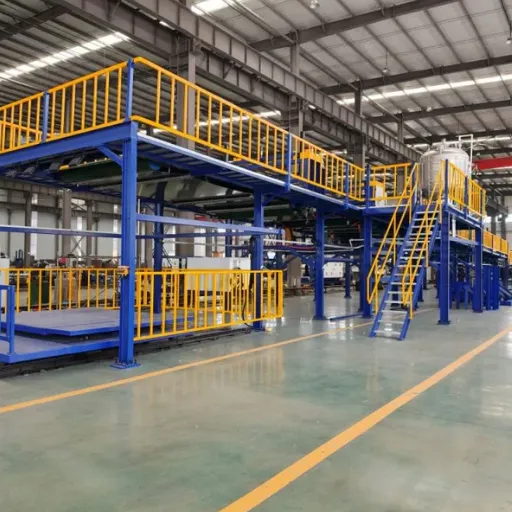
Most published content about UV-CIPP focuses on installation. A smaller but growing audience needs to understand how the liners themselves are manufactured. Qingdao Yongke Machinery designs and builds UV-CIPP liner hose manufacturing machines for contractors and pipe producers who want to control liner supply, quality, and cost.
What Equipment Is Needed to Produce UV-CIPP Liners
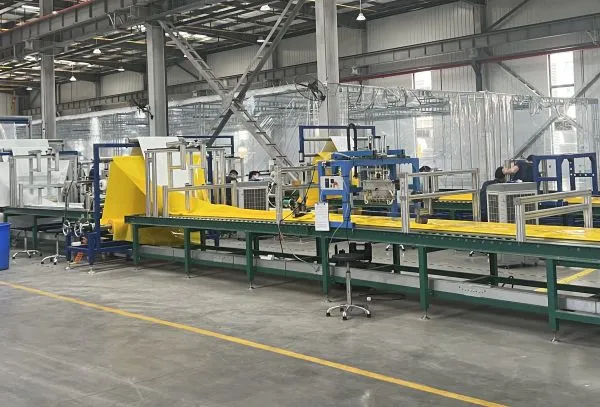
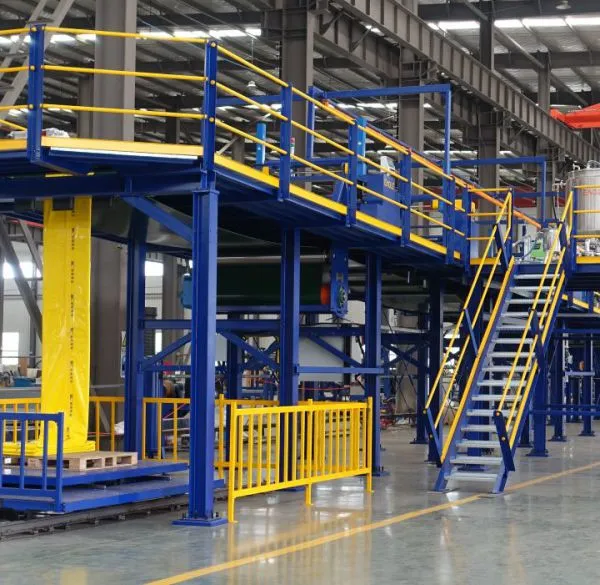
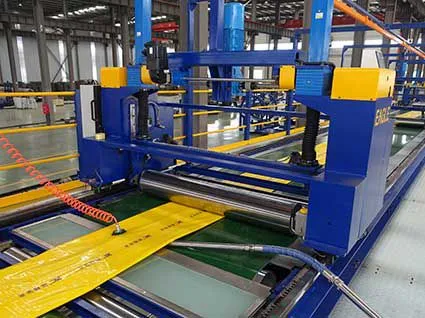
A complete UV-CIPP liner production line typically includes:
Tube forming system: Sewing or welding equipment to form the carrier felt or fiberglass fabric into a tube of the required diameter.
Resin impregnation station: A vacuum wet-out system that saturates the tube with UV-curable resin under controlled temperature and pressure.
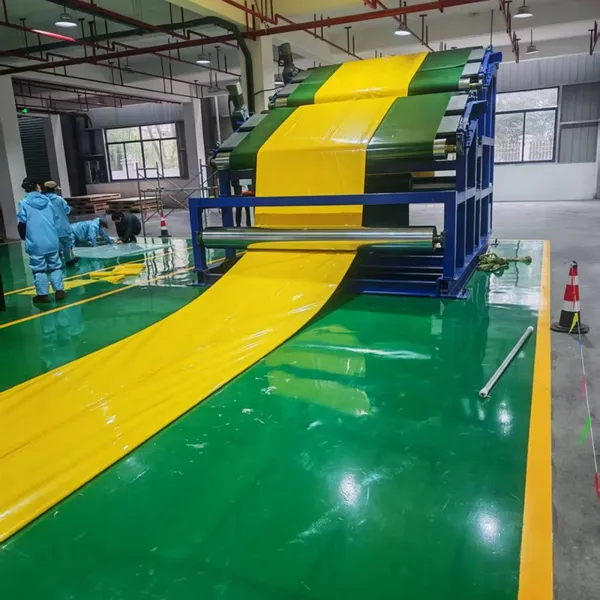
Inner film application unit: Equipment to apply the UV-transparent inner film and bond it to the carrier.
Calibration and winding system: Mandrels or rollers that maintain diameter and thickness while the liner is wound or folded for packaging.
Quality control station: Thickness gauges, weight checks, and sample-cutting equipment for mechanical testing.
Packaging line: Rolling, folding, or coiling systems that prepare liners for transport and storage.
Liner Hose Manufacturing Machine Overview
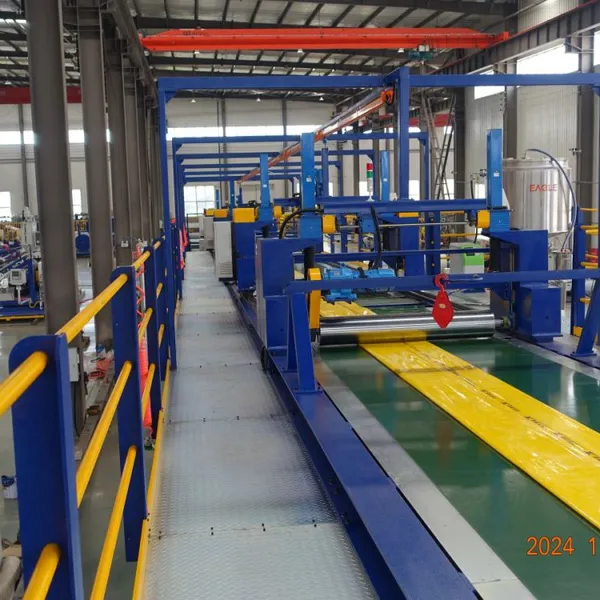
A UV-CIPP liner hose manufacturing machine integrates these functions into a continuous or semi-continuous production line. Modern machines use PLC control with recipe storage, allowing operators to switch between diameters and resin systems with minimal changeover time.
Key specifications to evaluate include:
Diameter range: Common machines cover DN150 to DN1200; larger custom lines are available.
Production speed: Meters per minute of finished liner, which determines daily output.
Resin compatibility: Ability to process epoxy, vinyl ester, or specialty UV resins.
Thickness control: Precision of impregnation and calibration to maintain wall thickness within specification.
Automation level: Degree of PLC control, data logging, and operator intervention required.
At Qingdao Yongke Machinery, our UV-CIPP liner hose manufacturing machines are configured to produce liners compatible with ASTM F1743 and ASTM F2019 requirements. We work with buyers to match the line's diameter range, output target, and resin system to their market.
Production Capacity and Line Configuration
Production capacity depends on liner diameter, wall thickness, and line speed. As a general reference, a well-configured UV-CIPP liner line can produce several hundred meters of small-diameter liner per day, or several thousand meters per week. Larger diameters require more resin and slower handling, reducing daily output.
Many producers start with a line covering DN300-DN800, which addresses the largest share of municipal sewer rehabilitation work. As demand grows, they add capacity or wider diameter capability.
For rehabilitation contractors currently purchasing liners from external suppliers, producing liners in-house can reduce material cost by 30-40% and eliminate delivery delays during peak season. The payback period depends on project volume, but contractors running multiple crews often recover the investment within two to three years.
Quality Control During Liner Production
Consistent quality separates reliable liner producers from commodity suppliers. A robust quality system includes:
Incoming inspection of felt, fiberglass, resin, and film
Weight and thickness checks at regular intervals during production
Resin content verification by ignition loss or extraction
Test coupons cured and tested for flexural strength and modulus
Traceability records linking each liner roll to raw material batches and production parameters
Qingdao Yongke Machinery supplies production lines with integrated monitoring and documentation support. Our ISO 9001-certified manufacturing process and factory acceptance testing help buyers start production with confidence.
Applications and Use Cases
UV-cured pipe lining is used wherever excavation is costly, disruptive, or impossible. The most common applications fall into three categories.
Municipal Sewer and Stormwater Rehabilitation
Aging sewer networks in North America and Europe include pipes that are 50 to 100 years old. Many are structurally sound enough to remain in place but have cracks, joint failures, or corrosion that cause infiltration and overflows. UV-CIPP restores these pipes without closing streets or relocating services.
In 2023, a municipal contractor in Northern Europe lined a 250-meter DN800 interceptor beneath a busy retail street. Hot water curing would have required water heating trucks, discharge management, and a 12-hour work window. UV-CIPP reduced the active installation time to under three hours, and the street reopened for morning traffic.
Industrial Pipe Repair
Chemical plants, refineries, and food processing facilities operate process pipelines that cannot be taken offline for long. UV-CIPP allows these operators to rehabilitate corroded or eroded lines during scheduled shutdowns without cutting and replacing pipe.
A maintenance manager at a chemical facility in Southeast Asia faced repeated leaks in a DN400 process effluent line. Replacement would have required dismantling adjacent equipment and a two-week shutdown. Instead, the crew installed a UV-CIPP liner during a 48-hour maintenance window. The line returned to service with a new corrosion-resistant interior and no excavation.
Pipe Diameter Range and Material Compatibility
UV-CIPP is most commonly used for circular gravity sewers from DN150 to DN1200. Larger diameters are possible with specialized equipment and thicker liners, although hot water or steam methods may be more economical for very large pipes.
The host pipe material is rarely a limiting factor. UV-CIPP works inside concrete, clay, cast iron, PVC, HDPE, and brick pipes, provided the host is structurally capable of holding the liner during installation and curing.
For pipe producers, this broad compatibility makes UV-CIPP liner manufacturing a flexible addition to a product portfolio that may already include HDPE/PP spiral profile pipe machines or inversion CIPP liner hose machines.
Common Questions About UV-Cured Pipe Lining
How Long Does UV-CIPP Lining Last?
UV-CIPP liners are typically designed for a 50-year service life when installed according to standards. Actual lifespan depends on host pipe condition, chemical exposure, and installation quality. The liner forms a corrosion-resistant barrier that protects the original pipe from further deterioration.
Is UV Pipe Lining Safe for Drinking Water?
Standard UV-CIPP resins are formulated for wastewater, industrial effluent, and stormwater applications. For potable water, the resin system must meet drinking-water approval requirements such as NSF/ANSI 61 or equivalent national standards. Always specify the intended service environment when selecting resin.
What Is the Maximum Pipe Diameter for UV-CIPP?
Practical UV-CIPP installations commonly extend to DN1200. Larger diameters are technically possible but require more powerful UV equipment, thicker liners, and careful quality control. For pipes above DN1500, engineers often compare UV-CIPP with other rehabilitation or replacement methods.
Can UV-CIPP Navigate Bends and Junctions?
Yes. UV-CIPP liners are flexible before curing and can accommodate bends, offsets, and gradual diameter changes. Lateral connections are reopened after curing using robotic cutters. However, sharp changes in direction or collapsed sections may require local repair before lining.
How Does UV-CIPP Compare with Open-Cut Replacement?
Open-cut replacement removes and replaces the existing pipe. It is straightforward but disruptive, expensive, and slow in built-up areas. UV-CIPP typically costs 50-70% less than open-cut in urban environments and can be completed in a fraction of the time, with minimal surface restoration.
Conclusion
UV-cured pipe lining offers a fast, controlled, and minimally disruptive way to rehabilitate deteriorated pipelines. Its short curing time, small site footprint, and strong structural performance make it especially valuable for municipal sewers, industrial pipes, and any project where excavation is impractical.
For contractors and pipe producers, the next opportunity is often vertical integration. Producing UV-CIPP liners in-house reduces supplier dependency, improves margin, and gives direct control over quality and delivery schedules. Qingdao Yongke Machinery supplies UV-CIPP liner hose manufacturing machines designed for ASTM-compatible production, backed by installation support, operator training, and spare parts supply.
As global infrastructure ages and trenchless rehabilitation demand grows, UV-cured pipe lining will continue to move from a specialized method to a standard practice. Companies that understand the technology today, and that control their liner supply, will be best positioned to capture that growth.
Recently Posted
-
Qingdao Yongke Machinery: Full-Category Spiral Pipe Equipment from China's Qingdao
September 1, 2026Choosing a machinery supplier for large-diameter plastic pipe production is a long-term decision, because the line you install wil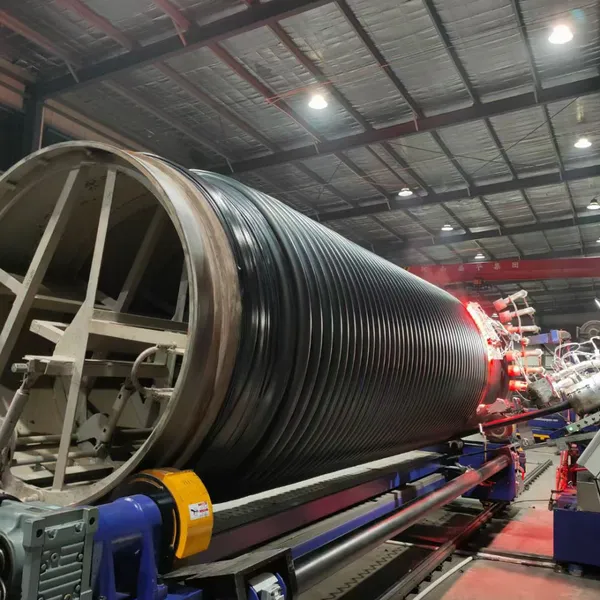 Read More
 -
Quality Control in Spiral Pipe Machine Manufacturing
August 31, 2026A buyer in South America some time ago received a winding line that looked complete on the surface but suffered repeated seam defe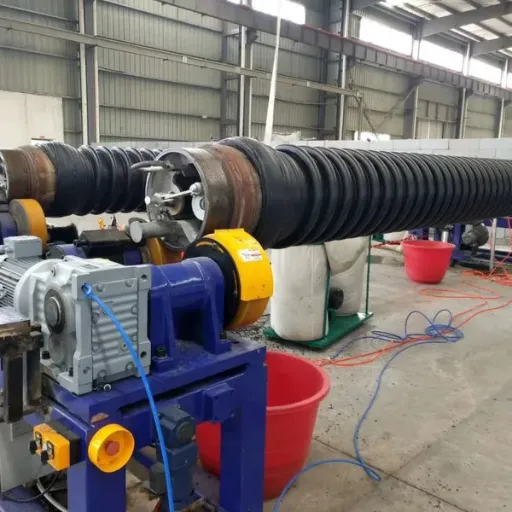 Read More
 -
Spiral Pipe for Sewage and Drainage Networks: Production Notes
August 28, 2026A municipal contractor in Eastern Europe some time ago took delivery of spiral-wound sewer pipe that looked flawless on the line.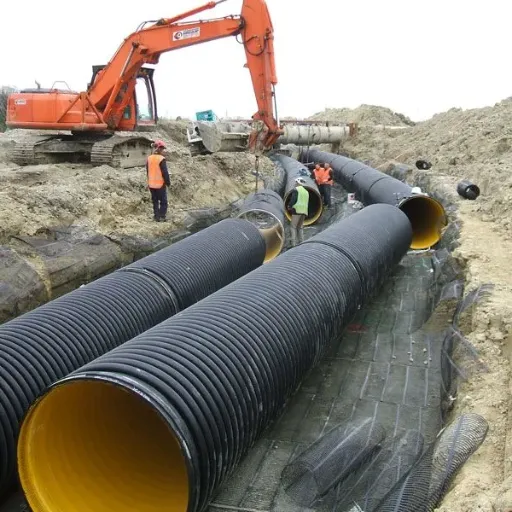 Read More
 -
DN300 to DN5000: Diameter Range and Machine Configuration
August 27, 2026A plant owner in Central Asia once asked for a line "up to DN5000" because a future tender mentioned large storage tanks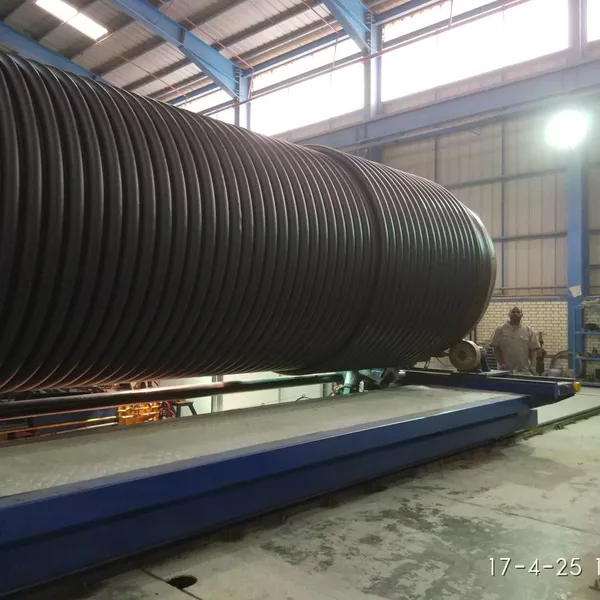 Read More

Contact Us
Recommended Products
-
 CIPP Glass Fibre Liner MachineNegotiableMOQ: 1 Set
 -
HDPE Helically Wound Tank MachineUS$ 10MOQ: 1 Set
-
CIPP Glass Liner MachineNegotiableMOQ: 1 Set
-
CIPP Felt Liner Manufacturing MachineNegotiableMOQ: 1 Set
-
Large Diameter HDPE Sea Intake Outfall Structured Wall Pipe Making MachineNegotiableMOQ: 1 Set
-
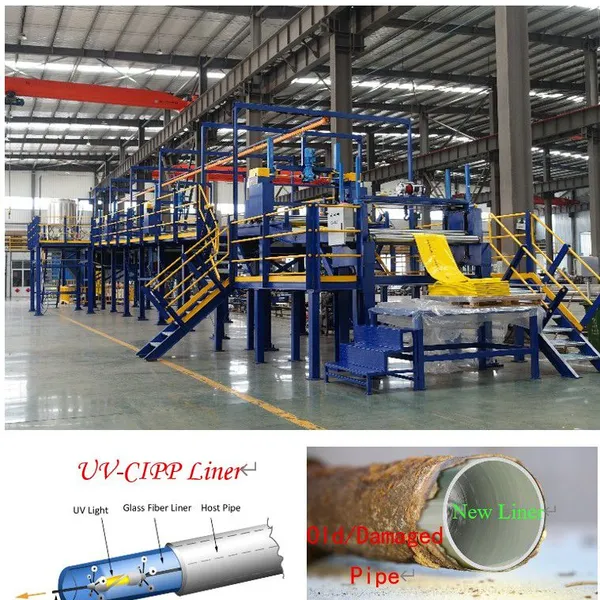
UV-CIPP Glass Fibre Liner Manufacturing MachineUS$ 1000 - 110000MOQ: 10 Meters
-
HDPE Pipe Extrusion Machine / PE Pipe Production Line With High OutputNegotiableMOQ: 1 Set
-
UV-CIPP Glass Fiber Liner Hose Production LineUS$ 1000 - 110000MOQ: 1 Set
-
HDPE Spiral Structure Wall Pipe MachineNegotiableMOQ: 1 Set
-
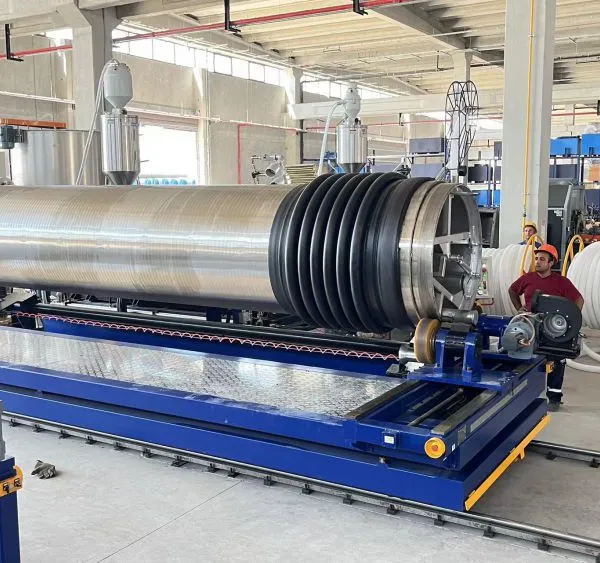
HDPE Spiral Pipe MachineNegotiableMOQ: 1 Set
-
HDPE Spiral Tank MachineNegotiableMOQ: 1 Set
-
Krah Pipe MachineNegotiableMOQ: 1 Set
-
Plastic HDPE PVC PPR Pipe Extrusion Making Machine Extrusion LineNegotiableMOQ: 1 Set
-
PVC Pipe Extrusion Production Line for Electrical Conduit and Water Supply PipesNegotiableMOQ: 1 Set
-
Hot Sell Single Wall Corrugated Pipe Extrusion Line With Competitive PriceNegotiableMOQ: 1 Set
-
HDPE Krah Profild Pipe MachineUS$ 10000MOQ: 1 Set
-
Plastic Tank CNC Holes Boring MachineUS$ 10000MOQ: 1 Set
-
Double Wall Corrugated Pipe Extrusion LineNegotiableMOQ: 1 Set
-
Single Wall Corrugated Pipe Extrusion LineNegotiableMOQ: 1 Set
-
Inversion CIPP Liner Tube Manufacturing MachineNegotiableMOQ: 1 Set