
 Business License
Pipe Stiffness Calculation: A Practical Guide for Large-Diameter Pipe Projects
A municipal contractor in Southeast Asia installed DN1200mm HDPE pipe for a stormwater system without completing a full pipe stiffness calculation. Two rainy seasons later, measurable deflection had reduced flow capacity and created standing water at several joints. The repair cost more than double the original material savings.
If you specify, procure, or install large-diameter pipe, you have probably faced the same tension: controlling upfront material cost while ensuring the pipe performs for decades under soil and traffic loads. Pipe stiffness calculation is the bridge between those two priorities. It tells you whether a pipe wall profile can resist external pressure without excessive deflection.
In this guide, you will learn what pipe stiffness actually measures, how ring stiffness classification works, the key variables that affect results, and how to apply pipe stiffness calculation to HDPE/PP spiral profile pipe and other large-diameter thermoplastic systems. You will also see where engineers commonly make errors, and how to avoid them.
What Pipe Stiffness Actually Measures
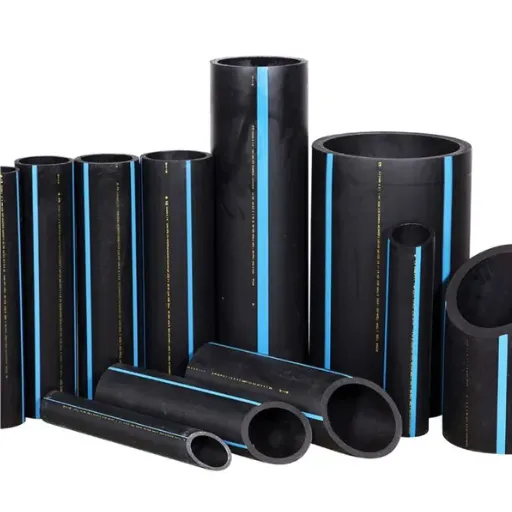
Pipe stiffness is not the same as material strength. It describes the pipe wall's resistance to deformation under external load. A stiff pipe resists ovalization. A flexible pipe deforms more under load but may still perform acceptably if the surrounding soil provides support.
In technical terms, pipe stiffness is often expressed as ring stiffness (SN value) or as pipe stiffness (PS value). Ring stiffness measures the force required to deflect a pipe ring by 3% of its diameter, normalized to a unit length. Pipe stiffness follows the parallel-plate loading test and is reported in pounds per inch per inch or newtons per meter squared.
For most civil and municipal engineers, the ring stiffness class is the more practical number. It appears in standards such as EN 13476, ISO 9969, and ASTM D2412, and it directly drives specification sheets for HDPE and PP structured-wall pipe.
Ring Stiffness vs. Pipe Stiffness
Ring stiffness (SN) and pipe stiffness (PS) both describe deflection resistance, but they are not interchangeable.
Ring stiffness (SN): Measured in kN/m². Common classes are SN4, SN8, and SN16. It uses a constant-rate compression test on a pipe ring.
Pipe stiffness (PS): Measured in kPa or lb/in². Based on parallel-plate loading and commonly used in North American specifications.
The two values can be approximated, but conversion depends on pipe diameter, wall geometry, and test method. For procurement clarity, always specify the standard and class you need rather than assuming equivalence.
Engineering Note: A DN1500mm pipe and a DN400mm pipe can share the same SN8 classification, but the wall thickness and profile geometry required to achieve that rating will differ significantly.
Why Pipe Stiffness Calculation Matters on Site
Pipe stiffness calculation matters because it predicts how much the pipe will deform under backfill, groundwater, and live loads. Excessive deflection causes several problems:
Reduced hydraulic capacity
Joint misalignment and leakage risk
Stress concentrations that accelerate crack growth
Long-term creep deformation in thermoplastic materials
Failure to meet acceptance criteria during project handover
Most municipal specifications limit vertical deflection to 3-5% of pipe diameter after installation. Achieving that limit requires the right combination of pipe stiffness, bedding quality, compaction, and trench geometry. The pipe alone is only part of the system.
A Cautionary Example from a Drainage Upgrade
In 2022, a contractor in Eastern Europe selected DN2000mm corrugated pipe based on a low bid. The pipe met the stated SN4 requirement, but the engineer had not verified the actual soil modulus or the depth of cover. After backfilling with poorly compacted material, the pipe deflected nearly 8% during the first year. The owner rejected the installation. The contractor had to excavate, rebed, and reinstall selected sections.
The pipe was not necessarily defective. The pipe stiffness calculation simply did not account for site-specific installation conditions.
Key Factors That Influence Pipe Stiffness Calculation
A proper pipe stiffness calculation considers more than the pipe wall. It is a system-level evaluation that includes material properties, geometry, loading, and soil support.
1. Material Properties
The two most important material inputs are flexural modulus and Poisson's ratio.
Flexural modulus measures the material's resistance to bending. HDPE typically ranges from 800-1200 MPa. PP can range from 1200-1800 MPa depending on grade and formulation.
Poisson's ratio for thermoplastics is usually around 0.4-0.45. It affects how the pipe wall responds to combined stresses.
These values change with temperature and loading duration. Long-term pipe stiffness calculation should use the appropriate apparent modulus, not the short-term value from a datasheet.
2. Pipe Diameter and Wall Geometry
Larger diameters require more material or more efficient wall profiles to maintain the same stiffness class. A DN5000mm pipe carrying SN8 classification needs a substantially different structural wall design than a DN600mm pipe with the same rating.
Spiral profile pipe achieves stiffness through a corrugated or profiled wall geometry rather than solid wall thickness. The shape of the profile, the height of the ribs, and the spacing between them all contribute to moment of inertia and therefore to ring stiffness.
3. External Loads
External loads come from multiple sources:
Soil overburden weight
Groundwater pressure
Traffic loads at shallow cover
Construction equipment during backfill
Surcharge from adjacent structures
Each load must be estimated for the specific burial depth, trench width, and surface conditions. Generic assumptions often lead to under- or over-design.
4. Soil Support
Soil is not just a load. Properly compacted backfill provides side support that dramatically reduces pipe deflection. The modulus of soil reaction (E') is a critical input in most deflection prediction models. Poor soil support can make even a high-stiffness pipe deflect excessively.
For HDPE and PP flexible pipe, soil-pipe interaction is often more important than the pipe stiffness itself. The Plastics Pipe Institute publishes technical reports and handbooks that explain this interaction in detail.
Pipe Stiffness Calculation: How to Determine Pipe Ring Stiffness
The most common approach to pipe stiffness calculation combines a standardized ring test with a burial design equation. Engineers use the ring test to validate the pipe, and a deflection equation to predict field performance.
Ring Stiffness Test (ISO 9969 / EN 1228)
The ring stiffness test compresses a pipe ring between two flat platens at a constant rate. The test measures the force required to produce 3% vertical deflection. The result is calculated as:
SN = (F / L) × (1 / Δy) × factor
Where:
F = measured force
L = length of the pipe sample
Δy = vertical deflection (typically 3% of diameter)
factor = standard-specific adjustment
The result is reported in kN/m². A pipe that reaches the threshold for SN8 has proven it can resist the test load without excessive deformation.
Buried Pipe Deflection Calculation
For field prediction, engineers often use the Iowa formula or Spangler's equation for pipe deflection calculation:
Δy/D = (DL × K × Wc) / (EI/r³ + 0.061 × E')
Where:
Δy/D = vertical deflection divided by diameter
DL = deflection lag factor
K = bedding constant
Wc = load per unit length
EI = pipe wall stiffness
r = mean pipe radius
E' = modulus of soil reaction
This equation shows why pipe stiffness calculation must include soil support. A low EI can still perform if E' is high, and a high EI cannot compensate for unsuitable backfill.
Simplified Design Process
A practical design workflow looks like this:
Determine design loads based on burial depth, groundwater, and traffic.
Select an allowable deflection limit (often 3-5%).
Estimate soil modulus from planned backfill material and compaction.
Calculate required pipe stiffness or ring stiffness.
Select a pipe with the appropriate SN or PS rating.
Verify installation requirements are achievable on site.
Pipe Stiffness Classes: SN4, SN8, and SN16 Explained
Pipe stiffness classes simplify the pipe stiffness calculation process. Instead of calculating a custom value for every project, engineers choose from standardized ring stiffness classes.
SN4 Pipe Stiffness
For many low-load projects, a pipe stiffness calculation will show that SN4 pipe is sufficient. SN4 pipe has a ring stiffness of at least 4 kN/m². It is suitable for:
Low-traffic areas
Deep burial with good soil support
Gravity drainage with stable trench conditions
Projects where cost is a primary constraint
SN8 Pipe Stiffness
SN8 pipe has a ring stiffness of at least 8 kN/m². It is the most common class for municipal drainage and sewer applications. It balances material cost with performance under moderate traffic and variable backfill.
SN16 Pipe Stiffness
SN16 pipe has a ring stiffness of at least 16 kN/m². It is used for:
Shallow cover under roads
Heavy traffic loads
Poor or variable soil conditions
Areas with high groundwater pressure
| Ring Stiffness Class | Minimum SN (kN/m²) | Typical Applications |
|---|---|---|
| SN4 | 4 | Low-load, deep burial, stable soil |
| SN8 | 8 | Municipal drainage, moderate traffic |
| SN16 | 16 | Roads, shallow cover, poor soil |
The right class depends on load case, not habit. Choosing SN8 for every project may be safe, but it is not always economical.
HDPE and PP Spiral Profile Pipe Stiffness Considerations
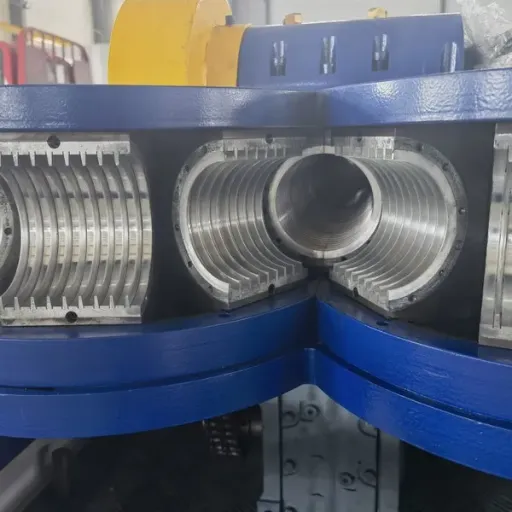
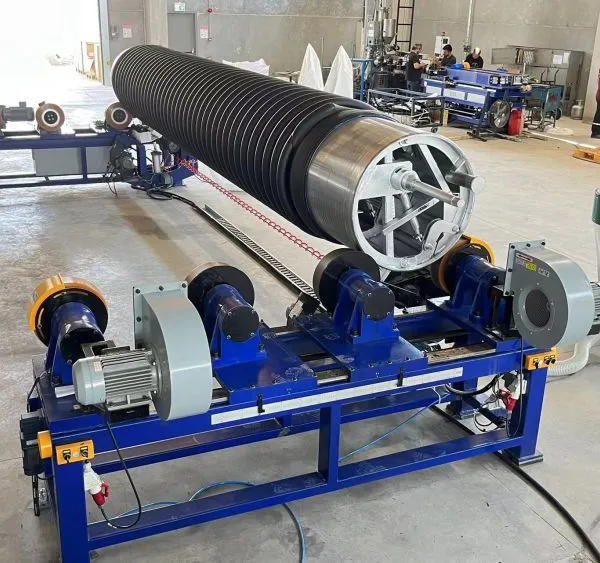
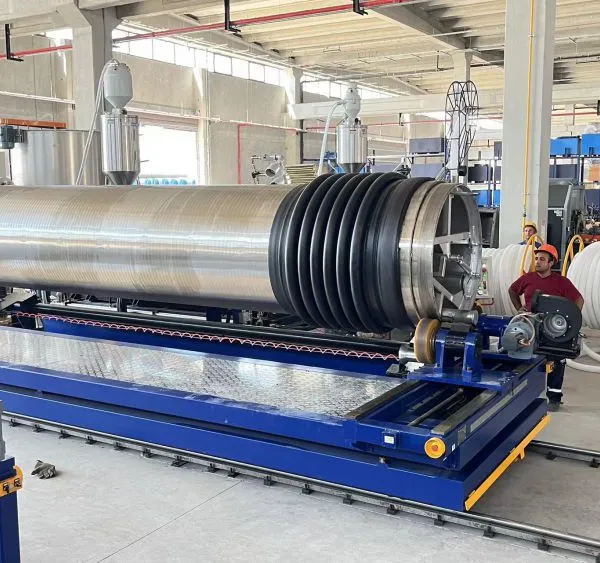
Spiral profile pipe uses a structural wall profile to achieve high ring stiffness with less material than solid-wall pipe. This design is especially valuable for large-diameter applications where wall thickness alone would become impractical.
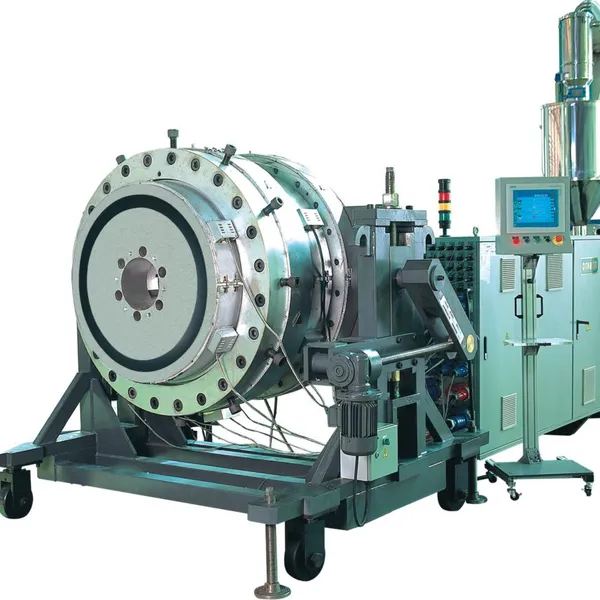
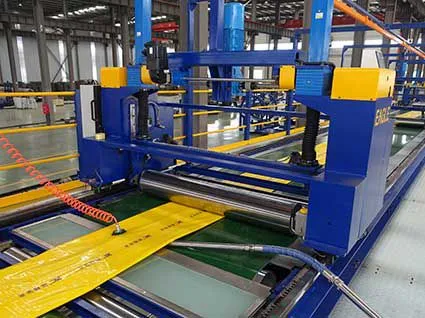
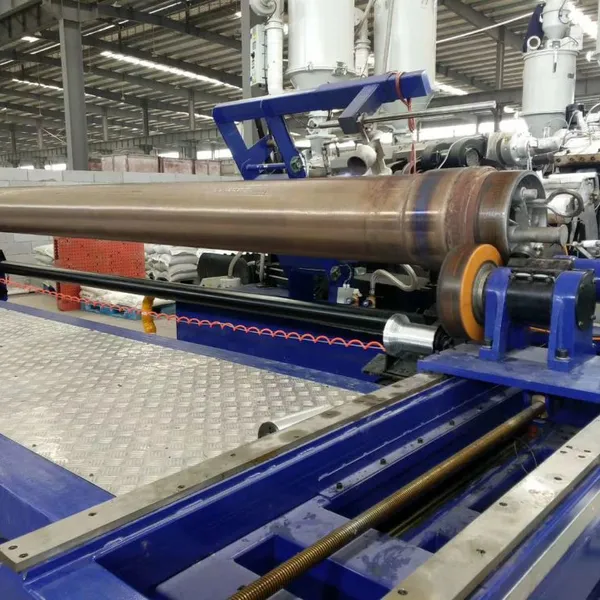
Yongke Machinery's HDPE/PP spiral profile pipe machine produces pipes from DN300mm to DN5000mm with controlled profile geometry for consistent ring stiffness. The profile height, rib spacing, and welding quality all influence the final pipe stiffness calculation.
Profile Geometry and Stiffness
The structural wall profile behaves like a beam under external load. A deeper profile with optimized rib spacing increases the moment of inertia. However, profile design must also consider:
Extrusion consistency
Profile welding strength at overlaps
Long-term creep under sustained load
Impact resistance during handling
Hydraulic smoothness of the inner wall
A well-designed spiral profile can achieve SN8 or SN16 at large diameters while maintaining a smooth inner bore for hydraulic efficiency.
Material Selection: HDPE vs. PP
Material choice affects the pipe stiffness calculation because HDPE and PP have different flexural modulus values. HDPE pipe stiffness is generally lower than PP pipe stiffness for the same profile geometry.
HDPE: Lower modulus, higher flexibility, excellent chemical resistance, good impact strength
PP: Higher modulus, greater stiffness at elevated temperatures, lighter weight, good chemical resistance
For the same profile geometry, a PP pipe will generally have higher ring stiffness than an HDPE pipe. However, the appropriate material depends on installation conditions, fluid chemistry, and project specifications. Our article on HDPE vs PP spiral profile pipe covers this comparison in more detail.
Common Mistakes in Pipe Stiffness Calculation
Even experienced engineers make errors when estimating pipe stiffness. Here are the most common pitfalls.
1. Ignoring Long-Term Creep
Thermoplastics creep under sustained load. A pipe that passes a short-term ring stiffness test may deform more over 50 years. Long-term pipe stiffness calculation should apply a reduction factor or use the long-term modulus provided by the material supplier.
2. Overestimating Soil Support
Assuming high-quality backfill without verifying compaction on site is risky. Poor bedding, large clods, or frozen material can reduce the effective soil modulus to a fraction of the design value. Always specify compaction requirements and test them during construction. The same discipline applies to machinery procurement: verifying ISO-certified manufacturing standards before purchase reduces long-term risk and ensures consistent equipment performance.
3. Confusing SN and PS Values
Specifying "pipe stiffness" when you mean "ring stiffness" can lead to mismatched products. The two test methods produce related but different numbers. Always reference the relevant standard.
4. Neglecting Installation Loads
Construction equipment passing over an unburied or partially buried pipe can create higher loads than the design traffic load. The pipe stiffness calculation should consider temporary construction loads, not just final service conditions.
5. Selecting Pipe Class by Habit
SN8 is commonly specified, but it is not always necessary. In deep, well-compacted trenches with low traffic, SN4 may perform adequately. In poor soils under heavy roads, SN16 or higher may be required. The calculation should drive the specification, not tradition.
From Pipe Stiffness Calculation to Specification: A Practical Workflow
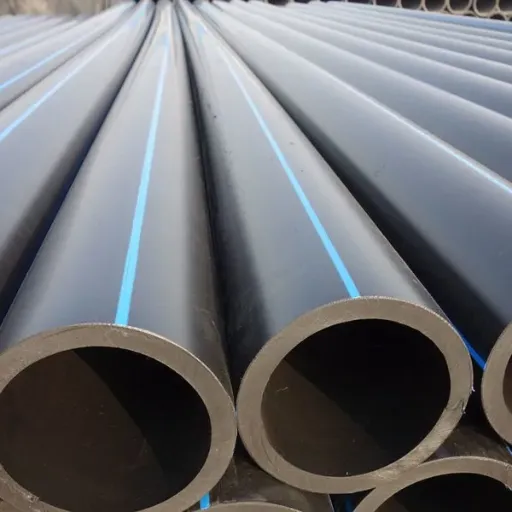
Here is how to move from pipe stiffness calculation to a reliable specification for your next project. Each step reinforces the pipe stiffness calculation with real-world constraints.
Collect site data. Record burial depth, groundwater level, traffic type and frequency, trench width, and native soil conditions.
Define performance limits. Identify the maximum allowable deflection and any project-specific safety factors.
Estimate loads. Calculate soil load, live load, and surcharge using project standards or references such as ASTM D2321.
Evaluate soil support. Select a design E' value based on planned backfill material and compaction level. Be conservative if field control is uncertain.
Calculate required stiffness. Use Spangler's equation or project-specific software to complete the pipe stiffness calculation and determine the required pipe stiffness or ring stiffness.
Select pipe class and material. Match the calculated requirement to an available SN class. Confirm the material (HDPE, PP, PVC) meets chemical and thermal requirements. If you are also evaluating production equipment, our guide to choosing a pipe machinery manufacturer outlines the key factors that separate reliable suppliers from general trading companies.
Specify installation requirements. Write compaction, bedding, and backfill requirements that support the design assumptions.
Verify during construction. Measure deflection after backfill and again before handover. Adjust if results exceed limits.
Conclusion
Pipe stiffness calculation is not an abstract exercise. It directly affects whether a buried pipe performs for decades or becomes a maintenance liability. Getting the pipe stiffness calculation right at the specification stage prevents costly failures later.
Key takeaways:
Ring stiffness (SN) and pipe stiffness (PS) are related but not interchangeable. Specify the standard you need.
Material modulus, pipe diameter, profile geometry, external loads, and soil support all influence the result.
Standard pipe stiffness classes such as SN4, SN8, and SN16 simplify selection but must match the actual load case.
HDPE and PP spiral profile pipe achieve high stiffness efficiently through engineered wall profiles.
Long-term creep, installation loads, and soil compaction are common sources of error.
If you are evaluating large-diameter pipe production equipment or need to produce pipes with verified ring stiffness from DN300mm to DN5000mm, request a technical quotation and our engineering team will configure a turnkey production line for the pipe stiffness classes and diameters your projects demand.
Recently Posted
-
Qingdao Yongke Machinery: Full-Category Spiral Pipe Equipment from China's Qingdao
September 1, 2026Choosing a machinery supplier for large-diameter plastic pipe production is a long-term decision, because the line you install wil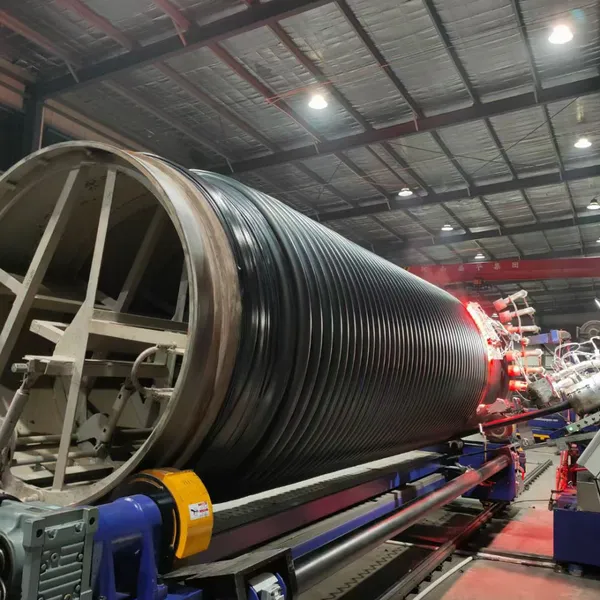 Read More
 -
Quality Control in Spiral Pipe Machine Manufacturing
August 31, 2026A buyer in South America some time ago received a winding line that looked complete on the surface but suffered repeated seam defe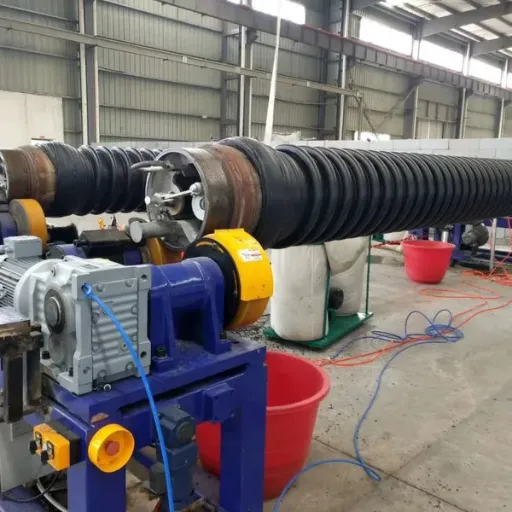 Read More
 -
Spiral Pipe for Sewage and Drainage Networks: Production Notes
August 28, 2026A municipal contractor in Eastern Europe some time ago took delivery of spiral-wound sewer pipe that looked flawless on the line.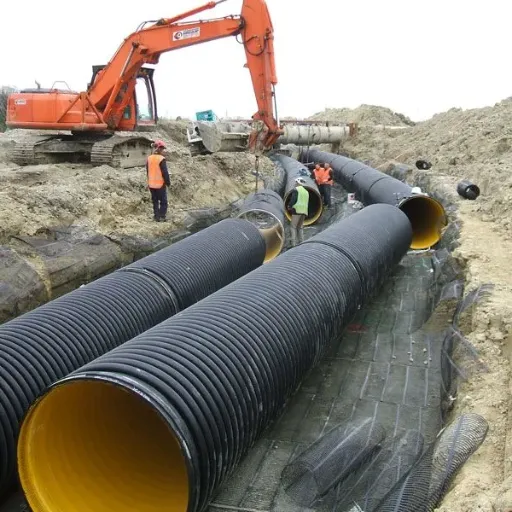 Read More
 -
DN300 to DN5000: Diameter Range and Machine Configuration
August 27, 2026A plant owner in Central Asia once asked for a line "up to DN5000" because a future tender mentioned large storage tanks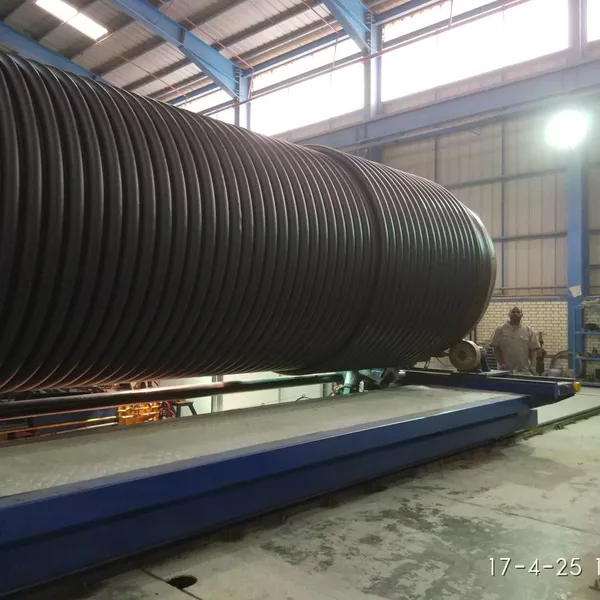 Read More

Contact Us
Recommended Products
-
 CIPP Glass Fibre Liner MachineNegotiableMOQ: 1 Set
 -
HDPE Helically Wound Tank MachineUS$ 10MOQ: 1 Set
-
CIPP Glass Liner MachineNegotiableMOQ: 1 Set
-
CIPP Felt Liner Manufacturing MachineNegotiableMOQ: 1 Set
-
Large Diameter HDPE Sea Intake Outfall Structured Wall Pipe Making MachineNegotiableMOQ: 1 Set
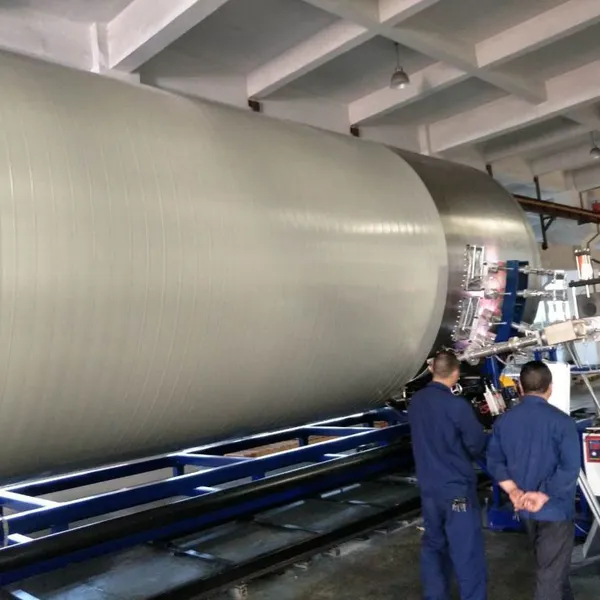
-
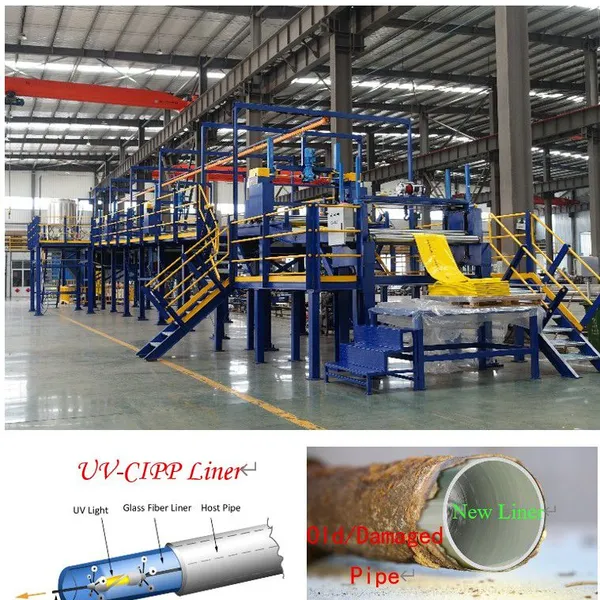
UV-CIPP Glass Fibre Liner Manufacturing MachineUS$ 1000 - 110000MOQ: 10 Meters
-
HDPE Pipe Extrusion Machine / PE Pipe Production Line With High OutputNegotiableMOQ: 1 Set
-
UV-CIPP Glass Fiber Liner Hose Production LineUS$ 1000 - 110000MOQ: 1 Set
-
HDPE Spiral Structure Wall Pipe MachineNegotiableMOQ: 1 Set
-
HDPE Spiral Pipe MachineNegotiableMOQ: 1 Set
-
HDPE Spiral Tank MachineNegotiableMOQ: 1 Set
-
Krah Pipe MachineNegotiableMOQ: 1 Set
-
Plastic HDPE PVC PPR Pipe Extrusion Making Machine Extrusion LineNegotiableMOQ: 1 Set
-
PVC Pipe Extrusion Production Line for Electrical Conduit and Water Supply PipesNegotiableMOQ: 1 Set
-
Hot Sell Single Wall Corrugated Pipe Extrusion Line With Competitive PriceNegotiableMOQ: 1 Set
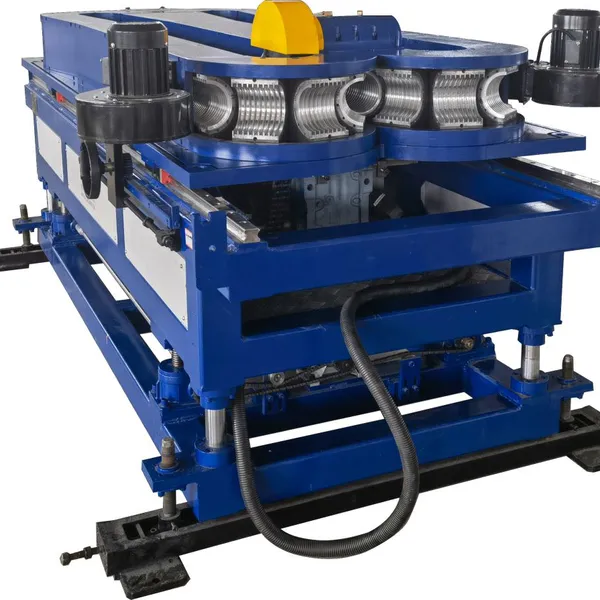
-
HDPE Krah Profild Pipe MachineUS$ 10000MOQ: 1 Set
-
Plastic Tank CNC Holes Boring MachineUS$ 10000MOQ: 1 Set
-
Double Wall Corrugated Pipe Extrusion LineNegotiableMOQ: 1 Set
-
Single Wall Corrugated Pipe Extrusion LineNegotiableMOQ: 1 Set
-
Inversion CIPP Liner Tube Manufacturing MachineNegotiableMOQ: 1 Set