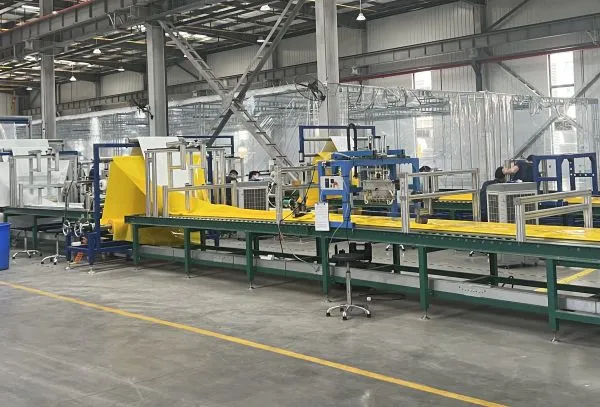

 Business License
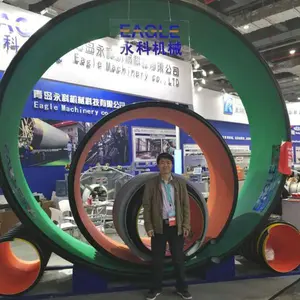
Spiral Pipe Fittings: Types, Connection Methods, and Selection Guide
Spiral pipe fittings are the specialized connectors, adapters, and termination components that join sections of spiral profile pipe into a continuous, leak-resistant system. Designed for HDPE and PP structural-wall pipe from DN300mm to DN5000mm, these fittings use electrofusion, butt fusion, flanges, gaskets, or extrusion welding to create joints that match the strength and chemical resistance of the pipe itself.
A pipe run is only as reliable as its joints. Procurement teams and contractors often focus on pipe diameter, ring stiffness, and material grade, but the fitting system determines how easily the line goes together, how it tolerates settlement, and whether it stays watertight over decades of service. The wrong joint type can turn a straightforward installation into a field-fabrication project with uncertain quality.
This guide explains what spiral pipe fittings are, compares the main connection methods, and shows how to select the right fitting for municipal sewer, drainage, tank, and industrial applications. By the end, you will understand which joint system matches your pipe material, diameter, and installation conditions, and you will know what questions to ask your pipe machine supplier about producing compatible fittings.
Key Takeaways
Spiral pipe fittings join HDPE or PP spiral profile pipe sections using electrofusion, butt fusion, flanges, gasketed joints, or extrusion welding.
Electrofusion fittings suit DN300-DN1200mm gravity systems; butt fusion handles larger diameters where a homogeneous joint is required.
Flanged connections are preferred for tanks, pump stations, and industrial equipment tie-ins.
Gasketed push-fit joints speed installation in long sewer and drainage runs.
Fittings should match the pipe material, ring stiffness class, and applicable standards such as EN 13476, ASTM F894, or ISO 21138.
What Are Spiral Pipe Fittings?
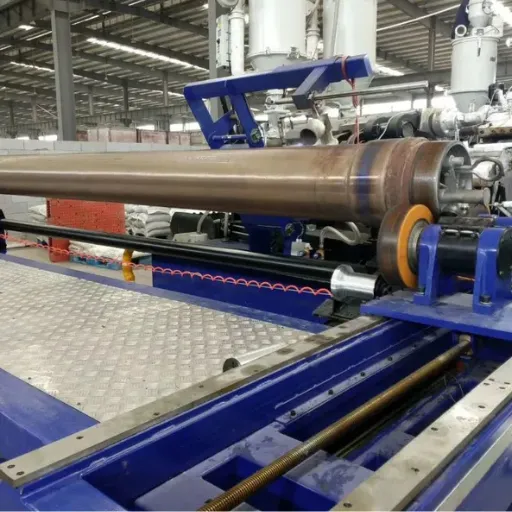
Spiral pipe fittings are components manufactured or fabricated specifically for structural-wall spiral profile pipe. Unlike plain solid-wall HDPE pipe, which uses standard PE electrofusion or butt fusion fittings from a catalog, spiral profile pipe has a corrugated or profiled outer surface. This profiled geometry means fittings must either accommodate the corrugations, be sized to the pipe's inner diameter, or be custom fabricated from the same profile strip used to produce the pipe.
A fitting for spiral pipe may take several forms:
Factory-molded electrofusion or spigot fittings: Designed for smaller-diameter spiral pipe with smooth internal bore and profiled external wall.
Fabricated butt fusion fittings: Made from HDPE or PP pipe segments welded together to form bends, tees, reducers, and manifolds.
Flanged adapters: Machined or welded end rings that bolt to pumps, valves, tanks, or other equipment.
Gasketed sleeve couplings: Push-fit systems that seal on the pipe's smooth inner wall or a prepared spigot end.
Extrusion-welded custom fittings: Built on-site using a hand extruder to deposit molten polymer, matching the pipe material exactly.
At Qingdao Yongke Machinery, our HDPE/PP spiral profile pipe production line produces the profile strip from which both pipe and custom fittings can be formed. This single-source material strategy is important: a fitting extruded from the same polymer batch as the pipe will have identical melt-flow properties and fusion behavior, which improves joint reliability.
The key design challenge for spiral pipe fittings is load transfer. A DN2000mm SN8 pipe buried under a motorway carries soil, traffic, and hydrostatic loads. The joint must transfer those loads between pipe sections without creating a weak point. Fittings therefore need adequate wall thickness, proper reinforcement at the weld zone, and, in some cases, external concrete encasement or compacted backfill to distribute stress.
Common Types of Spiral Pipe Fittings
Selection starts with understanding the available joint technologies. Each method has a preferred diameter range, skill requirement, and equipment cost.
Electrofusion Fittings
Electrofusion fittings contain embedded resistance wires. When the fitting is slipped over the pipe spigot and an electrofusion processor applies voltage, the wires heat and melt the inside of the fitting and the outside of the pipe simultaneously. After the fusion cycle completes and the joint cools, the two parts become one homogeneous piece.
Advantages of electrofusion fittings include:
Repeatable quality: The processor controls time, temperature, and pressure.
Compact equipment: A fusion unit and scraper fit in a service vehicle.
Good for tight spaces: No need to move pipe sections axially once cut.
Electrofusion is most common for DN300mm to DN1200mm spiral pipe in water, sewer, and gas applications. Above DN1200mm, fitting size, power requirements, and handling make butt fusion or mechanical joints more practical.
Butt Fusion Fittings
Butt fusion joins pipe ends by heating both faces against a hot plate, removing the plate, and pressing the molten surfaces together. The result is a joint with the same strength as the parent material. For spiral pipe, butt fusion is typically used for straight-line joints between pipe sections, but it can also fabricate bends, tees, and reducers from straight pipe segments.
For spiral profile pipe, the pipe ends are often trimmed and planed to create smooth, flat fusion faces. Specialized clamps and alignment fixtures keep large-diameter pipe centered during fusion. This method is preferred for:
Large diameters: DN1200mm to DN5000mm pipe runs.
Pressure-rated or leak-sensitive systems: Homogeneous joints outperform mechanical couplings.
Pre-fabrication: Complex manifold assemblies can be built in a workshop and transported to site.
Butt fusion requires trained operators, proper alignment, and clean, dry conditions. A poorly aligned DN3000mm butt fusion joint cannot be reworked easily.
Flanged Connections
Flanged pipe fittings consist of an end ring or stub end bolted to a mating flange. A gasket between the flanges provides the seal. For spiral pipe, flanges are usually welded to a short spigot or machined adapter that matches the pipe's inner diameter, then bolted to equipment flanges. These spiral pipe fittings are common on tanks and pump stations.
Flanges are the standard choice when connecting spiral pipe to:
Pumps and valves in sewage pumping stations.
Tank nozzles on HDPE spiral tanks.
Treatment plant equipment requiring future disassembly.
Penetrations through concrete walls or manholes.
The main limitation is rigidity. Flanged joints do not tolerate ground movement as well as flexible gasketed or fused joints. They also require periodic bolt re-torquing in some service conditions.
Gasketed Push-Fit Joints
Gasketed joints use an elastomeric seal seated in a bell or coupling. The spigot end of one pipe is inserted into the socket of the next, compressing the gasket to form a seal. This joint allows some axial movement and angular deflection, which makes these spiral pipe fittings ideal for buried gravity sewers where settlement is expected.
For spiral profile pipe, gasketed systems may use:
Profile-accepting bells: Designed to receive the corrugated pipe end directly.
Smooth-bore spigots: A length of plain pipe is fused to the spiral pipe end to create a conventional spigot.
External sleeve couplings: A rubber sleeve with stainless-steel bands seals over the pipe outside diameter.
These systems are fast. A crew can install several hundred meters of DN800mm drainage pipe per day once trenching and bedding are complete. The trade-off is lower pressure capability than fused systems and dependence on gasket material compatibility with the conveyed fluid.
Extrusion-Welded Custom Fittings
For large diameters or unusual geometries, fittings are often built in the field using hand-held extrusion welders. An operator feeds polymer rod or regrind into the welder, which melts it and deposits a bead onto the prepared joint. Multiple beads build up a reinforced fillet or full-penetration weld.
Extrusion welding is especially valuable for:
Tank fittings: Manways, nozzles, and sumps on HDPE spiral tanks.
Repair work: Patching damaged sections or tying in laterals.
Custom geometry: Bends and transitions that are not available as molded parts.
Quality depends heavily on operator skill, surface preparation, and ambient temperature. Weld procedures should be qualified, and welders should be trained and tested on sample joints before production welding.
How Spiral Pipe Fittings Connect to the Main Line
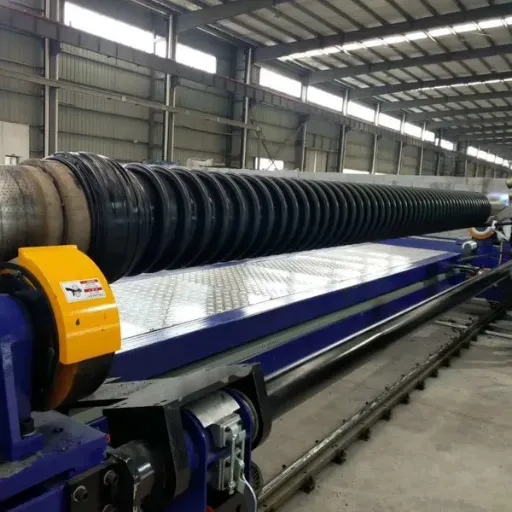
Joining spiral pipe is not simply a matter of picking a fitting from a catalog. The connection must account for pipe wall geometry, thermal movement, soil loading, and hydraulic requirements.
Preparing the Pipe End
Before any joint is made, the pipe end must be clean, square, and dimensionally correct. For electrofusion and butt fusion, this means removing the outer profile layer to expose a smooth cylindrical surface. For gasketed joints, the spigot must be free of cuts, gouges, and deformation. A damaged spigot will leak even with a new gasket.
Alignment and Restraint
Large-diameter spiral pipe is flexible but heavy. During fusion, the joint must be held in alignment until the weld cools. Misalignment creates bending stress that can crack the joint or cause the pipe to drift off grade. For flanged and gasketed joints, pipe supports and thrust blocks prevent movement from internal pressure or thermal expansion.
Load Transfer and Bedding
Spiral pipe fittings often have a different outer diameter or stiffness than the pipe itself. At these transition points, the surrounding soil must provide uniform support. A common field mistake is to leave a void under a coupling or flange.
That void allows the fitting to settle independently of the pipe, creating shear stress at the joint. Backfill should be placed and compacted evenly around fittings, just as it is around the pipe. For high-load locations, concrete cradles or compacted granular bedding may be specified.
Material Compatibility
HDPE fittings cannot be fused to PP pipe, and vice versa, because the polymers have different melting points and crystallization behavior. Even within the HDPE family, PE80 and PE100 have different properties. Fittings should be stamped or certified for the same base resin as the pipe. When in doubt, perform a small trial weld and test it for peel strength before production welding.
Material and Specification Standards
Spiral pipe fittings and the pipes they join are governed by the same product standards, plus installation and testing standards for the joint method. Specifying engineers and contractors should reference the relevant documents for their region.
Product Standards
EN 13476: Plastics piping systems for non-pressure underground drainage and sewerage. Covers structured-wall piping systems, including spiral profile pipe and fittings, with requirements for dimensions, ring stiffness, and impact resistance.
ASTM F894: Standard specification for polyethylene profile wall pipe and fittings. Applies to HDPE profile pipe with a smooth interior and annular or helical corrugations.
ISO 21138: Plastics piping systems for non-pressure underground drainage and sewage. Specifies structured-wall piping systems of PE, PP, and PVC-U, including joint performance requirements.
Joint-Specific Standards
Electrofusion: ISO 11414 and ASTM F1290 cover electrofusion assembly procedures and quality testing.
Butt fusion: ISO 21307 and ASTM F2620 describe heating plate temperatures, fusion pressures, and cooling times for polyethylene pipe.
Flanges: ASME B16.5 or EN 1092-1 for flange dimensions and bolting patterns, combined with project-specific gasket specifications.
Gasketed joints: EN 681 for elastomeric seals, plus manufacturer-specific installation tolerances.
At Qingdao Yongke Machinery, our facility is certified to ISO 9001, ISO 14001, and ISO 45001, and our machinery carries CE marking. We design extrusion lines so that the profile strip and welding parameters produce pipe and fittings compatible with these international standards.
Pressure and Leak Testing
Gravity sewer systems are usually tested for leakage using air or water exfiltration tests. Joints are inspected visually and may be pressure-tested according to project specifications. For water-retaining structures such as tanks, hydrostatic testing confirms that extrusion-welded and flanged joints do not leak under operating head.
Selecting the Right Spiral Pipe Fitting for Your Project
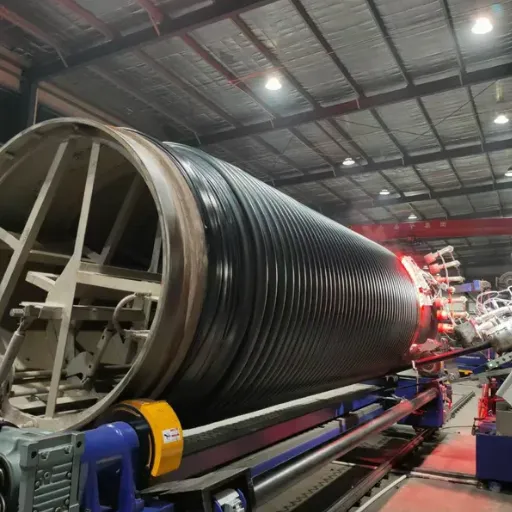
Choosing a fitting system requires answers to four questions: What is the pipe material? What diameter and stiffness class are involved? Is the system gravity or pressure? And what installation conditions will the joint face?
Match the Fitting to the Pipe Material
HDPE and PP have different welding temperatures and fusion behavior. Electrofusion fittings are resin-specific. Butt fusion parameters differ between PE80, PE100, and PP-HM. Always confirm that spiral pipe fittings are stamped or certified for the same base resin as the pipe. If the pipe is a co-extruded structure with virgin inner and recycled outer layers, the fusion zone must engage the virgin layer for a sound joint.
Consider Diameter and Stiffness
Small-diameter spiral pipe (DN300-DN800) often uses molded electrofusion or gasketed couplings because these fittings are economical and widely stocked. Mid-range diameters (DN800-DN2000) move toward fabricated butt fusion fittings and profile-specific gasketed bells. Large diameters (DN2000-DN5000) rely heavily on butt fusion, flanges, and extrusion-welded custom spiral pipe fittings because molded parts in these sizes are expensive or unavailable.
Ring stiffness also matters. An SN16 pipe buried under a railway needs a joint with equivalent structural integrity. A light-duty gasketed coupling rated for SN4 may not be appropriate without external support.
Evaluate Gravity vs. Pressure Service
Gravity sewer and drainage systems operate at low internal pressure. Gasketed and electrofusion spiral pipe fittings perform well in these applications. Pressure systems, including low-pressure water lines and tank nozzles, generally require butt fusion or flanged joints with appropriate pressure ratings. Always check the fitting's pressure rating against the system design pressure.
Account for Site Conditions
Tight urban trenches favor electrofusion or gasketed spiral pipe fittings because they require less pipe movement. Open rural construction with good access favors butt fusion. Corrosive environments require gasket materials and flange coatings compatible with the soil and conveyed fluid. Seismic zones benefit from flexible gasketed joints that tolerate movement without cracking.
Project Example: A municipal contractor in Southeast Asia needed to install a DN1200mm SN8 sanitary sewer interceptor through a built-up district. Space was limited, and the alignment included several tight bends.
The contractor selected electrofusion couplings for the straight runs and shop-fabricated 45-degree butt fusion bends for the directional changes. Because the fittings were extruded from the same PE100 compound as the pipe, fusion parameters were consistent across the line. Leak testing passed on the first attempt, and the crew avoided the tight-space alignment problems that would have come with flanged or mechanically restrained joints.
If you are planning a new spiral pipe production operation, the ability to produce your own fittings or compatible profile strip can reduce lead times and improve project margins. Our engineering team can help you match extrusion line capability to the fitting range your market demands.
Applications and Industries
Spiral pipe fittings appear wherever large-diameter plastic pipe is joined in the field. The application often dictates the joint type and the material grade for the fittings.
Municipal Sewer and Drainage
Gravity sewer systems use electrofusion couplings, gasketed bells, and extrusion-welded saddles for lateral connections. Manholes are typically connected using flexible boot connectors that seal around the pipe OD and cast into the manhole wall. Stormwater detention systems use gasketed couplings to speed installation across long runs. Where projects stay at smaller diameters, a high-speed PP corrugated pipe extrusion line may be a complementary production option for non-spiral drainage pipe.
Industrial Chemical Storage
HDPE spiral tanks require nozzles, manways, and overflow connections that are often extrusion-welded directly to the tank shell. Flanged nozzles allow pumps and level instruments to be bolted on. HDPE spiral tank production lines produce the same profile strip used for these tank fittings, so material compatibility for spiral pipe fittings is guaranteed.
Landfill and Environmental
Leachate collection systems use large-diameter spiral pipe with gasketed or extrusion-welded fittings. The aggressive leachate chemistry makes material compatibility essential. HDPE fittings resist the acids, bases, and organic compounds found in landfill leachate better than metallic alternatives.
Agriculture and Mining
Irrigation reservoirs, tailings pipelines, and mine dewatering systems use spiral pipe with a mix of butt fusion, flanged, and gasketed joints. Mining applications may require abrasion-resistant compounds and heavier wall fittings at changes in direction.
Water Supply and Treatment
Although less common than gravity applications, spiral pipe is used for low-pressure raw water lines and treatment plant outfalls. These systems use pressure-rated butt fusion fittings and flanged connections to pumps and valves.
Installation Best Practices
Even the best spiral pipe fittings will fail if installed incorrectly. The following practices apply across joint types and diameters.
Keep Components Clean and Dry
Moisture, dust, and oxidation contaminate fusion surfaces. Pipe ends should be stored capped until just before joining. Fusion zones must be scraped or planed immediately before heating. A joint left prepared overnight may need to be re-prepped.
Follow Manufacturer Fusion Parameters
Electrofusion processors and butt fusion machines have specified heating times, pressures, and cooling times. Do not shorten cooling time to speed production. A joint disturbed while molten will have reduced strength and may leak.
Use Trained Operators
Fusion welding is a skill. Operators should be trained and periodically requalified, especially for large-diameter butt fusion and extrusion welding. Keep weld logs that record fusion parameters, ambient conditions, and operator identification for traceability.
Support Fittings Independently
Flanges, valves, and heavy fittings should not hang from the pipe. Use concrete thrust blocks or pipe supports to carry fitting weight and isolate the pipe from equipment vibration. This is particularly important on tank nozzles and pump connections.
Allow for Thermal Movement
HDPE and PP expand and contract with temperature. Long above-ground runs need expansion loops or flexible joints. Buried systems generally accommodate movement through soil friction, but fittings at structure penetrations need clearance or flexible connectors.
Field Scenario: During a landfill leachate line installation, a crew noticed that a DN1600mm pipe section had been delivered with a slightly ovalized spigot end. Attempting to insert a gasketed coupling would have damaged the seal.
The supervisor ordered the spigot re-rounded using an internal mandrel and inspected the gasket seating area with a feeler gauge. After re-rounding, the joint assembled smoothly and passed the exfiltration test. The lesson: pipe end preparation is as important as the fitting itself. A few minutes of corrective work prevented a leak that would have required excavation to repair.
Frequently Asked Questions
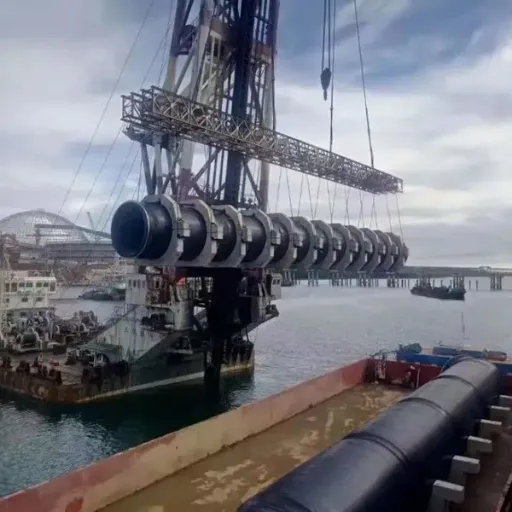
What is the most common joint type for spiral pipe fittings?
For DN300mm to DN1200mm gravity systems, electrofusion couplings are the most common because they are reliable, portable, and require minimal pipe movement. For larger diameters and pressure applications, butt fusion dominates. Flanges and gasketed joints are chosen for specific equipment connections or settlement-tolerant installations.
Can you use standard HDPE fittings on spiral profile pipe?
Not directly. Spiral profile pipe has a corrugated or structured outer wall, so standard PE fittings designed for solid-wall pipe will not fit properly. The pipe end must be planed or a smooth spigot must be fused on before using standard fittings. Alternatively, use fittings specifically designed for profile-wall pipe.
How do you connect spiral pipe to a manhole?
Manhole connections usually use a flexible boot or link seal that clamps around the pipe OD and is cast into the manhole wall. This allows differential settlement between the rigid concrete structure and the flexible plastic pipe without breaking the seal. Some designs use a short plain-ended spigot with a gasketed manhole connector.
Are spiral pipe fittings pressure rated?
Some are, but many are rated only for gravity service. Butt fusion fittings made from pressure-rated PE100 pipe can carry pressure comparable to the parent pipe. Gasketed and electrofusion fittings have their own pressure ratings that must be checked against the system design. Always request the fitting's pressure rating in writing.
How do you repair a damaged spiral pipe fitting in the field?
Small damage can often be repaired by extrusion welding. For larger damage or failed joints, the affected section is cut out and replaced with a new pipe section and coupling. A repair clamp or external sleeve may be used as a temporary measure. The repair method must match the pipe material and be qualified by testing.
What standards should spiral pipe fittings meet?
Common product standards include EN 13476, ASTM F894, and ISO 21138. Joint procedures should follow ISO 11414 or ASTM F1290 for electrofusion, and ISO 21307 or ASTM F2620 for butt fusion. Project specifications may add additional requirements for leak testing, material certification, and installation qualifications.
Conclusion
Spiral pipe fittings are the critical link between pipe sections, equipment, and structures. Whether you are building a DN400mm sewer lateral with electrofusion couplings or a DN3500mm tank with extrusion-welded nozzles, the fitting system must match the pipe material, diameter, stiffness, and service conditions.
Understanding the strengths and limits of each joint method helps contractors avoid field problems and helps pipe producers offer a complete system rather than just pipe. Fittings produced from the same HDPE or PP compound as the pipe simplify fusion, improve joint quality, and reduce project risk.
Qingdao Yongke Machinery has manufactured spiral profile pipe machinery and CIPP liner equipment since 2010 at our ISO-certified facility in Qingdao, China. Our HDPE/PP spiral profile pipe production lines produce the profile strip used for both pipe and compatible fittings across the DN300mm to DN5000mm range. We provide engineering support, operator training, and technical documentation to help pipe manufacturers serve infrastructure projects worldwide.
Need help selecting spiral pipe fittings or configuring a production line? Contact our sales team to request a quotation, discuss material compatibility, or schedule a video factory tour with our engineering team.
Recently Posted
-
Wastewater Infrastructure Design, Assessment, and Renewal
June 29, 2026In March 2023, a wastewater treatment plant serving 400,000 residents in Southern Europe suffered a cascade failure. A single inte Read More
 -
Combined Sewer System Design, Operation, and Rehabilitation
June 29, 2026In August 2021, a single storm dropped 175mm of rain on a midwestern U.S. city in less than 36 hours. The city's aging combine Read More
 -
Underground Drainage System Design: An Engineer's Guide to HDPE/PP Pipe Solutions
June 29, 2026A single storm in July 2023 dropped 180mm of rain on a mid-sized European city in 48 hours. The downtown drainage network, built m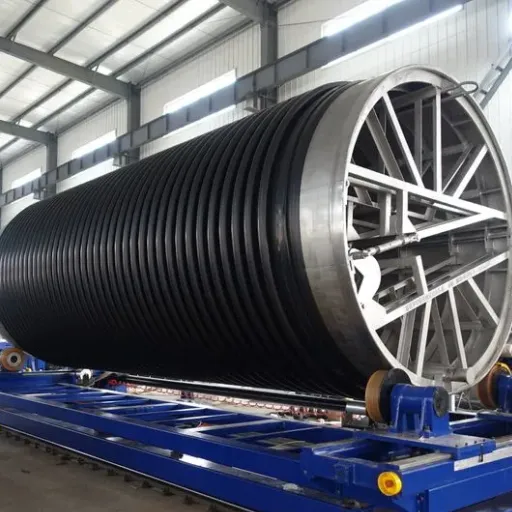 Read More
 -
Drainage Pipe Design: A Practical Guide for Municipal and Stormwater Systems
June 29, 2026In November 2023, a municipal engineer in Texas named Carlos Mendez reviewed plans for a new storm sewer along a commercial corrid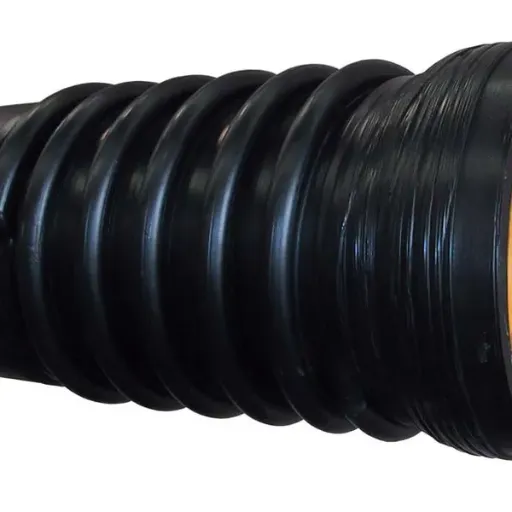 Read More

Contact Us
Recommended Products
-
 CIPP Glass Fibre Liner MachineNegotiableMOQ: 1 Set
 -
HDPE Helically Wound Tank MachineUS$ 10MOQ: 1 Set
-
CIPP Glass Liner MachineNegotiableMOQ: 1 Set
-
CIPP Felt Liner Manufacturing MachineNegotiableMOQ: 1 Set
-
Large Diameter HDPE Sea Intake Outfall Structured Wall Pipe Making MachineNegotiableMOQ: 1 Set
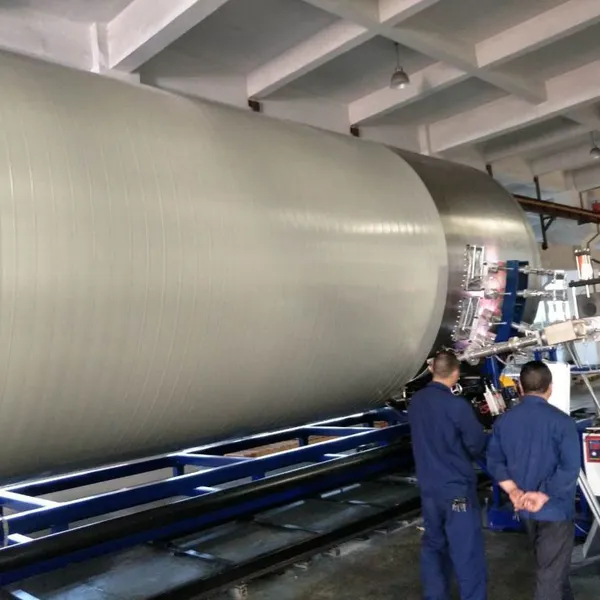
-
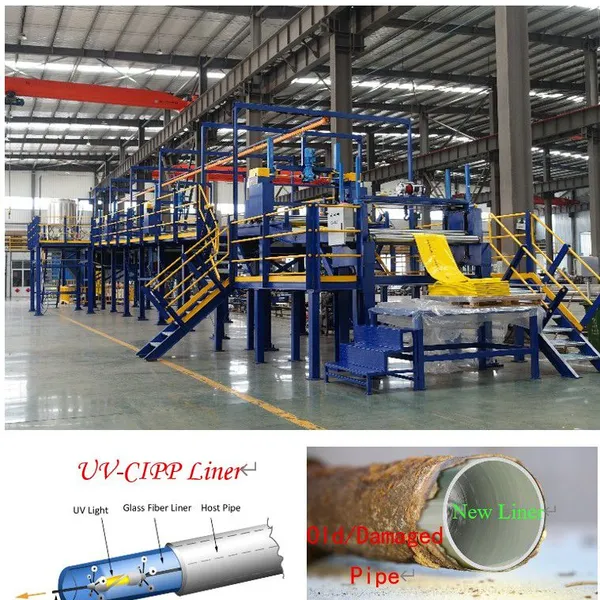
UV-CIPP Glass Fibre Liner Manufacturing MachineUS$ 1000 - 110000MOQ: 10 Meters
-
HDPE Pipe Extrusion Machine / PE Pipe Production Line With High OutputNegotiableMOQ: 1 Set
-
UV-CIPP Glass Fiber Liner Hose Production LineUS$ 1000 - 110000MOQ: 1 Set
-
HDPE Spiral Structure Wall Pipe MachineNegotiableMOQ: 1 Set
-
HDPE Spiral Pipe MachineNegotiableMOQ: 1 Set
-
HDPE Spiral Tank MachineNegotiableMOQ: 1 Set
-
Krah Pipe MachineNegotiableMOQ: 1 Set
-
Plastic HDPE PVC PPR Pipe Extrusion Making Machine Extrusion LineNegotiableMOQ: 1 Set
-
PVC Pipe Extrusion Production Line for Electrical Conduit and Water Supply PipesNegotiableMOQ: 1 Set
-
Hot Sell Single Wall Corrugated Pipe Extrusion Line With Competitive PriceNegotiableMOQ: 1 Set
-
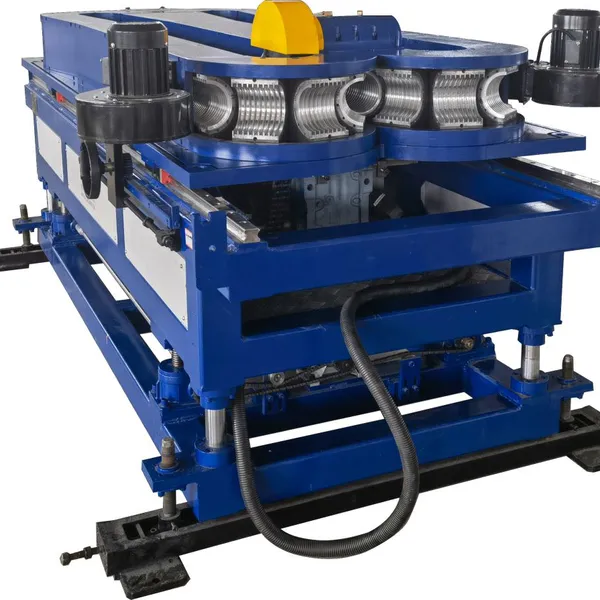
HDPE Krah Profild Pipe MachineUS$ 10000MOQ: 1 Set
-
Plastic Tank CNC Holes Boring MachineUS$ 10000MOQ: 1 Set
-
Double Wall Corrugated Pipe Extrusion LineNegotiableMOQ: 1 Set
-
Single Wall Corrugated Pipe Extrusion LineNegotiableMOQ: 1 Set
-
Inversion CIPP Liner Tube Manufacturing MachineNegotiableMOQ: 1 Set