
 Business License
Corrugated Spiral Pipe: Manufacturing, Applications, and Equipment Guide
A corrugated spiral pipe is a structural-wall pipe produced by helically winding an extruded HDPE or PP profile strip onto a rotating mandrel. The profile strip contains hollow chambers or corrugations that create ring stiffness while using less material than a solid-wall pipe of the same diameter. These pipes are manufactured from DN300mm to DN5000mm and serve municipal sewage, stormwater, drainage, and industrial storage applications worldwide.
Many procurement managers and contractors hear "corrugated spiral pipe" and immediately picture double-wall corrugated pipe. The two terms are not interchangeable. The manufacturing process, diameter range, and structural behavior differ significantly. Choosing the wrong specification can leave a project with pipes that do not meet load requirements or with equipment that cannot produce the required diameters.
This guide explains what a corrugated spiral pipe is, how it is manufactured, where it is used, and what to look for when selecting production equipment. By the end, you will understand how corrugated spiral pipe technology fits alongside double-wall corrugated pipe and solid-wall alternatives, and you will know what questions to ask a machine supplier before committing to a production line.
Key Takeaways
A corrugated spiral pipe uses a helically wound profile strip with hollow chambers to deliver high ring stiffness at diameters from DN300mm to DN5000mm.
It differs from double-wall corrugated pipe in manufacturing method, maximum diameter, and structural-wall geometry.
HDPE and PP are the primary materials, with PP-HM enabling thinner walls and higher stiffness ratings.
Common applications include municipal sewer and drainage, stormwater management, and industrial chemical storage tanks.
Selecting the right spiral profile pipe machine requires matching extruder capacity, die-head geometry, and winding-station capability to your target diameter and output.
What Is a Corrugated Spiral Pipe?
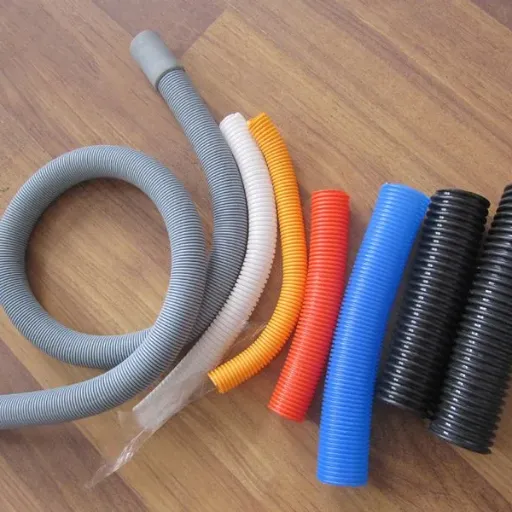
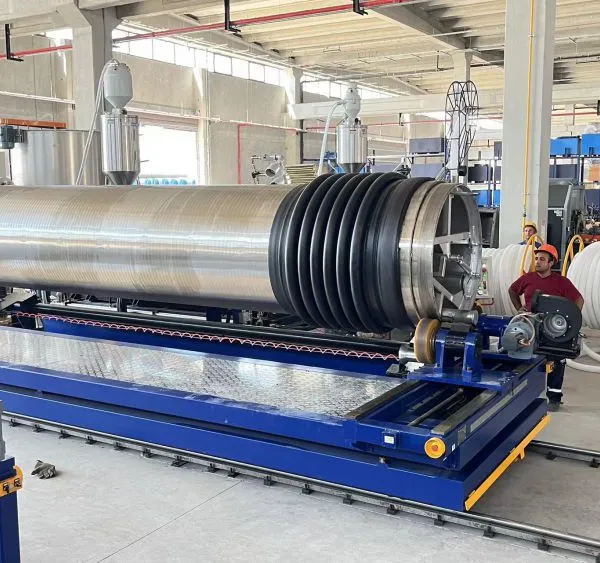
A spiral profile pipe consists of a continuous structural wall formed by winding a profiled strip in a helix around a mandrel. Each turn overlaps the previous one, and the overlap is welded to create a monolithic pipe wall. The profile strip itself contains hollow sections, often described as corrugations or chambers, that give the pipe its ring stiffness without the material weight of a solid wall.
The term "corrugated spiral pipe" can refer to two related concepts:
Spiral profile pipe with a corrugated outer wall: The visible external surface shows a helical corrugated pattern created by the wound profile strip. This is the classic Krah-type or spiral wound structural wall pipe.
Spiral wound pipe with a corrugated inner liner: Some designs use an internal corrugated tube as a forming mandrel or structural liner, over which additional layers are wound.
At Qingdao Yongke Machinery, our HDPE/PP spiral profile pipe production line handles both approaches across the DN300mm to DN5000mm range. The same winding technology can produce pipes with smooth inner surfaces and corrugated outer profiles, or pipes with corrugated inner tubes for specialized applications.
The key advantage of the corrugated spiral design is material efficiency. A DN1200mm SN8 pipe can achieve the required ring stiffness with substantially less polymer than a solid-wall HDPE pipe of equivalent diameter. The reduced weight lowers material costs, simplifies handling, and reduces transportation expense, especially important for large-diameter infrastructure projects.
Corrugated Spiral Pipe vs. Double-Wall Corrugated Pipe
The similarity in names creates confusion. Both pipe types use hollow wall structures to improve stiffness-to-weight ratios. Both are used in drainage and sewer applications. However, the manufacturing process and size range are very different.
Manufacturing Method
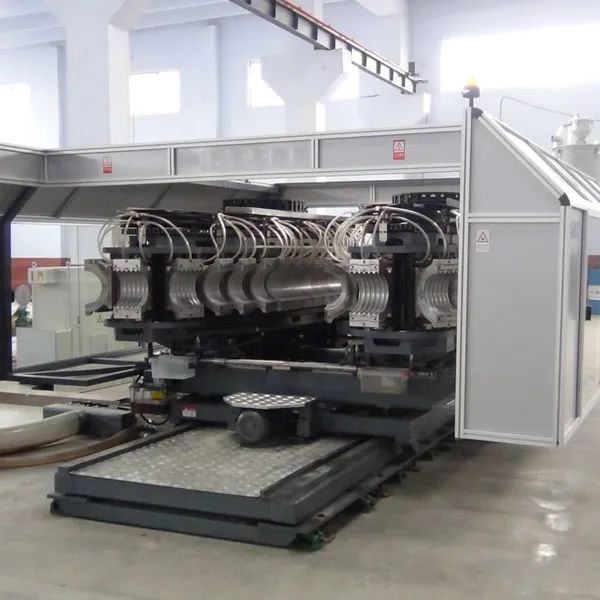
Double-wall corrugated pipe is produced on a continuous extrusion line. A co-extrusion die forms a smooth inner wall and a corrugated outer wall simultaneously. The corrugated outer wall is shaped by vacuum-forming or blow-molding against a corrugated mold block. This process is fast and efficient for smaller diameters, typically DN200mm to DN1200mm.
Spiral profile pipe, by contrast, is produced by winding a pre-extruded profile strip onto a mandrel. The pipe grows in diameter as the mandrel rotates, which allows much larger diameters. The trade-off is a slower production rate for very large pipes, since each pipe is wound individually rather than extruded continuously.
Diameter Range
Double-wall corrugated pipe lines commonly cover DN200mm to DN1200mm. Some specialized lines reach DN1500mm or DN2000mm, but diameters above DN1200mm become increasingly difficult on conventional corrugated extrusion equipment.
Spiral profile pipe machines routinely produce pipes from DN300mm to DN5000mm. This makes spiral technology the practical choice for large-diameter trunk sewers, interceptors, outfalls, and industrial storage tanks.
Wall Structure
In double-wall corrugated pipe, the inner and outer walls are extruded as parallel cylinders, with the corrugated outer wall providing stiffness. The corrugations run perpendicular to the pipe axis.
In spiral profile pipe, the structural wall is a single helical winding. The hollow chambers in the profile strip follow the spiral direction. This helical construction gives the pipe excellent ring stiffness and some longitudinal flexibility, which can be advantageous in installations where ground movement is expected.
| Parameter | Corrugated Spiral Pipe | Double-Wall Corrugated Pipe |
|---|---|---|
| Manufacturing | Helical winding of profile strip | Continuous co-extrusion and vacuum forming |
| Typical diameter range | DN300mm to DN5000mm | DN200mm to DN1200mm |
| Maximum diameter | Up to DN5000mm+ | Typically DN1500mm-DN2000mm |
| Wall geometry | Helical corrugated structural wall | Smooth inner wall, annular corrugated outer wall |
| Primary materials | HDPE, PP, PP-HM | HDPE, PP |
| Best applications | Large sewers, interceptors, tanks | House connections, collectors, drainage |
If your projects stay below DN1200mm and prioritize high output, a high-speed PP corrugated pipe extrusion line may be the better investment. If you need diameters above DN1200mm or produce storage tanks, a spiral profile pipe machine is the more versatile choice.
How Corrugated Spiral Pipe Is Manufactured
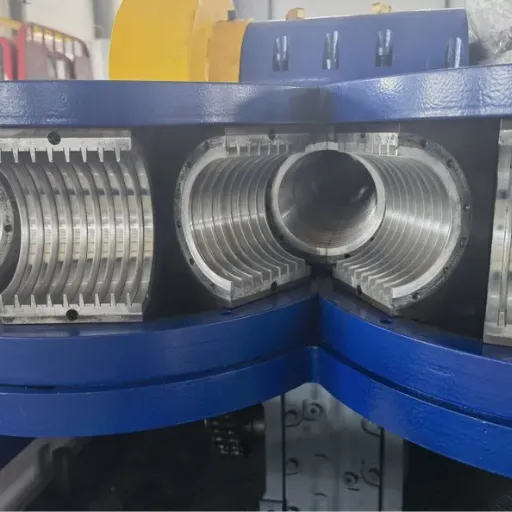
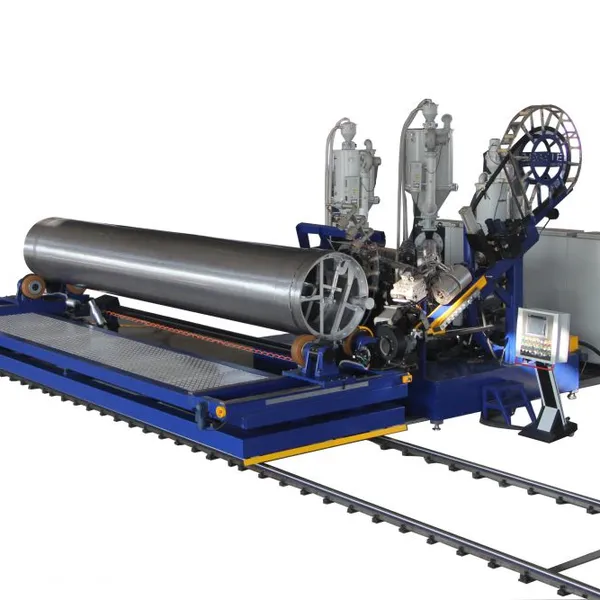
A complete spiral profile pipe production line integrates several subsystems. Each stage must be precisely controlled to ensure consistent wall thickness, ring stiffness, and dimensional accuracy.
1. Material Preparation and Extrusion
The process begins with HDPE or PP resin, typically PE100 for HDPE applications or PP-HM for higher stiffness. Recycled material can be incorporated in co-extrusion designs, often in the outer layers, while the inner layer uses virgin material to maintain hydraulic performance.
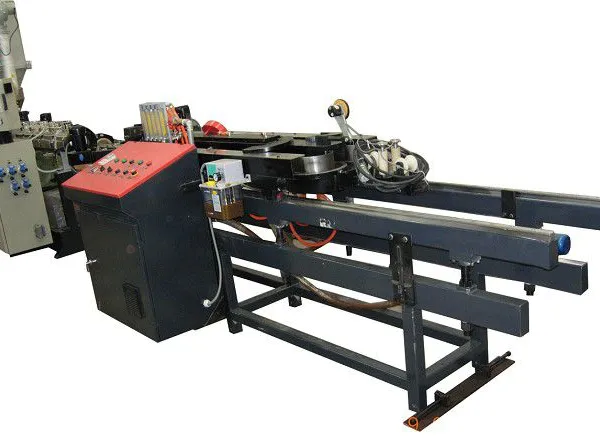
The resin feeds into a single-screw extruder sized for the target output. For DN300-DN1200mm pipes, a 90mm to 120mm extruder is common. For DN2000-DN5000mm pipes, extruders of 150mm or larger may be required. The extruder melts and homogenizes the polymer, then delivers it to the die head at a controlled temperature and pressure.
2. Profile Strip Formation
The die head shapes the molten polymer into a profile strip with the desired cross-section. For spiral profile pipe, the profile includes hollow chambers that will become the pipe's structural ribs. The die geometry determines:
Wall thickness of the profile strip
Height and width of the corrugations
Thickness of the inner and outer profile walls
Number and shape of hollow chambers
Immediately after exiting the die, the hot profile passes through a vacuum calibration sleeve and a water-cooling trough. The calibration sleeve holds the profile dimensions while the outer surface solidifies. Precise cooling is critical: if the profile cools too quickly, residual stresses can cause warping; if too slowly, the profile may deform before winding.
3. Winding and Welding
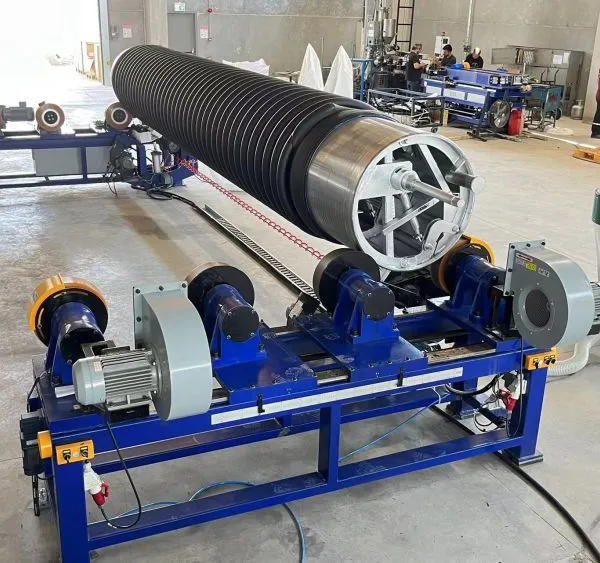
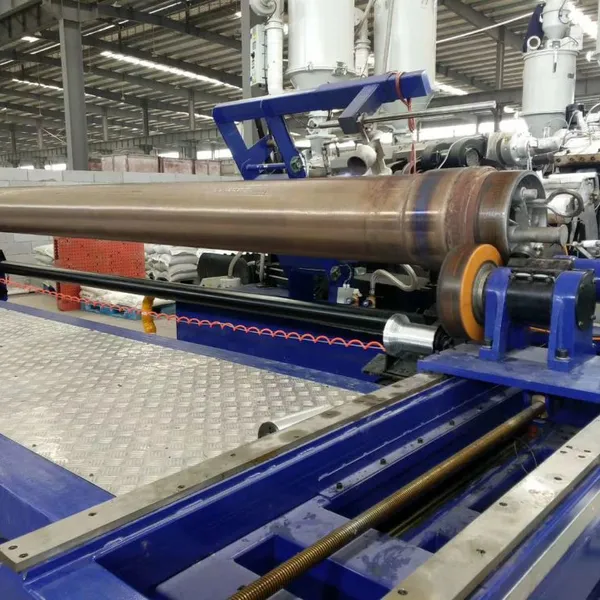
The cooled profile strip feeds onto a rotating mandrel at a controlled helical angle. This is the defining step of spiral profile pipe manufacturing. The mandrel diameter determines the inside diameter of the finished pipe.
As the mandrel rotates, the profile strip winds in a helix. Each turn overlaps the previous turn by a controlled width. A heating element at the overlap zone heats both surfaces to fusion temperature, and pressure from the winding tension creates a welded joint. The result is a continuous structural wall with helical corrugations.
Critical winding parameters include:
Mandrel rotation speed: Must synchronize with extruder output and profile strip feed rate.
Winding angle: Typically 55 to 75 degrees, depending on pipe diameter and profile design.
Overlap width: Ensures adequate weld strength between turns.
Weld temperature and pressure: Must be sufficient for fusion without degrading the polymer.
At Qingdao Yongke Machinery, our independently developed second heating system improves this stage for large-diameter corrugated spiral pipe production. The system provides faster, more stable heating of the overlap zone, reducing cycle times while maintaining uniform melt flow and profile accuracy.
4. Cutting and Handling
When the pipe reaches the specified length, an automatic cutting unit severs it while winding continues on a fresh mandrel. Flying cut-off saws allow production without stopping the line. Downstream equipment removes the finished pipe from the mandrel and transfers it to a stacking or conveying system.
Production Scenario: A pipe manufacturer in Southeast Asia needed to supply DN1800mm SN8 sewer pipe for a municipal interceptor project. Their existing double-wall corrugated line topped out at DN1200mm.
After installing a spiral profile pipe production line with a 120mm extruder and mandrel adjustment up to DN2000mm, they produced the required diameter range in-house. Delivery time to the contractor dropped from 14 weeks to 5 weeks, and material usage per meter fell by approximately 30% compared to the solid-wall alternative they had considered importing.
Applications and Industries
Corrugated spiral pipe serves markets where large-diameter plastic pipe is needed for buried or containment applications. The material efficiency and diameter range make it suitable for projects that would otherwise use concrete, ductile iron, or fiberglass pipe.
Municipal Sewer and Drainage
The largest application segment is municipal infrastructure. Corrugated spiral pipe is used for:
Sanitary sewer trunk lines and interceptors
Stormwater collection and detention systems
Combined sewer overflow projects
Highway and airport drainage
Ring stiffness ratings from SN4 to SN16 allow engineers to match the pipe to burial depth and traffic loading. The smooth inner wall provides excellent hydraulic performance, while the corrugated outer wall distributes soil and live loads.
Industrial Chemical Storage
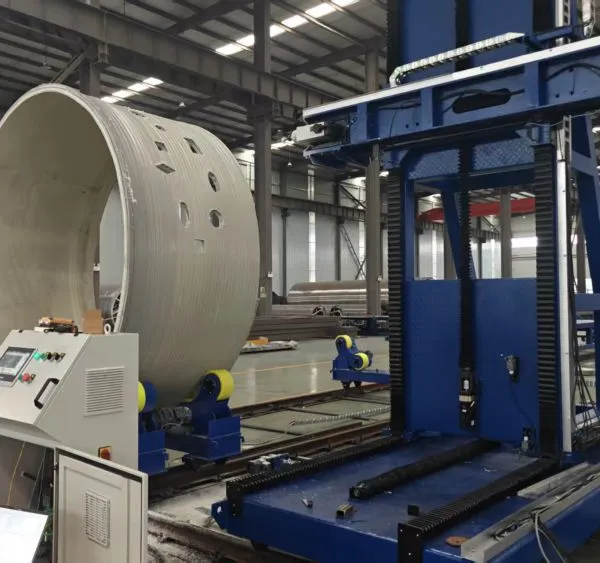
Beyond buried pipe, the same helical winding technology produces HDPE spiral tanks for chemical storage. The corrosion resistance of HDPE and PP makes these tanks suitable for acids, alkalis, and other aggressive media. Tank diameters can exceed 5 meters, and custom fittings can be integrated during winding.
Agriculture and Landfill
Agricultural applications include irrigation reservoirs, manure storage, and drainage. Landfill projects use large-diameter corrugated spiral pipe for leachate collection and gas venting. The chemical resistance and long service life of HDPE are important in these environments.
Water Supply and Fire Wells
Although less common than sewer applications, corrugated spiral pipe is used for low-pressure water supply lines, fire protection reservoirs, and well casings. Special joint systems and gaskets are required when pressure capability is needed.
Project Example: A contractor in North Africa faced tight deadlines for a stormwater detention system. The design called for DN2500mm pipe in a coastal area with aggressive saline groundwater. Concrete pipe would have required heavy lifting equipment and corrosion protection. The contractor selected HDPE corrugated spiral pipe, which reduced installation time, eliminated corrosion concerns, and allowed field cutting and heat-fusion joints without specialized machinery.
Technical Specifications and Standards
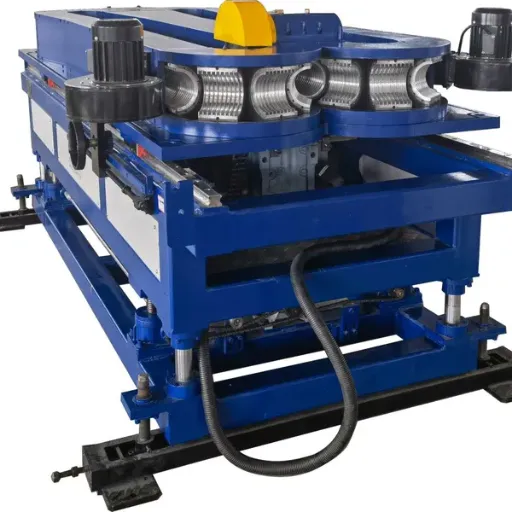
When specifying or purchasing spiral profile pipe, engineers evaluate several key parameters. These same parameters guide machine selection for manufacturers.
Diameter Range
Corrugated spiral pipe is available from DN300mm to DN5000mm. Smaller diameters (DN300-DN800) compete with double-wall corrugated pipe. Mid-range diameters (DN800-DN2000) are the sweet spot for spiral technology. Large diameters (DN2000-DN5000) are almost exclusively produced by spiral winding.
Ring Stiffness
Ring stiffness indicates resistance to external deformation. Common ratings include:
SN4 / PS 46: Light-duty applications, shallow burial
SN8 / PS 115: Standard municipal sewer applications
SN16 / PS 230: Deep burial, heavy traffic, or industrial loading
The achievable ring stiffness depends on profile design, material modulus, and winding precision. PP-HM allows higher stiffness with thinner walls than standard HDPE.
Material Grades
HDPE PE80/PE100: Excellent chemical resistance and toughness; common for sewer and drainage.
PP: Higher stiffness and temperature resistance than HDPE.
PP-HM (High Modulus Polypropylene): Enables thinner walls and higher ring stiffness ratings.
Joint Systems
Corrugated spiral pipe can use several joint types:
Electrofusion socket joints: Common for HDPE systems
Push-fit gaskets: Quick installation for gravity systems
Extrusion welding: Field fabrication of fittings and repairs
Flanged connections: For tanks and industrial applications
Applicable Standards
Manufactured pipe should comply with relevant product standards. Common references include:
EN 13476: European standard for plastics piping systems with structured walls
ASTM F894: American standard for polyethylene profile wall pipe and fittings
ISO 21138: International standard for plastics piping systems for non-pressure underground drainage and sewage
Machine manufacturers should design equipment with these standards in mind. At Qingdao Yongke Machinery, our facility is certified to ISO 9001, ISO 14001, and ISO 45001, and our machinery carries CE marking for European markets.
Selecting the Right Corrugated Spiral Pipe Machine
Buying a spiral profile pipe production line is a capital decision that should match your project pipeline, material strategy, and output targets. The following factors determine the right configuration.
Target Diameter and Ring Stiffness
Start with the diameter range and stiffness ratings you need to produce. A machine configured for DN300-DN1200mm will not economically produce DN4000mm pipe, and vice versa. The mandrel size, winding-station geometry, and extruder capacity must all scale with the target diameter.
The profile die head must be designed for the corrugation geometry that delivers your target SN rating. Some suppliers offer interchangeable die sets for different profile designs.
Extruder Capacity
Extruder size is usually expressed in screw diameter and output in kilograms per hour. For spiral profile pipe, the extruder must supply enough melt to form the profile strip at the required production rate. A DN800mm SN8 line might require 200-300 kg/hour, while a DN3000mm line could require 800 kg/hour or more.
Material Flexibility
If you plan to process both HDPE and PP, verify that the extruder screw design, die-head temperatures, and calibration systems accommodate both materials. Some machines require screw or die changes for material switching. Co-extrusion capability is important if you want to use recycled material in outer layers.
Control and Automation
Modern spiral profile pipe machines use PLC-based control systems with touchscreen HMI interfaces. Useful features include:
Recipe storage for different pipe specifications
Real-time monitoring of extrusion temperature, pressure, and speed
Automatic mandrel diameter adjustment
Production data logging
Remote diagnostic capability
After-Sales Support
A production line requires installation, commissioning, operator training, and ongoing spare parts support. Reputable suppliers provide technical documentation, remote support, and fast spare parts dispatch.
At Qingdao Yongke Machinery, we configure each spiral profile pipe production line based on the customer's target diameter range, material, and output requirements. Our engineering team provides installation supervision, operator training, and lifetime technical support. To discuss your project, contact Mr. Zhou Maozhen at machinery@eaglegroup.cn or WhatsApp +86-13583232887.
Maintenance and Quality Control
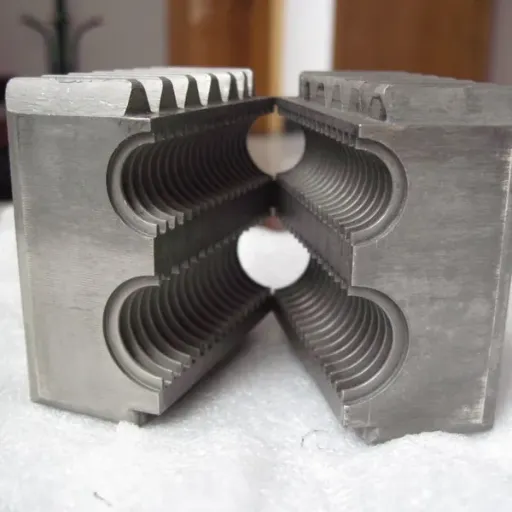
Consistent corrugated spiral pipe quality depends on process control and preventive maintenance. Manufacturers should establish routines for the following.
Extruder Maintenance
Inspect screw and barrel wear periodically.
Clean die heads when changing materials or colors.
Verify heater band performance and thermocouple accuracy.
Monitor melt pressure and temperature stability.
Calibration and Cooling
Clean vacuum calibration sleeves to maintain dimensional accuracy.
Check cooling water temperature and flow rate.
Inspect profile dimensions at start-up and at regular intervals.
Winding Station
Verify mandrel alignment and bearing condition.
Check overlap width and weld quality on sample pipes.
Calibrate winding angle for each diameter and profile recipe.
Quality Testing
Measure pipe inside diameter, outside diameter, and wall thickness.
Test ring stiffness per EN 1228 or ASTM D2412.
Inspect weld lines for completeness and uniformity.
Document batch records for traceability.
Frequently Asked Questions
What is the maximum diameter for corrugated spiral pipe?
Standard spiral profile pipe machines produce pipes up to DN5000mm. Specialized equipment can produce larger diameters for tank applications, but DN5000mm covers virtually all municipal sewer and drainage projects.
Can corrugated spiral pipe use recycled material?
Yes. Co-extrusion systems can process recycled HDPE or PP in outer layers while maintaining a virgin inner layer for hydraulic performance. Some designs use up to 80% recycled content in non-structural layers.
How does corrugated spiral pipe compare to concrete pipe?
Corrugated spiral pipe is lighter, more chemically resistant, and easier to handle than concrete pipe. It can reduce installation time and does not corrode in aggressive sewer environments. For very deep burial or extremely heavy loads, engineers must verify that the selected ring stiffness meets project requirements.
What is the typical production speed for corrugated spiral pipe?
Production speed depends on diameter, wall thickness, and profile design. Small-diameter pipes (DN300-DN600) can be produced at several meters per minute. Large-diameter pipes (DN2000-DN5000) are produced more slowly because each pipe requires more material and longer winding time.
How do I choose between corrugated spiral pipe and double-wall corrugated pipe?
Choose corrugated spiral pipe when you need diameters above DN1200mm, produce storage tanks, or require a machine that can handle a very wide diameter range. Choose double-wall corrugated pipe for high-volume production of smaller diameters (DN200-DN1200) where output speed is the priority.
Conclusion
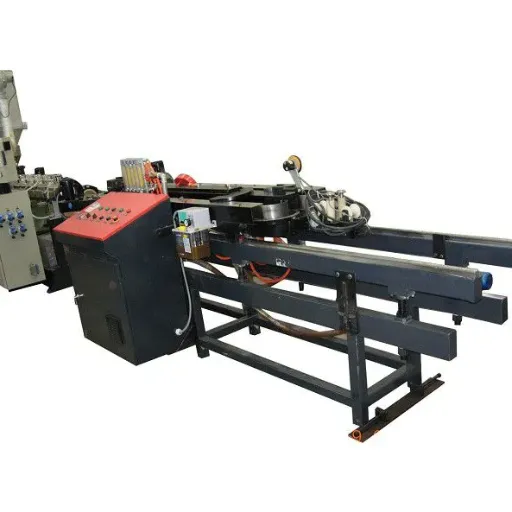
Corrugated spiral pipe combines the material efficiency of structural wall construction with the diameter flexibility of helical winding technology. From DN300mm drainage pipe to DN5000mm interceptors and storage tanks, this pipe type serves infrastructure projects that demand high ring stiffness, chemical resistance, and long service life.
Understanding the manufacturing process, from extrusion and profile calibration to winding, welding, and cutting, helps buyers evaluate equipment and produce pipe that meets international standards. The choice between corrugated spiral pipe and double-wall corrugated pipe comes down to diameter range, production volume, and application requirements.
For manufacturers looking to add corrugated spiral pipe capability, the right production line depends on your target diameter range, material strategy, and quality standards. Qingdao Yongke Machinery has manufactured spiral profile pipe and CIPP liner equipment since 2010 at our ISO-certified facility in Qingdao, China. We provide turnkey extrusion lines, technical training, and ongoing support for pipe producers worldwide.
Ready to configure a spiral profile pipe production line for your facility? Contact our sales team to request a quotation, schedule a video factory tour, or discuss your specific diameter and output requirements.
Recently Posted
-
Qingdao Yongke Machinery: Full-Category Spiral Pipe Equipment from China's Qingdao
September 1, 2026Choosing a machinery supplier for large-diameter plastic pipe production is a long-term decision, because the line you install wil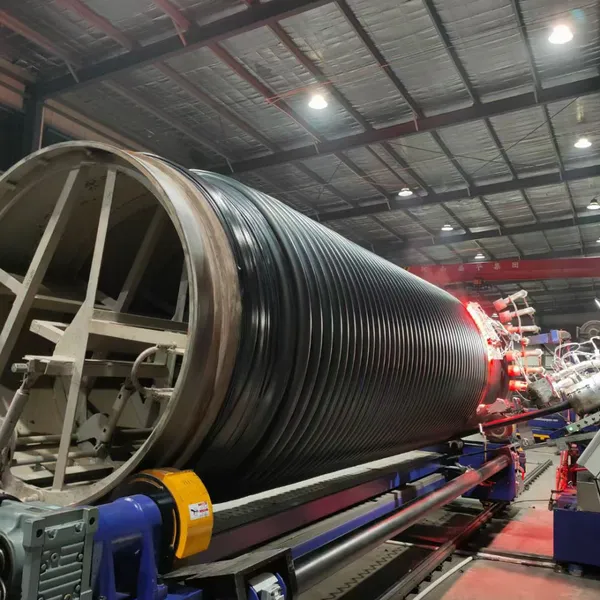 Read More
 -
Quality Control in Spiral Pipe Machine Manufacturing
August 31, 2026A buyer in South America some time ago received a winding line that looked complete on the surface but suffered repeated seam defe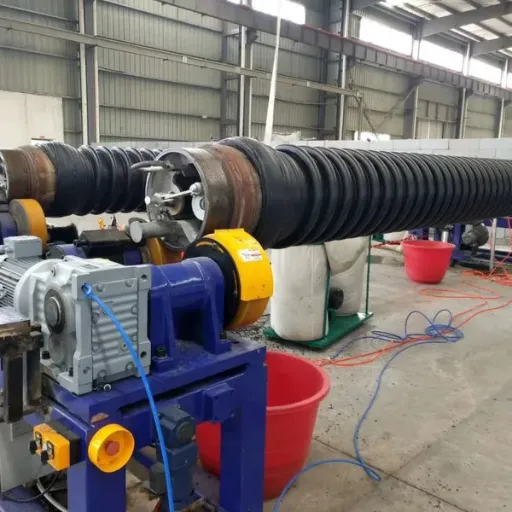 Read More
 -
Spiral Pipe for Sewage and Drainage Networks: Production Notes
August 28, 2026A municipal contractor in Eastern Europe some time ago took delivery of spiral-wound sewer pipe that looked flawless on the line.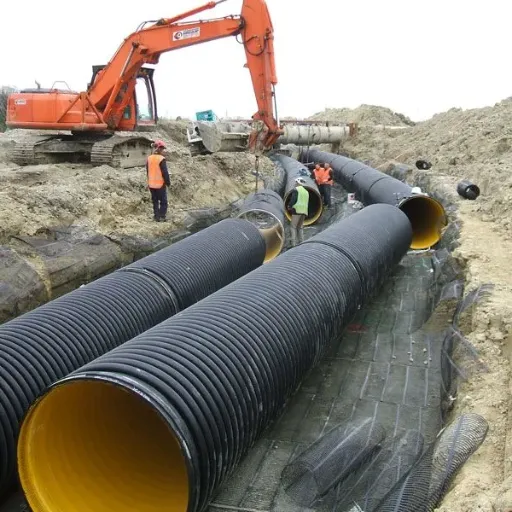 Read More
 -
DN300 to DN5000: Diameter Range and Machine Configuration
August 27, 2026A plant owner in Central Asia once asked for a line "up to DN5000" because a future tender mentioned large storage tanks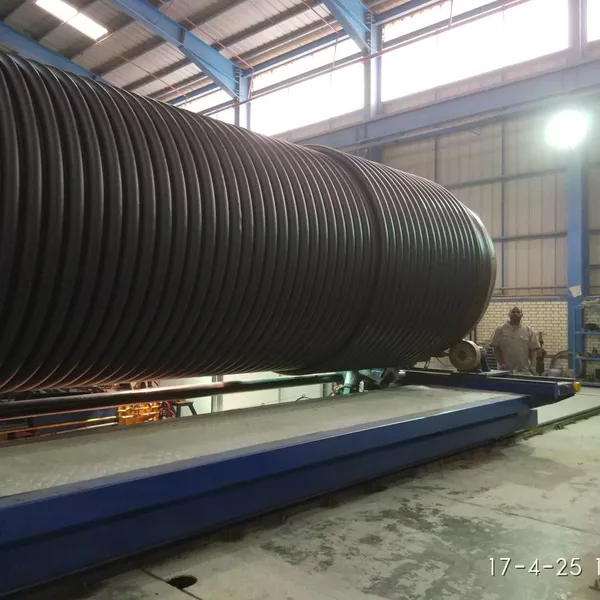 Read More

Contact Us
Recommended Products
-
 CIPP Glass Fibre Liner MachineNegotiableMOQ: 1 Set
 -
HDPE Helically Wound Tank MachineUS$ 10MOQ: 1 Set
-
CIPP Glass Liner MachineNegotiableMOQ: 1 Set
-
CIPP Felt Liner Manufacturing MachineNegotiableMOQ: 1 Set
-
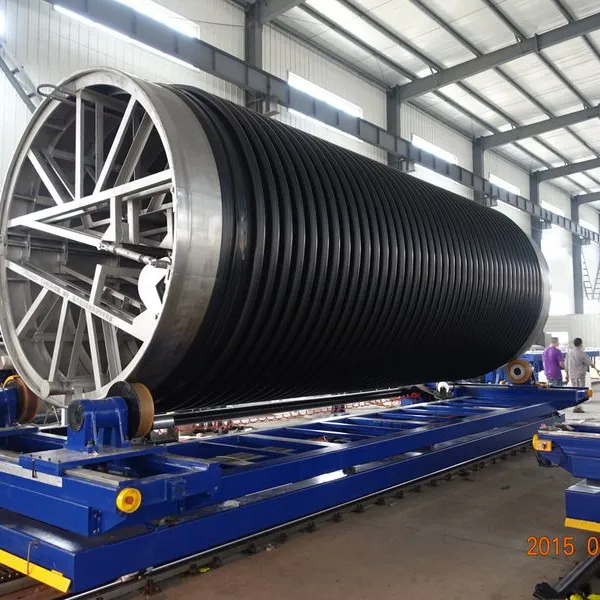
Large Diameter HDPE Sea Intake Outfall Structured Wall Pipe Making MachineNegotiableMOQ: 1 Set
-
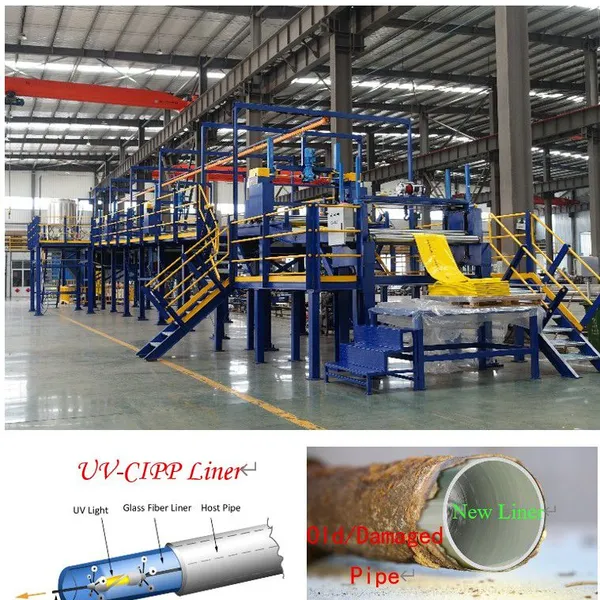
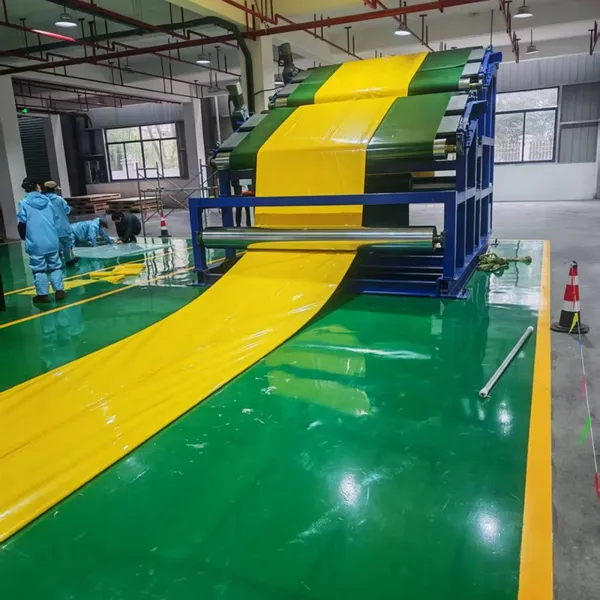
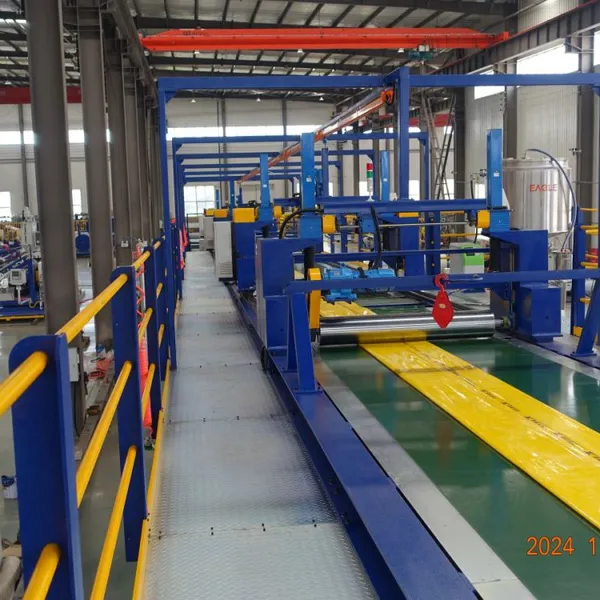
UV-CIPP Glass Fibre Liner Manufacturing MachineUS$ 1000 - 110000MOQ: 10 Meters
-
HDPE Pipe Extrusion Machine / PE Pipe Production Line With High OutputNegotiableMOQ: 1 Set
-
UV-CIPP Glass Fiber Liner Hose Production LineUS$ 1000 - 110000MOQ: 1 Set
-
HDPE Spiral Structure Wall Pipe MachineNegotiableMOQ: 1 Set
-
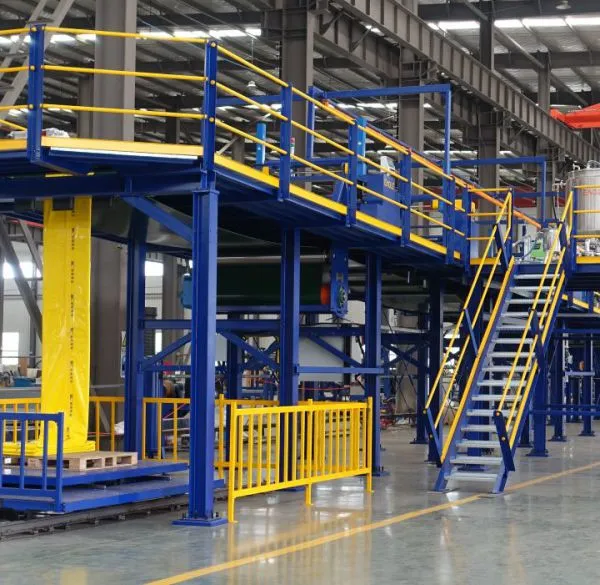
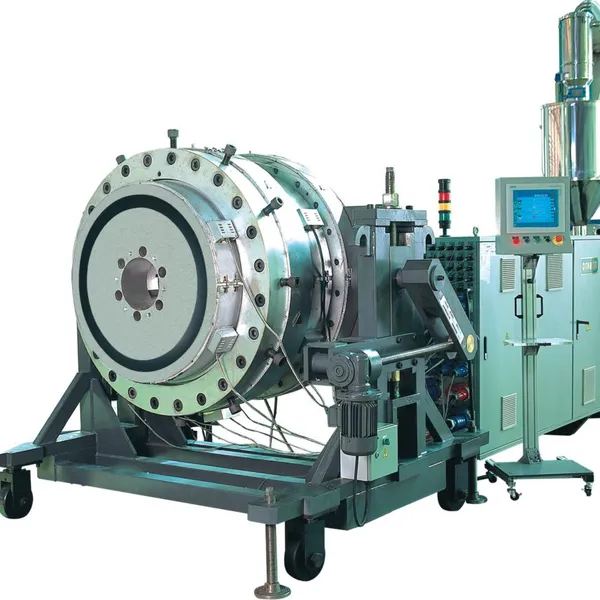
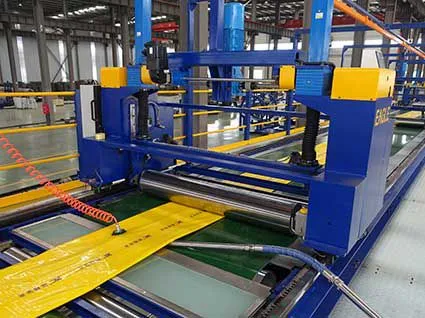
HDPE Spiral Pipe MachineNegotiableMOQ: 1 Set
-
HDPE Spiral Tank MachineNegotiableMOQ: 1 Set
-
Krah Pipe MachineNegotiableMOQ: 1 Set
-
Plastic HDPE PVC PPR Pipe Extrusion Making Machine Extrusion LineNegotiableMOQ: 1 Set
-
PVC Pipe Extrusion Production Line for Electrical Conduit and Water Supply PipesNegotiableMOQ: 1 Set
-
Hot Sell Single Wall Corrugated Pipe Extrusion Line With Competitive PriceNegotiableMOQ: 1 Set
-
HDPE Krah Profild Pipe MachineUS$ 10000MOQ: 1 Set
-
Plastic Tank CNC Holes Boring MachineUS$ 10000MOQ: 1 Set
-
Double Wall Corrugated Pipe Extrusion LineNegotiableMOQ: 1 Set
-
Single Wall Corrugated Pipe Extrusion LineNegotiableMOQ: 1 Set
-
Inversion CIPP Liner Tube Manufacturing MachineNegotiableMOQ: 1 Set